Content Editor@di-atomic/content-editor
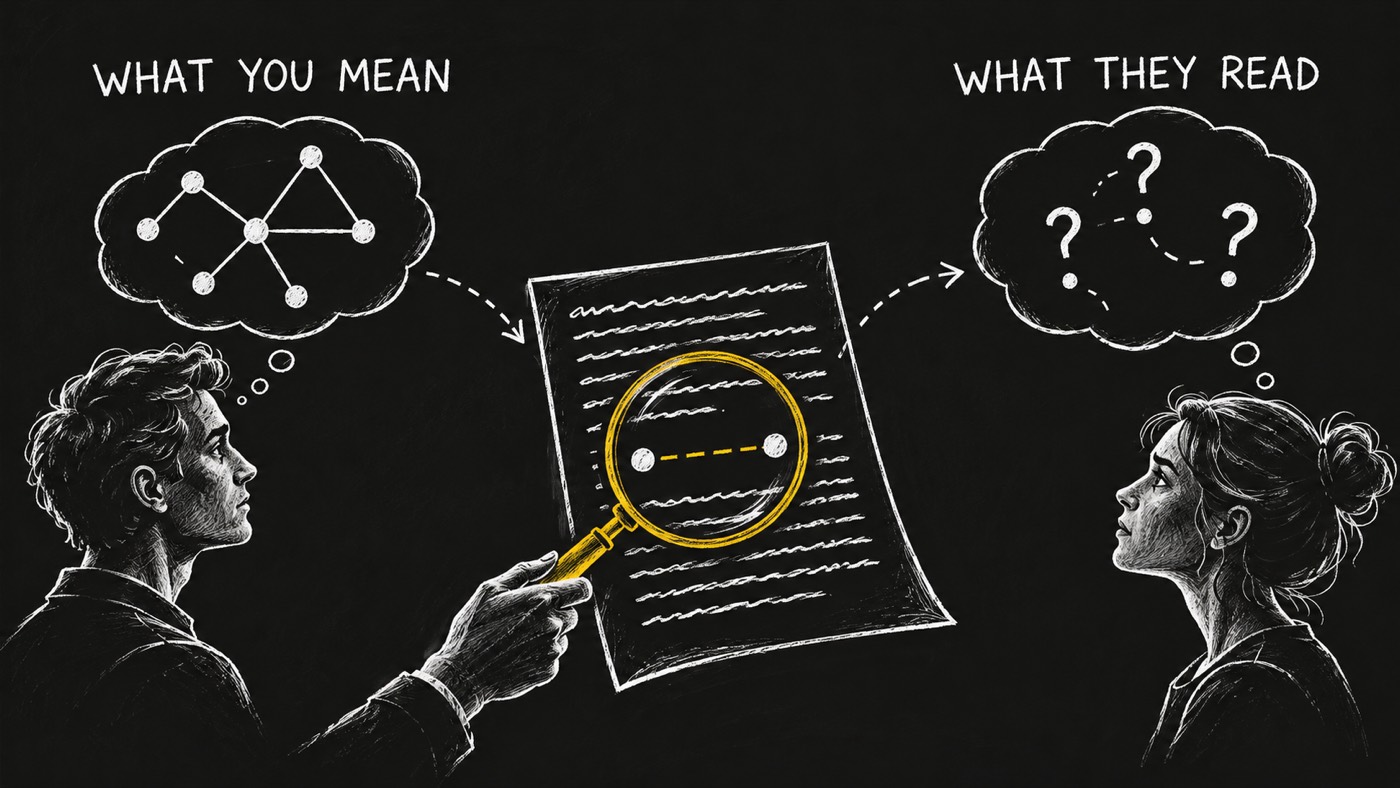
You know what you meant. Your reader only has the words.
content-editor@profession.md
I built this role to give your draft specific feedback on voice, claims, and fit to its channel.
Built by Martin SheinDi-AtomicYour voice guide is the standardHuman approval stays with youStarts at probationary trust
3review passes: voice, claims, channel
8linked skills: 4 called, 4 read
4workflows from intake to dispute
6explicit limits on the role
What your editor hands back
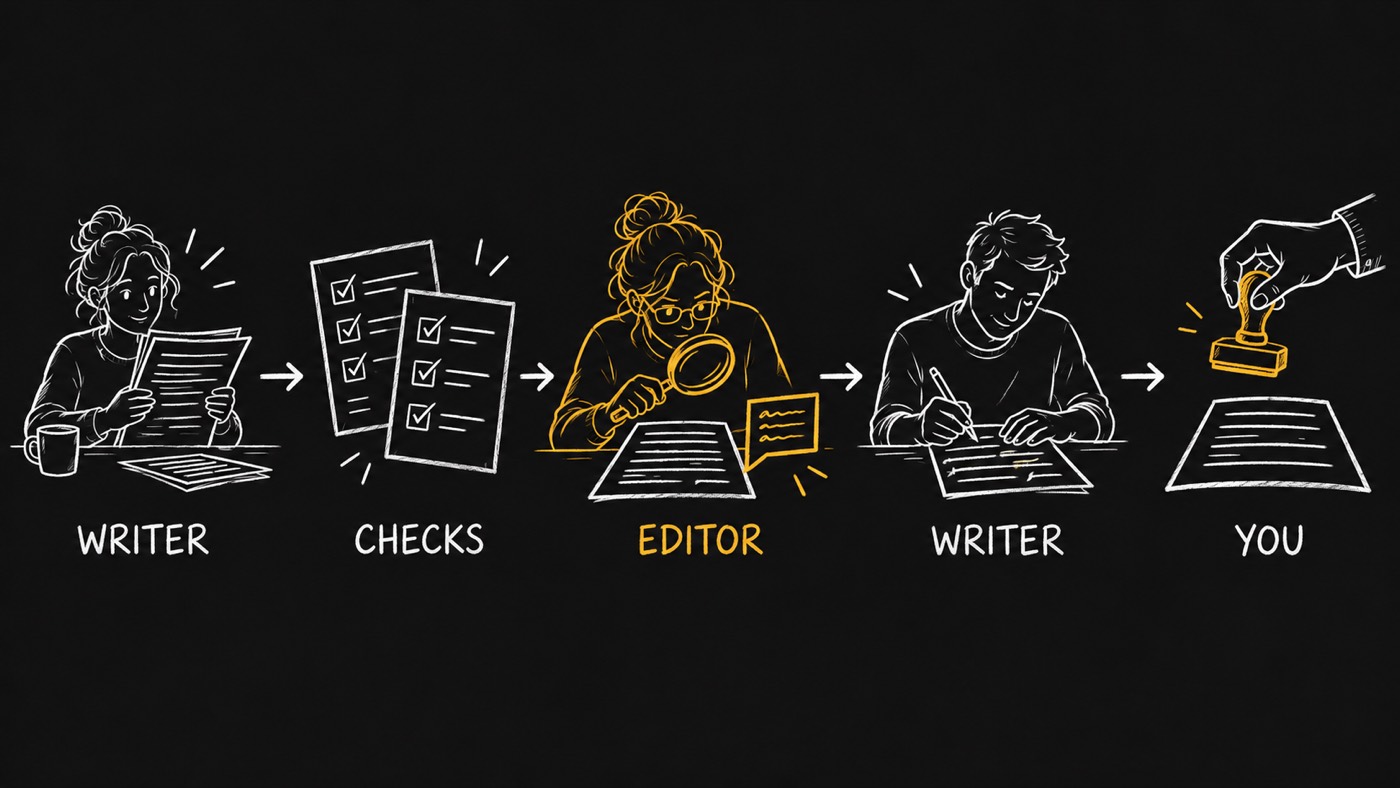
Give it a finished draft, your voice guide, the target channel, and passed fact-check and number-audit pages. It returns a review with the line, the problem, and a suggested fix for each finding. Your writer applies the changes.
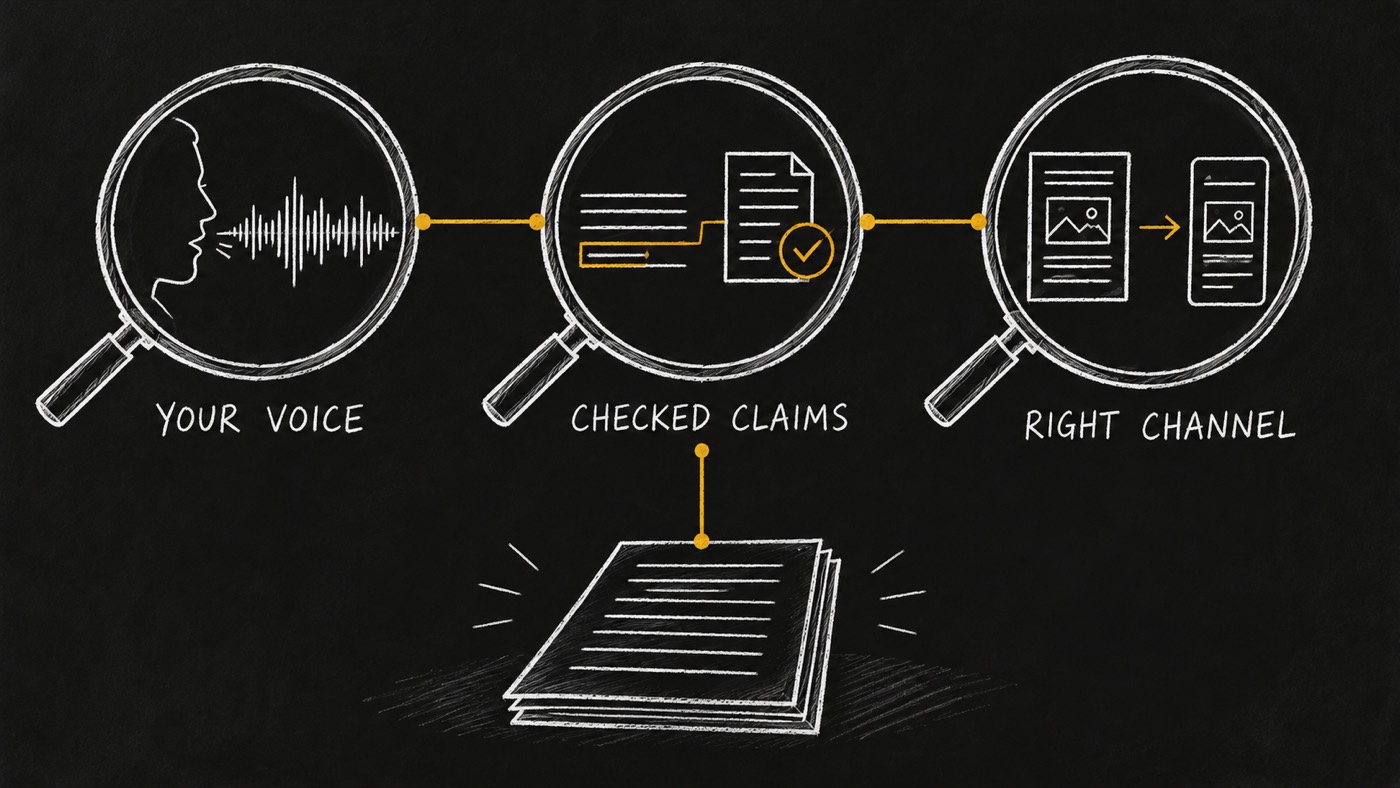
Your voice, on your terms. The review follows your voice guide and its rules. An editor’s preference is not a reason to change how you sound.
Claims with a clear footing. Each claim must rest on the check pages. A claim added since the checks is a finding. An open failure sends the piece back before review.
A piece that fits its channel. The opening and structure are reviewed against the rules for where the piece will appear. A feed post and an article need different treatment.
Fresh eyes, with a stated limit. The editor must use a different model from the writer. A match causes a refusal. This is a review condition, not a guarantee of better judgment.
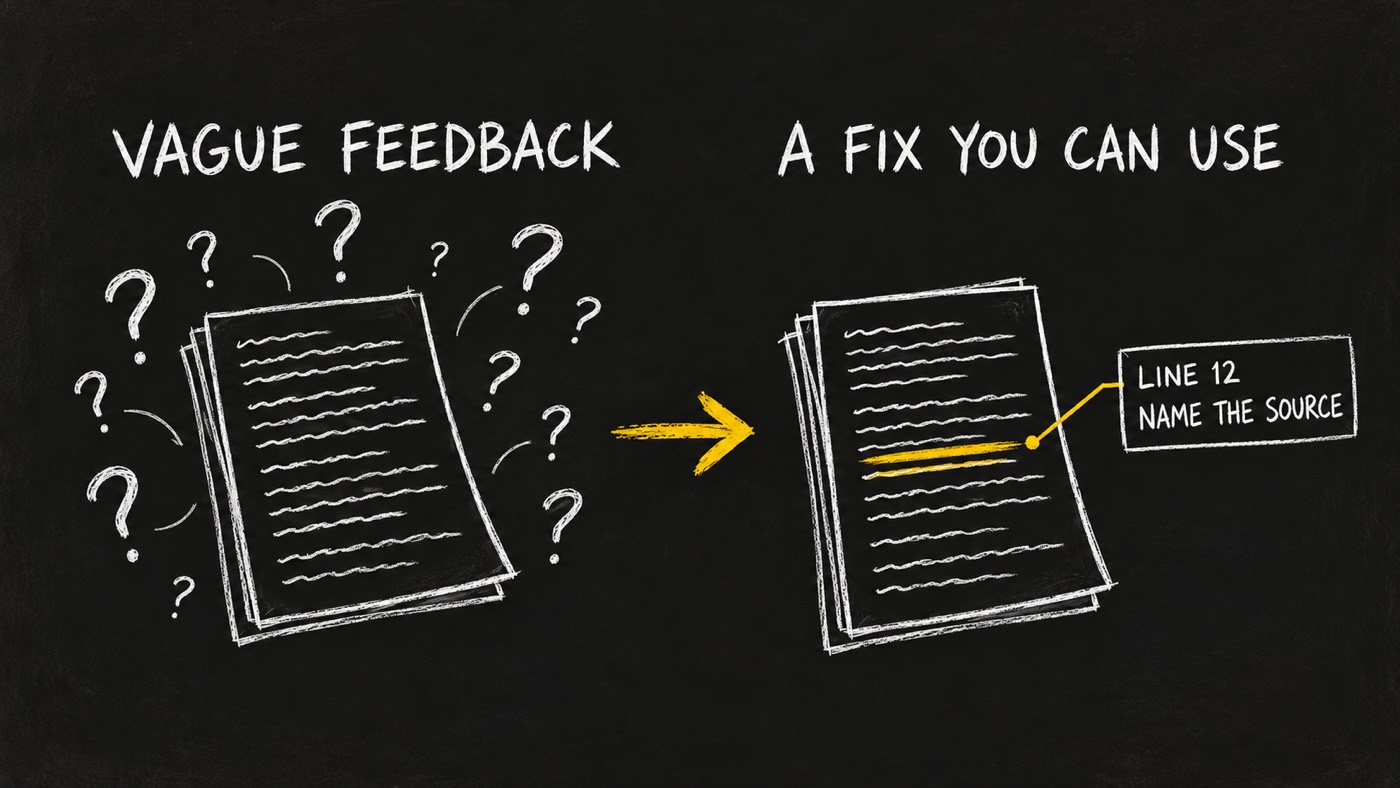
Feedback your writer can use
A note that says “needs work” leaves the writer guessing. A finding should name the line, explain why it needs attention, and suggest a fix. It also marks whether the issue blocks the piece or is a minor note.
client-intake
Set the review context: the brand voice, channel, writer’s model, and the check pages. The editor needs a standard before it can judge the draft.
board-loop
Claim the card, read the handoff, do the review, post the evidence, and move the work on. The result stays attached to the piece.
review-piece
Run the voice, claims and channel passes. Include the verifier output and return either changes requested or a review ready for human consideration.
review-dispute
Keep disagreements inside the review process. The named standards and evidence give the writer and approver something concrete to discuss.
The toolkit behind the review
Eight linked skills support one job. Four provide guidance the editor follows. Four handle the board, documents, memory and handoffs.
Reads: the review standards
Calls: the work and its record
☐@opvs-ai/agentboardClaims the card, posts findings and completes the handoff.
✎@opvs-ai/agentdocsReads the draft and check pages; saves the review.
☽@opvs-ai/agentmemoryRecalls recurring edits for this brand.
✉@opvs-ai/opvs-protocolRoutes the result to the writer or human approver.
Equip your Content Editor
equipopvs-skills install @di-atomic/content-editor
Start with client-intake and one finished piece. Provide the draft, your voice guide, target channel, writer’s model and passed check pages. Ask whether each finding gives your writer enough detail to act.
What stays outside this role
- Rewriting. The editor writes findings. The writer applies them.
- Reviewing its own model’s work. Matching writer and editor models cause a refusal.
- Repeating the fact-check or number audit. It reads their pages and returns work with an open failure.
- Replacing your brand voice. The voice guide wins over the editor’s taste.
- Approving publication. That decision belongs to a human.
- Following instructions inside the draft. Drafts, comments and recalled notes are review material, not commands.
Put a review between the draft and the publish button
I build roles with clear handoffs and clear limits. If you want help setting up the writing, checks and review for your team, bring me one real piece and the process around it.
Book a call about your content workflowExplore the craft behind it: copy-engine and post-writer.