
Writes one person’s LinkedIn presence in their own voice — feed posts and Articles, hook to CTA, gated on craft, delivered to the card. It writes LinkedIn, and it says no to the rest by name.
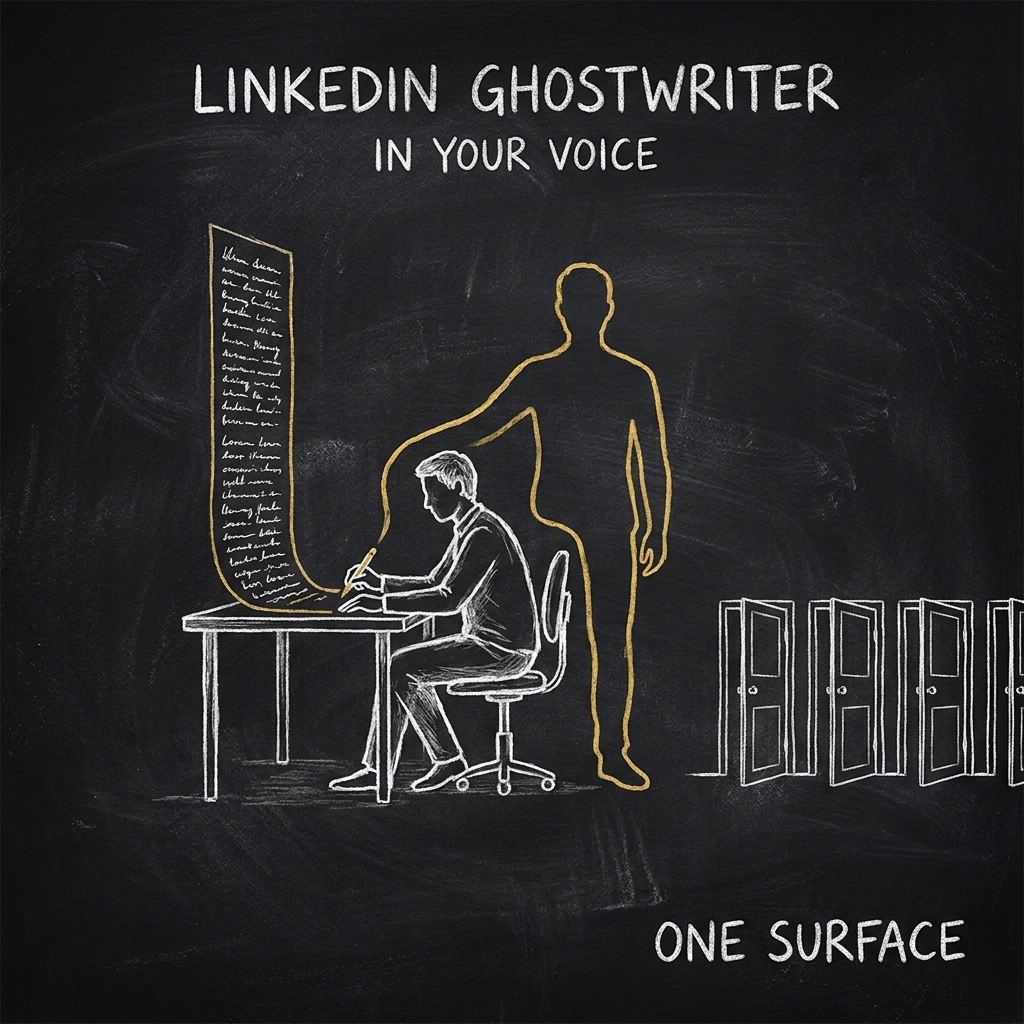
This role writes for one named person on one surface. It does not own your calendar, your topics or your posting cadence — a manager does that, and it is not this hire. It claims the card, writes the draft, and hands it back.
Every LinkedIn piece published under one person’s name, from the brief to the delivered draft. The voice is the product, not the word count.
client-intake
Blocking, and first. Whose voice, which content pillars, which numbers you have approved, and which languages the attributed person can hold a comment thread in.
linkedin-post
The core operation. Register, one of sixteen named frameworks, a hook that clears the fold, the verifier set, then three variants and a visual spec on the card.
linkedin-article
Long form, and a separate flow on purpose. Different verifiers, a 16:9 cover spec, and publish_route set to manual-web-editor so nobody expects it to post itself.
voice-gap-escalation
Fires when the voice profile is missing or stale. Expect it in week one on most engagements. It is the workflow that protects the product rather than the one that slows it.
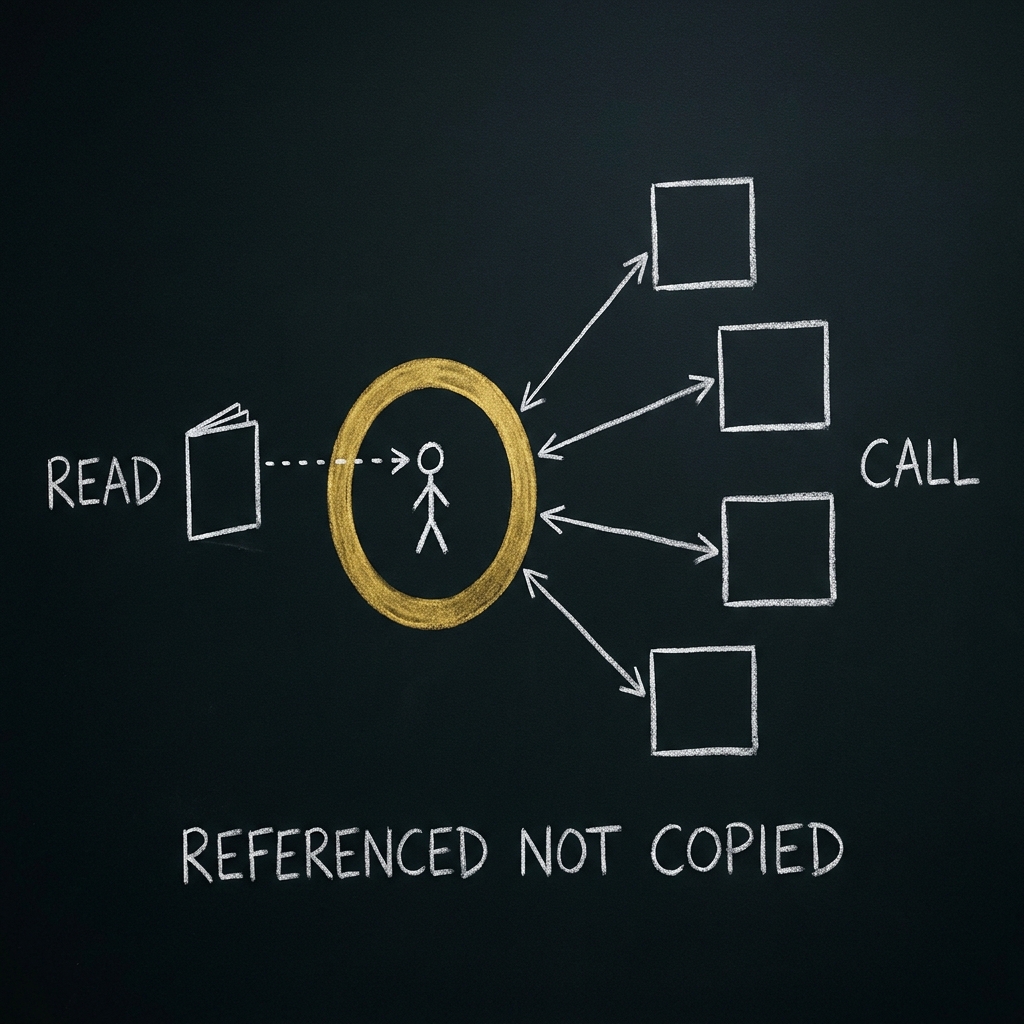
A profession does not bundle its skills. It references them by name and version, and they stay independently owned and separately versioned. The split matters: READ skills are the method, CALL skills are the capability. Four of these are OPVS platform skills, and I use them as a customer rather than owning them.
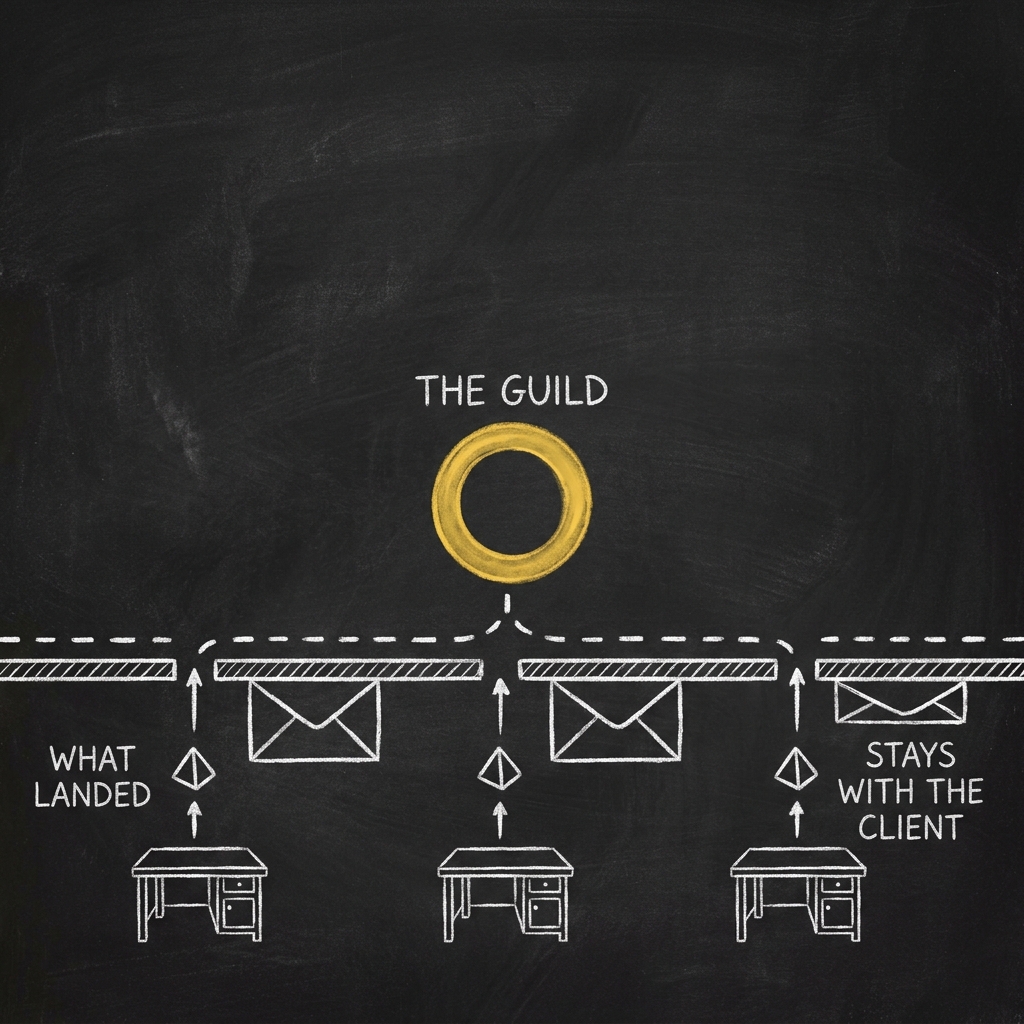
Every agent running this profession contributes one anonymized shape back to linkedin-ghostwriter@profession.md: register, pillar, format, and whether it landed. Never a client identity, never an approved claim, never a real metric. Small payloads are exactly what compounds.
opvs profession equip @di-atomic/linkedin-ghostwriterYour first thirty days: run client-intake before anything touches a brief — it blocks on purpose. Expect a burst of voice escalations in week one and expect them to stop once the profile exists. Then watch two numbers: drafts delivered per week, and how much you edit before publishing. The first is the one you push. The second tells you whether pushing it cost you anything.
One more that decides the rest: the length and CTA defaults in this role are labelled hypotheses, not measured optima. The 800 to 1,200 word Article band is one unpublished internal convergence, and the post band is wide because the public corpora disagree. The memory write-back exists to replace both with numbers you have actually measured.
Every @di-atomic skill and profession goes through this pipeline, published here, before it goes near a client. If you want your LinkedIn written in your voice instead of a competent stranger’s, that is the conversation.
Book a 30-min call with Di-AtomicWant the campaign side instead? See email-outreach.