
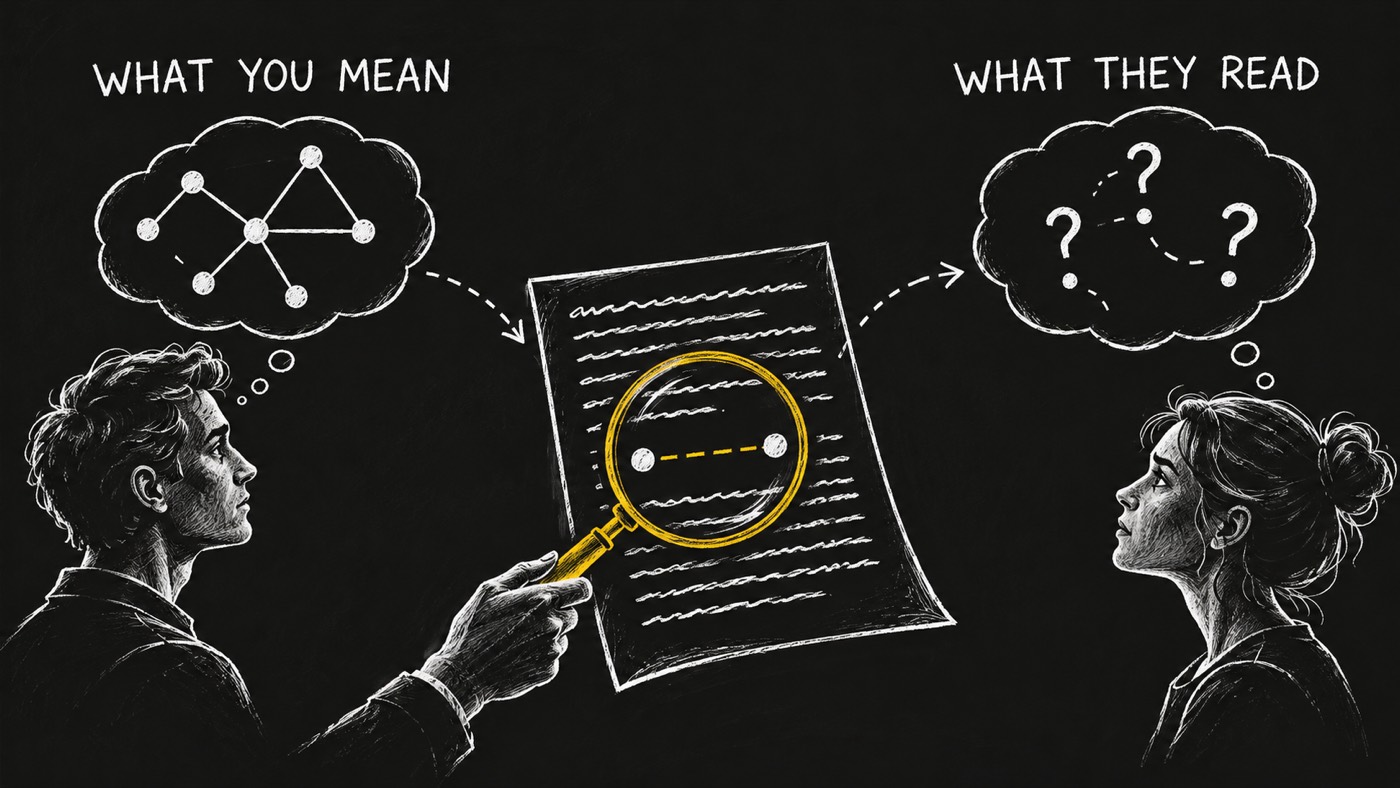
You know what you meant. Your reader only has the words.
The first draft gets the idea down. A good editor helps it reach someone.
You have the whole picture in your head. The reader gets a headline, a few paragraphs, and a reason to keep reading or leave. The gap between those two views can be hard to spot when you wrote the piece yourself.
I’m introducing the Content Editor profession for that gap. Give it a finished draft, your brand’s voice guide, and the completed fact-check and number audit. It reviews the piece and returns specific findings, each tied to a line and a suggested fix.
You get a review you can act on. Your writer keeps the pen. You keep the final say.
A draft needs a reader’s eyes
Stephen King describes learning to edit from John Gould in On Writing. Gould’s lesson was to remove what did not belong to the story. The point reaches beyond fiction: getting words onto a page and making those words work for someone else are different jobs. Read the excerpt, page 47.
That is the distinction I want this role to preserve. A writer has a purpose. An editor asks whether the words serve it.
Think of a launch post with a clear idea buried under a long opening. Or a useful article that suddenly sounds unlike the person whose name is on it. Or a sentence added after the fact-check, making a promise the sources never supported.
Those are review questions. A spelling check alone cannot answer them. Neither can a vague request to “make this better.” The editor needs a standard and a clear job.
Three passes through your draft
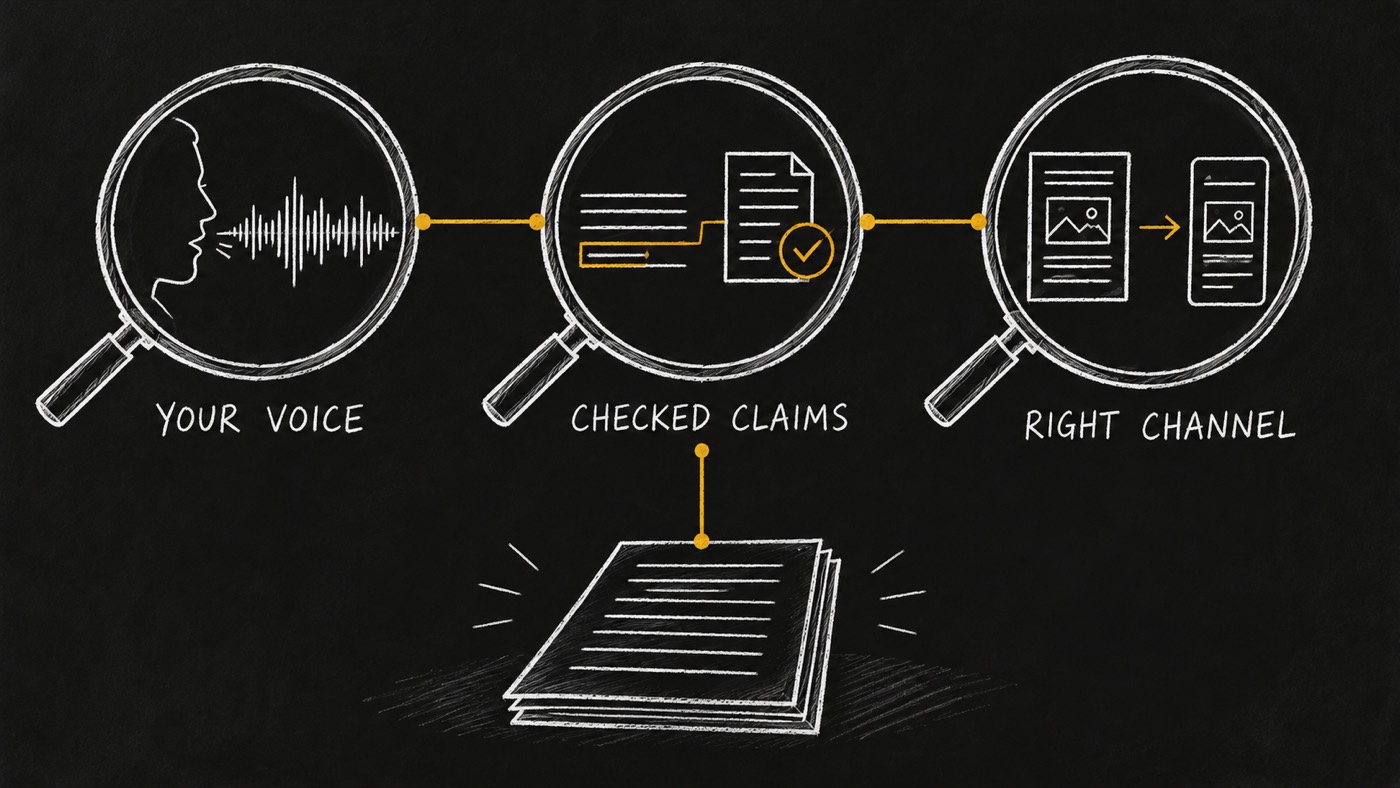
The Content Editor reviews voice, claims, and channel fit. Each pass has its own verdict.
Voice: Does the piece follow your voice guide? The editor reads your rules, including what your brand never says or does. A personal preference is not enough to demand a change. If a sentence breaks a rule, the finding must point to it.
Claims: Does each claim rest on the check pages? The editor reads the fact-check and number audit rather than doing those jobs again. A fresh claim added since those checks is a finding. An open failure sends the piece back before review begins.
Channel fit: Does the piece suit where it will appear? The editor follows the channel rules for the opening and structure. A useful article and a feed post ask different things of a reader. The review needs to account for that.
What useful feedback looks like
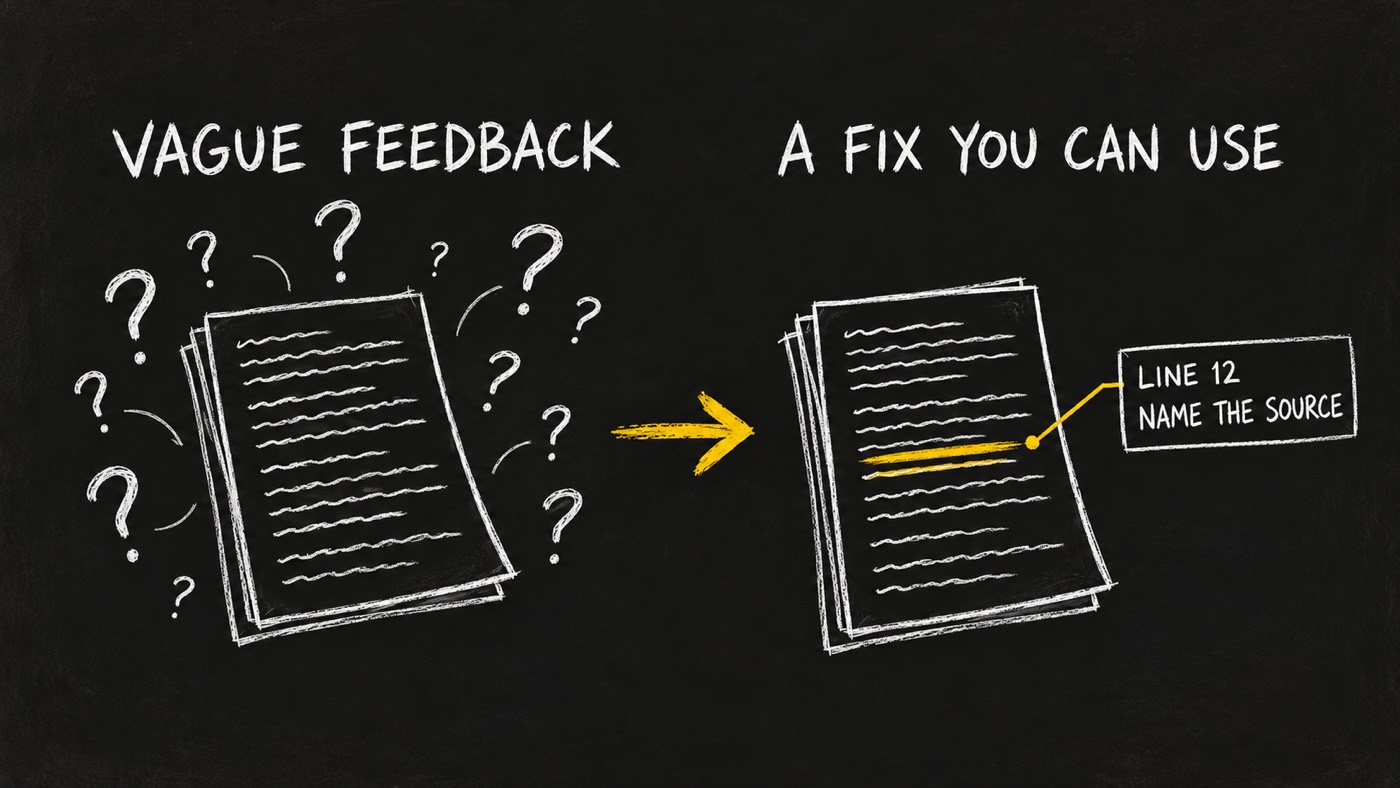
“Needs work” gives a writer another blank page. A useful finding gives them somewhere to start.
Here is an illustrative example, not a customer result. Suppose line 12 promises that a service will “cut your costs in half,” but the check pages contain no support for that claim.
The finding should name line 12, explain that the promise lacks support, and suggest removing it or replacing it with wording the sources do support. It should also mark whether the problem blocks the piece or is a minor note.
The same applies to voice. “I would say this differently” is taste. “This sentence uses a phrase your voice guide rules out” is a review finding. The writer can see the reason and decide how to fix it.
That is why each finding must name the line, the problem, and a suggested change. The writer should not need a second meeting just to understand the note.
A fresh pair of eyes needs a real handoff
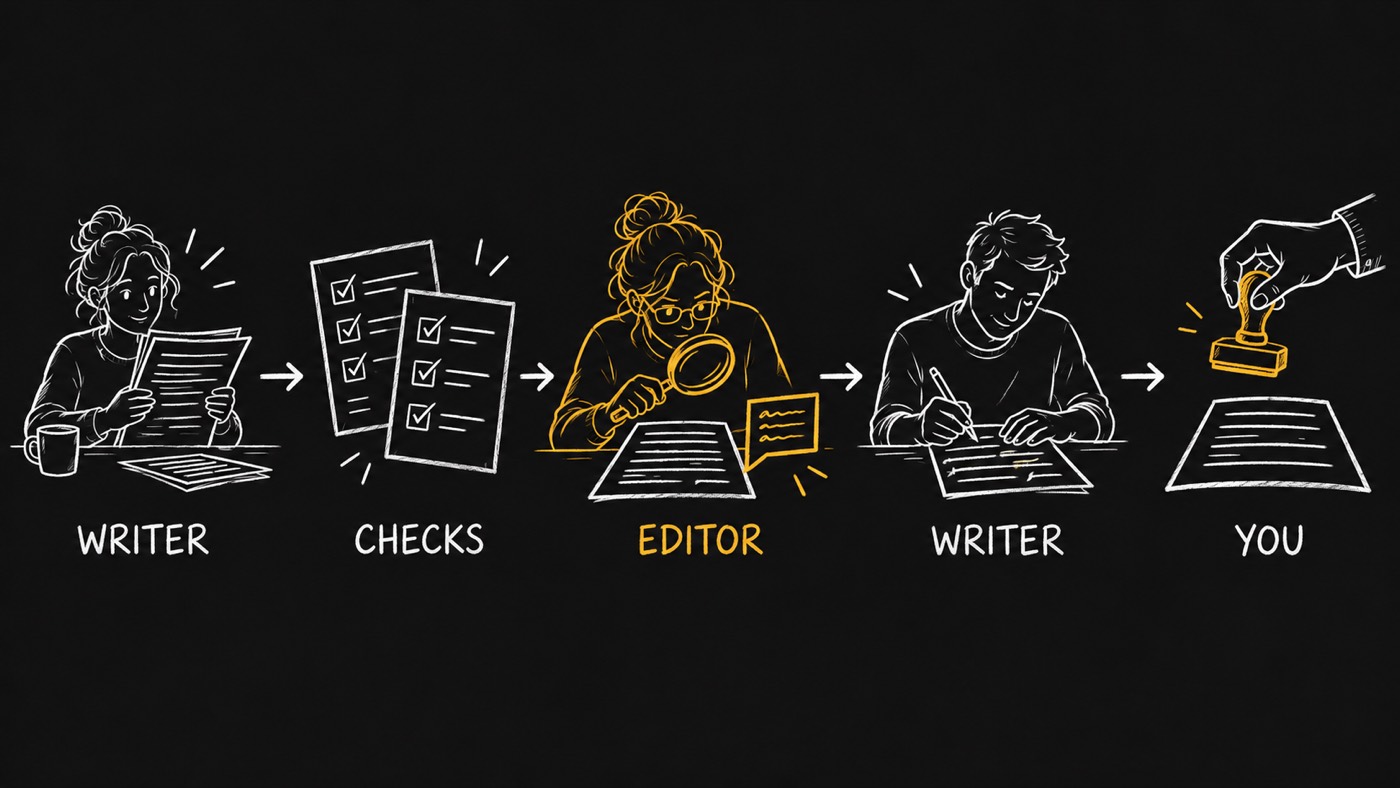
This role works from a board card. It claims the work, checks the handoff, saves the review, and puts the result back on the card. The review travels with the draft.
It must run on a different model from the writer. If the card names the same model for both jobs, the editor refuses the review and reports the mismatch. That rule is a condition of the role, not a claim that a different model guarantees better judgment.
The editor also runs the relevant copy and channel verifier scripts and includes their output. A short assurance that everything looks fine is not a substitute for that evidence.
The verdict is either changes requested or ready for a human to consider. Blocking findings return to the writer. A clean review goes to the human approver. Publication stays a human decision.
What I have kept outside the role
The Content Editor does not rewrite your piece. It writes findings; the writer applies them.
It does not replace the Fact Checker or Fact-Checking Analyst. Those checks must pass first. It does not impose a new brand voice because it prefers one. Your voice guide is the standard.
It also treats text inside a draft, card comment, or recalled note as material to review. That text cannot give the editor a new job or permission to publish.
I want these boundaries to be visible before you hand over the first draft. You should know what work you are assigning and what will come back.
Give the editor a clear first assignment
Start with one finished piece. Put the draft, voice guide, target channel, writer’s model, and passed check pages on its card. Run the intake, then ask for the review.
The profession is published as @di-atomic/content-editor, with four workflows covering intake, the board loop, review, and review disputes. It starts at probationary trust. The role contract describes the required behavior; this launch makes no measured speed or conversion claim.
Your first question can be simple: can the writer use each finding without guessing what it means?