
LinkedIn Researcher: the hidden champion behind your next article
The agent behind a good article often gets no credit.
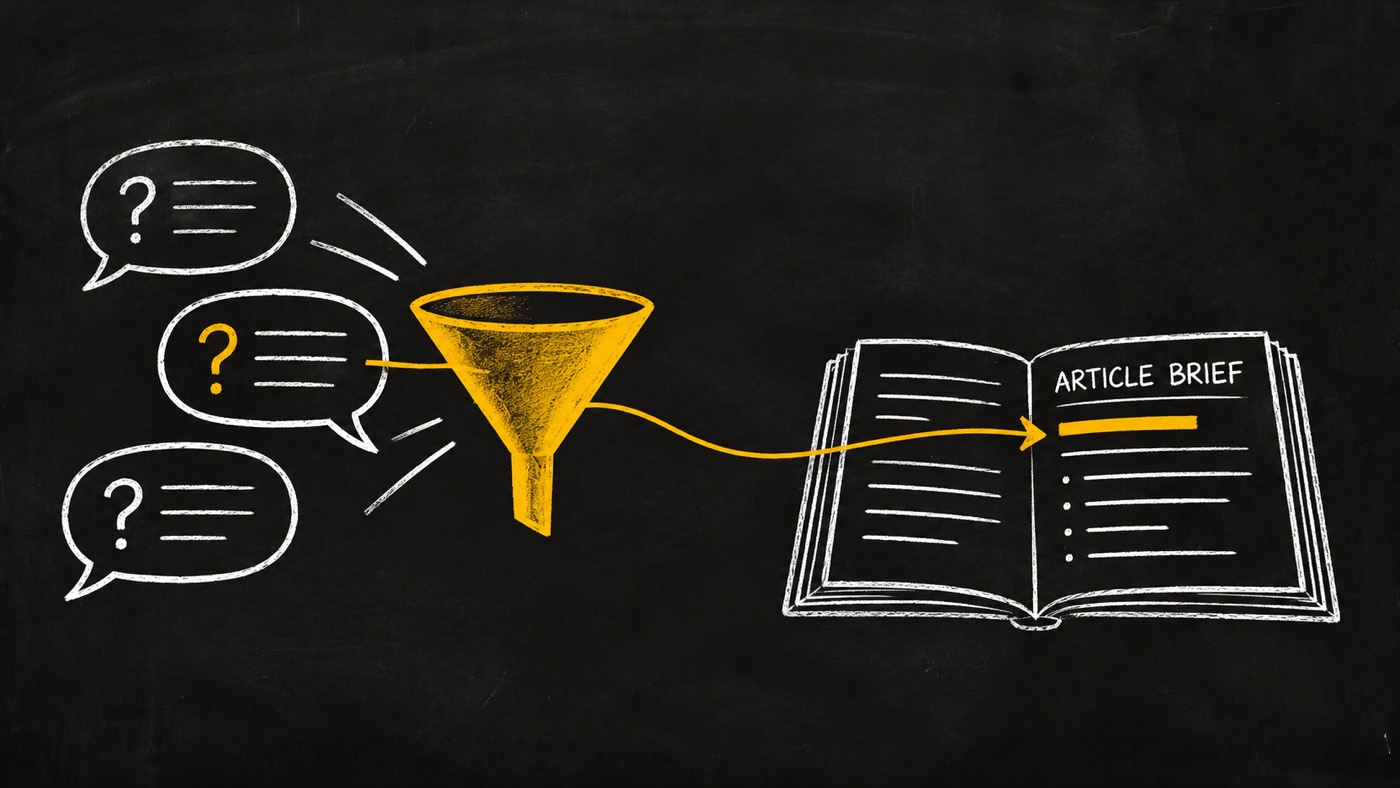
It finds the question worth answering. It reads the comments. It checks whether a quote exists, whether a date fits and whether two findings came from the same person.
Then it gives the writer a small, useful brief.
I call that agent the hidden champion.
That is the role I designed LinkedIn Researcher to fill. I want a specialist that keeps the research work moving while the main agent holds the purpose of the article. The writer should spend its attention on the argument, the reader and the words.
Your main agent has an attention budget
Ask one agent to run the whole job and its working context grows with every step.
The brief sits beside search results, failed calls, long posts, repeated comments and rough notes. Somewhere in that pile are the few passages the article needs.
The main agent can do research. The question is how much raw research belongs in the context where it must also write.
Anthropic's context-engineering guide treats context as a finite resource that needs careful selection. Its research-system account describes workers exploring sources in separate contexts and returning condensed findings to a lead agent.
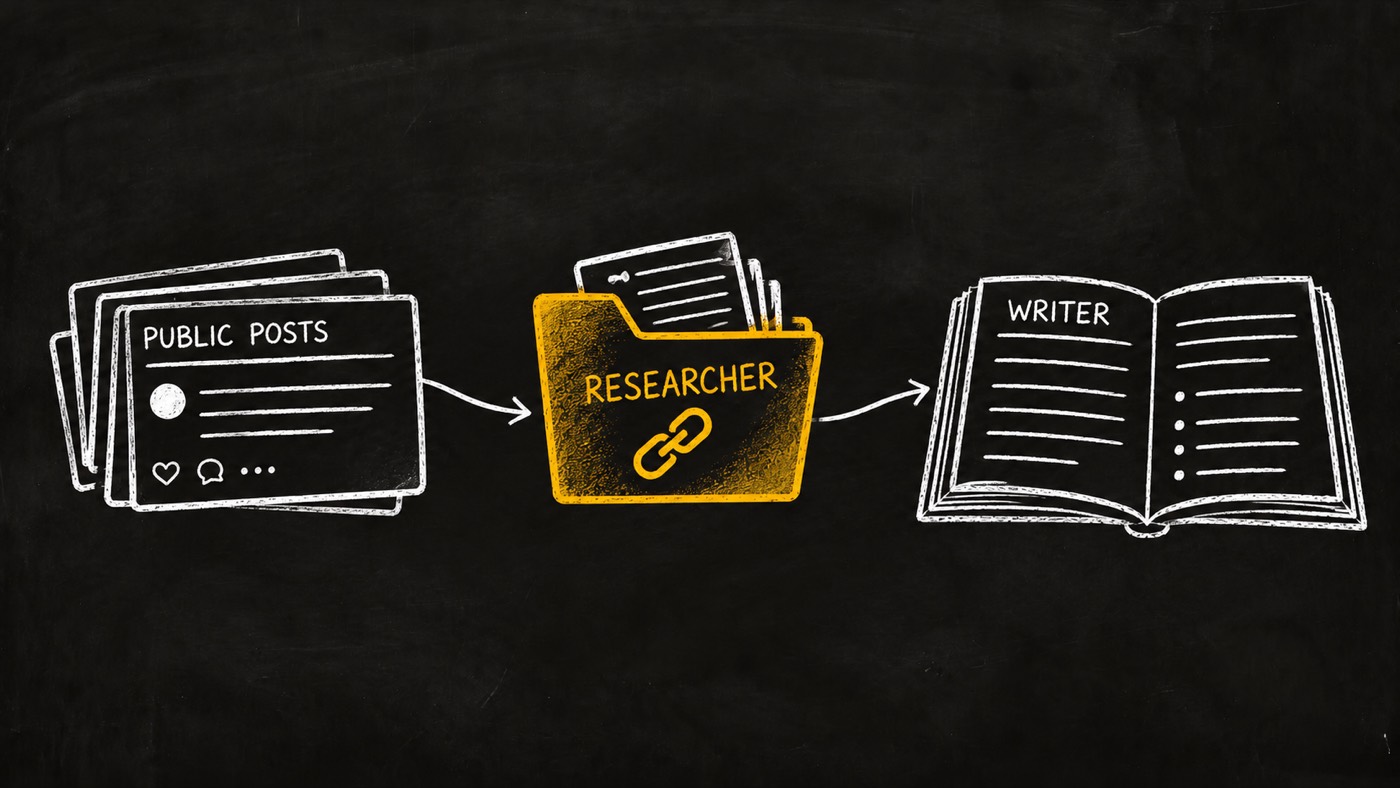
I apply that principle to the article workflow: keep the search trail with the researcher. Give the writer the evidence it needs and a way to inspect more.
The expensive model should earn its place
I want the research worker to use an economical model that has passed the task's checks.
Much of its work is concrete: fetch a declared source, preserve a passage, extract a date, spot a repeated URL and fill a known record. A stronger model can handle the harder synthesis and writing when that work needs it.
Price alone tells me very little. A cheap worker that drops caveats or invents a quote creates more work for the writer.
My rule is to test the least costly candidate against the research job, including broken and incomplete inputs. Escalate when it cannot meet the standard. I have not yet established a winning model or a measured saving for this skill.
The model must be good enough for the work. The workflow must make its mistakes visible.
Reliability lives in the routine
An audience researcher needs habits that survive the next assignment.
A useful question may have no reactions. A popular post may have little to say about the buyer's problem. An unavailable count must stay unknown. A failed request must stay a failed request.
LinkedIn Researcher carries those distinctions into its recipes. It covers audience language, topic discussion and specific public posts. Its five read methods expose search, post detail, company feeds, credit balance and available video transcripts.
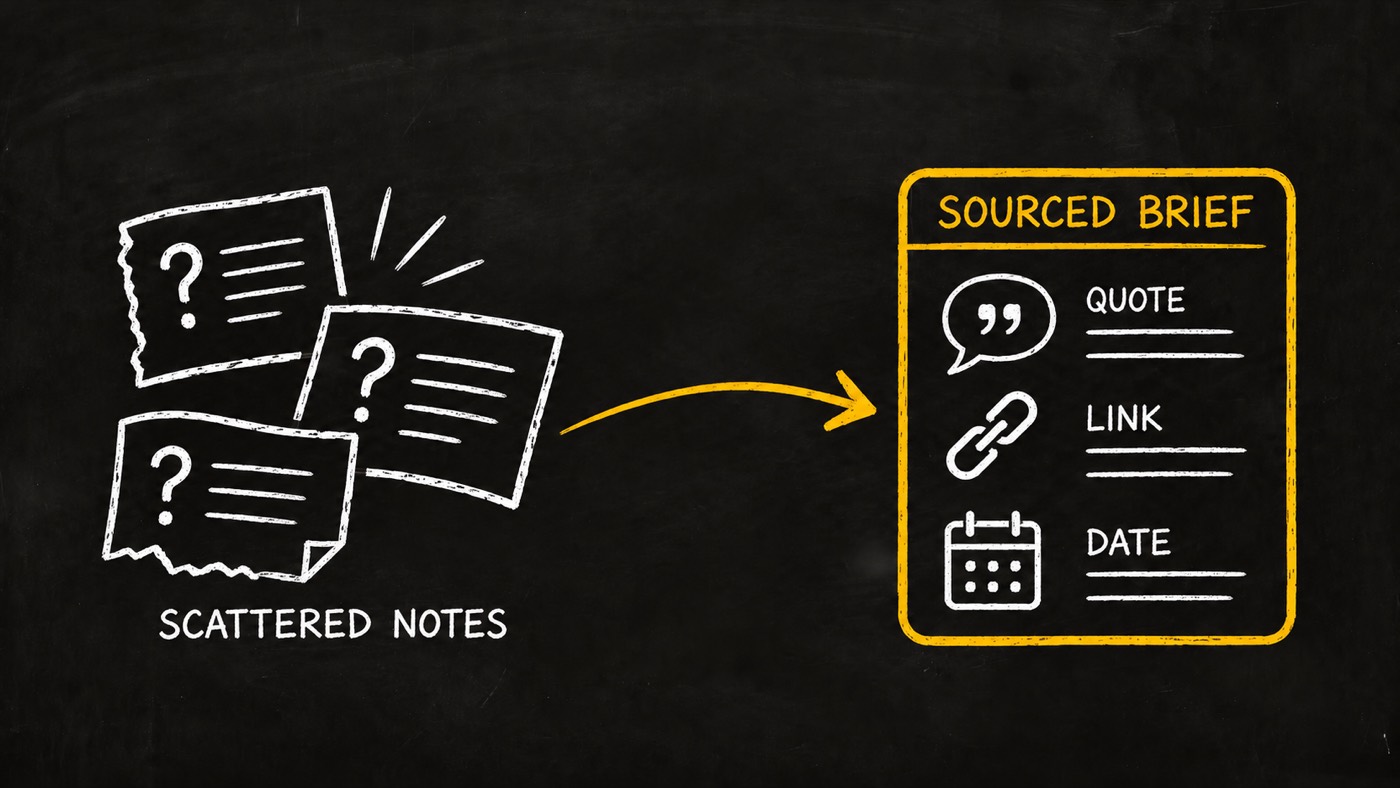
The researcher preserves questions, objections and workarounds with their sources. It keeps opposing evidence and reports thin coverage instead of filling the brief with plausible claims.
That is the experience I want to retain: procedures and reusable lessons that the next run can load. It does not require a model to learn new weights between assignments.
Verification scripts give the craft a memory
“Check your work” leaves too much to chance.
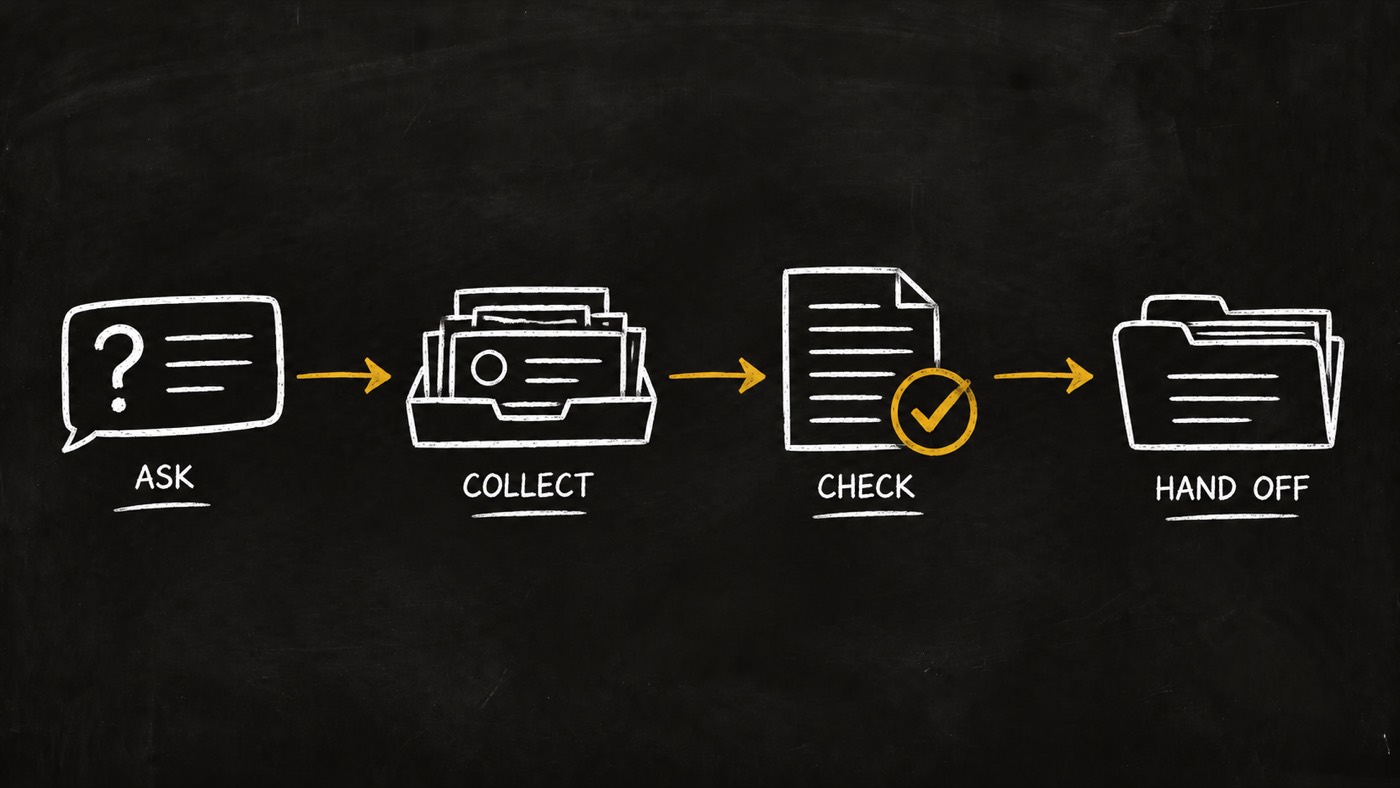
The skill includes separate gates for evidence and run receipts. The evidence check inspects saved captures, excerpt hashes, source identities and links. The receipt check inspects the recorded run against its limits and required proof.
Each gate can report PASS, FAIL or CANNOT. A missing receipt does not become a successful run because the prose reads well.
Those checks also have limits. They cannot decide whether a question deserves an article. They cannot prove an external budget reservation or worker isolation from a self-reported field.
The writer and reviewer still need judgment. The scripts give them a defined record to judge.
A research request should end in a usable handoff
Suppose I want to explore this question:
What do small content teams ask about checking AI article claims?
I give the researcher the audience, exact source dates, allowed sources and approved budget. It gathers within that scope, reads the passages and selects supported findings.
The skill's handoff policy allows at most five selected findings and a measured 1,200-token return. The larger evidence record stays in configured storage. Further retrieval is explicit and bounded.
Those are design limits, not measured savings. Their purpose is clear: the writer receives a brief it can use without inheriting the whole search session.
Why I want a dedicated specialist
A one-off delegation can start with little more than “research this.”
A dedicated research role can arrive with source knowledge, tested recipes, verification scripts, retained lessons and a known handoff. That is a stronger starting point for repeated work.
I value that accumulated craft more than a fresh worker with a clever prompt.
A subagent can carry the same craft and use its own context. I am not claiming that the word “dedicated” makes an agent more capable than every subagent. The advantage I want comes from maintaining the specialist's tools and standards across assignments.
Keep the role working, keep each run bounded
I want research to be an ongoing responsibility in the content operation. New questions should have somewhere to go, even while the writer is working on another piece.
That requires a queue, an operator and controlled runs. Every assignment still needs a question, a budget, a source window and a stopping point.
The published skill does not start a background worker or promise uninterrupted uptime. Its hired-agent test remains due when a product carries it. Runtime isolation, spending controls, retention and model choice still need proof from that run.
“Reliable all the time” is the standard I want the operation to meet. It takes repeated tests, visible failures and ownership to earn it.
I want the main agent to stay focused enough to make a good decision. I want the researcher to bring it evidence worth using.
The hidden champion earns its place every time the writer can follow a finding back to its source.
Explore LinkedIn Researcher and give your next article a question worth answering.