
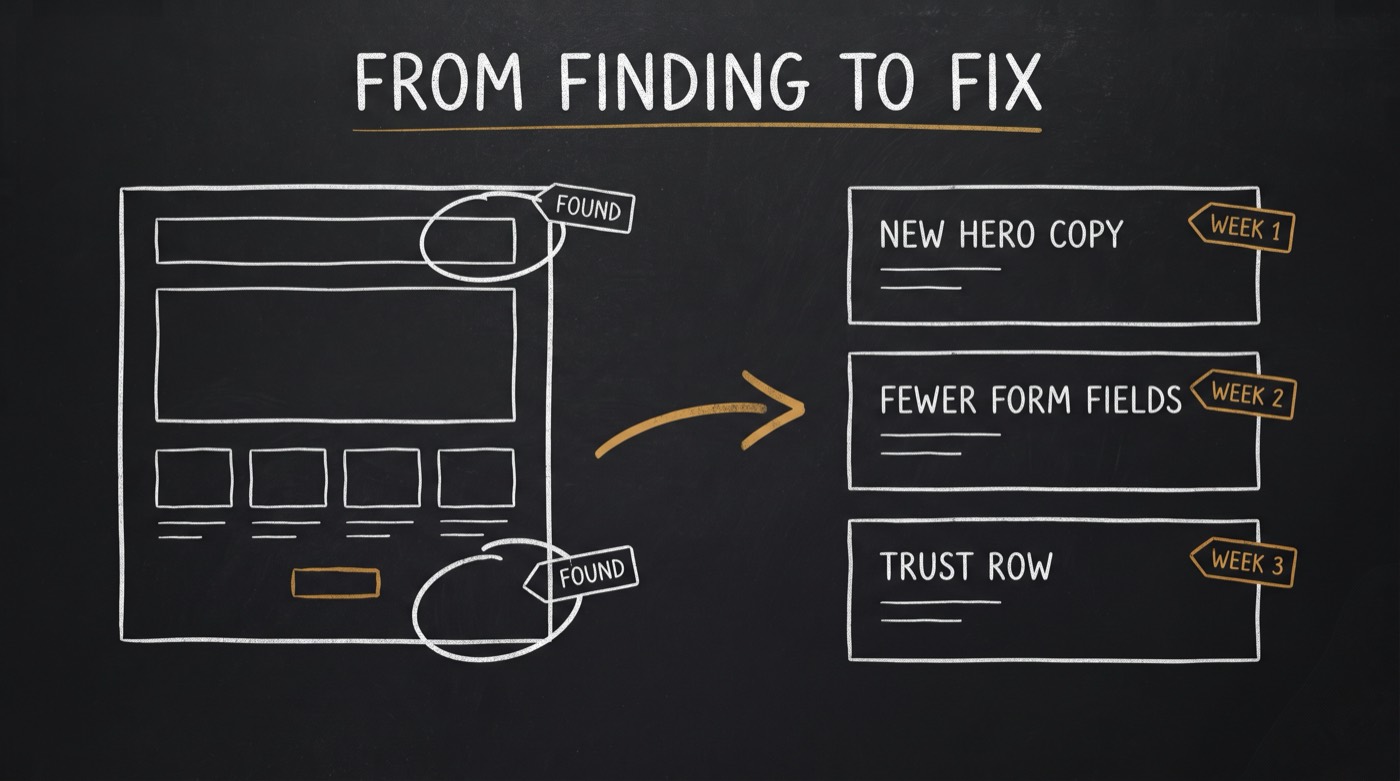
My audit found what was broken. Then everyone stared at the list.
Cutting a signup form from 11 fields to 4 lifted conversions 120%. Cutting a different one from 9 fields to 6 dropped them 14%.
Both numbers are real. Both are published. For a while I was quoting whichever one suited the slide I was building.
That is most CRO advice: somebody else's result, abstracted until every detail that made it true has been stripped out, then handed back to you as a rule. "Reduce form fields" is not a rule. It is a thing that happened twice, in opposite directions.
I already had a skill that finds what is broken on a page. What I did not have was the harder half — deciding what to actually do about it.
The list nobody can act on
Here is how it went before. My auditor scores a landing page and hands back a ranked list: the hero is weak, the form is too long, the pricing page is confusing.
Then everyone stares at the list.
Which one do we fix first? What exactly do we change the hero to? Will it actually work, or are we about to spend a sprint on a coin flip? How long does it take?
The list answers none of that. So the meeting fills the gap the way meetings do, with a best-practice dump. Add social proof. Shorten the form. Make the CTA stronger. Everyone nods, nobody can start on Monday, and three weeks later the page is exactly the same.
A finding is a diagnosis. It is not a plan.
An action names four things, or it is a vibe
So I built @di-atomic/cro-actions around a refusal. It will not emit an action unless that action carries two things: real evidence, and a real target.
Evidence means a source-cited measured lift, or an explicit flag saying this one is unverified best practice. Target means a named component you can install, or a specific content edit with a named owner. No evidence and no target is not an action. It is a vibe with a Jira ticket.
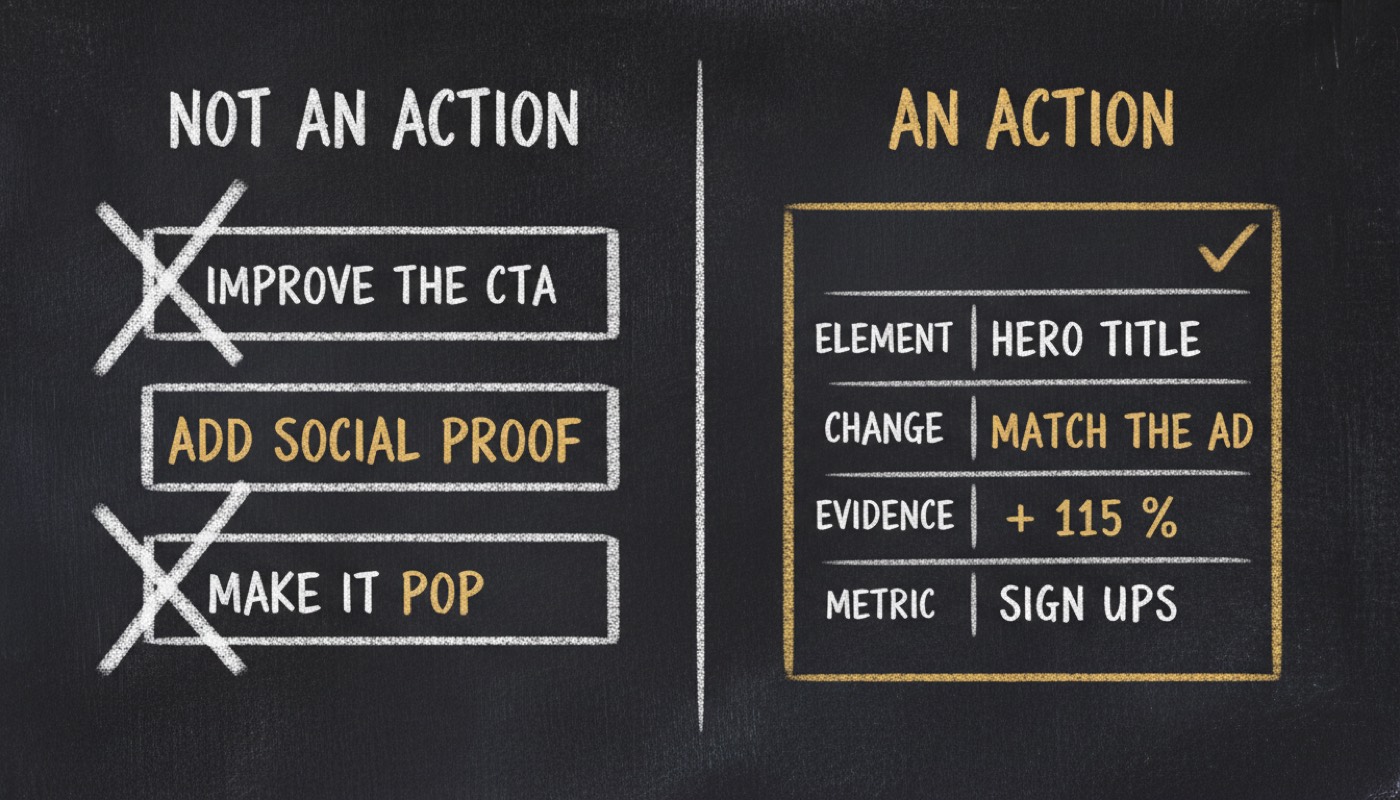
Three scripts enforce this on every plan, and they fail loudly with numbers rather than opinions.
The first rejects any action without a cited metric, and caps a whole plan at 20% unverified. The second grades each effort estimate against its change-type band, so "rebuild the checkout" cannot quietly be filed under hours. The third lints for empty verbs. "Improve the CTA" fails that one every time, because it names no element, no change, and no way to tell afterwards whether it worked.
I ran my own early drafts through these. Several failed. That was the point.
Three lifts do not make one big lift
Here is the mistake I most want to stop making, because it is the one that survives contact with a spreadsheet.
You find three fixes. One is worth 12%, one is worth 9%, one is worth 6%. It is very tempting to write 27% in the projection column and take it to the client.
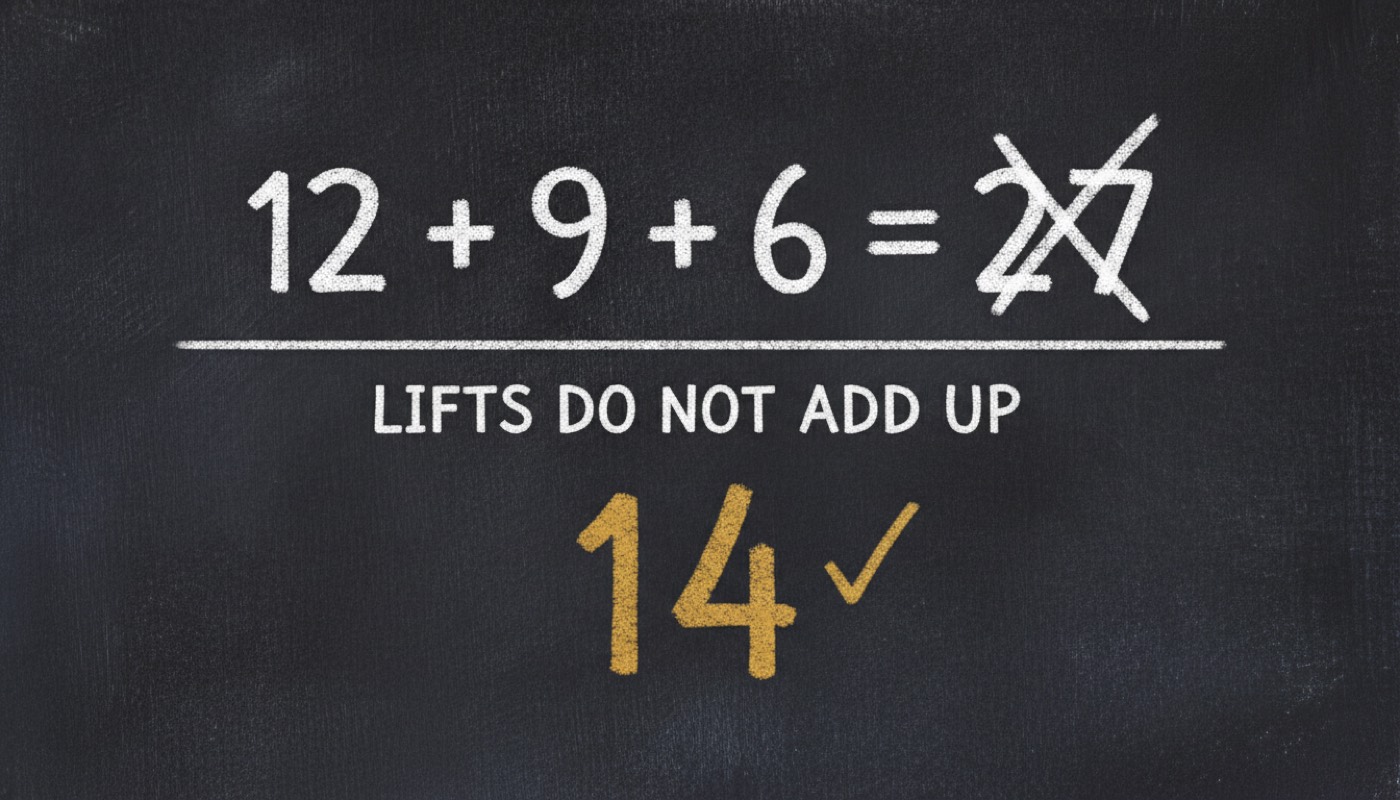
They do not add up. The effects overlap, because they are all acting on the same visitors and the same attention. A clearer headline and a shorter form both work partly by reducing the same hesitation, so you cannot bank each one in full.
So the skill never sums lifts into a bundle number. Projections stay per-action and conservative. It also refuses to stack more than a handful of new components on a single page, because the gain flattens out and the components start competing for the same screen.
Under-promising here is not modesty. It is the difference between a client who trusts the next plan and a client who does not.
Effort has bands
The other thing that quietly wrecks a prioritized list is a fantasy estimate. Rank by impact divided by effort, then get the effort wrong, and the whole order is wrong.
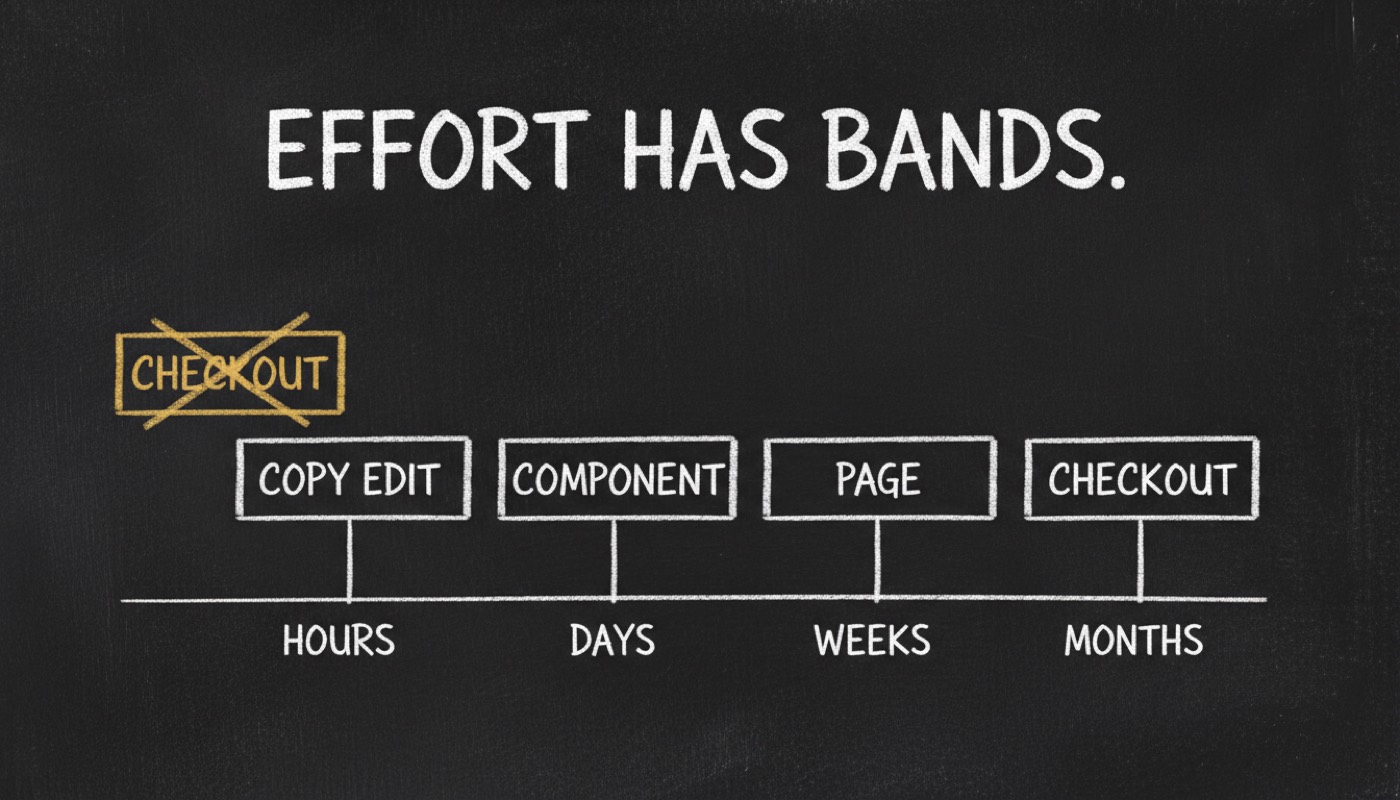
Copy edits live in hours. Installing an existing component lives in days. Rebuilding a page lives in weeks. Reworking a checkout lives in months. When an estimate lands two bands away from where its change type belongs, the script rejects it and the plan comes back for another pass.
What it does not do
It plans. It does not build.
That separation is deliberate and I enforce it in the skill itself. cro-actions decides and sequences, then hands each fix to whatever ships it: the site builder installs the component and deploys, the copy skill writes the words, the design skill rebuilds a layout, the media skill renders the assets. Afterwards a third skill reads the result and decides whether the win was real.
That is the whole chain, and it now runs end to end. One skill finds it, one plans it, one checks it. I had the first and the third live for weeks with a hole in the middle, which meant the part everybody actually argues about in the meeting was the part I had automated least.
On regulated pages there is one more refusal. No manufactured urgency, no invented scarcity, no social proof that is not backed by real data. For a chemicals client that is not a style preference, it is exposure.
Where it is
Live on the OPVS marketplace as @di-atomic/cro-actions. It ships with 32 action blueprints, each one carrying its own source and its own measured lift, plus 7 fix recipes, 10 learnings and the 4 scripts that gate the output.
Ask it "what should I fix first" and it will not tell you to make the CTA pop.