
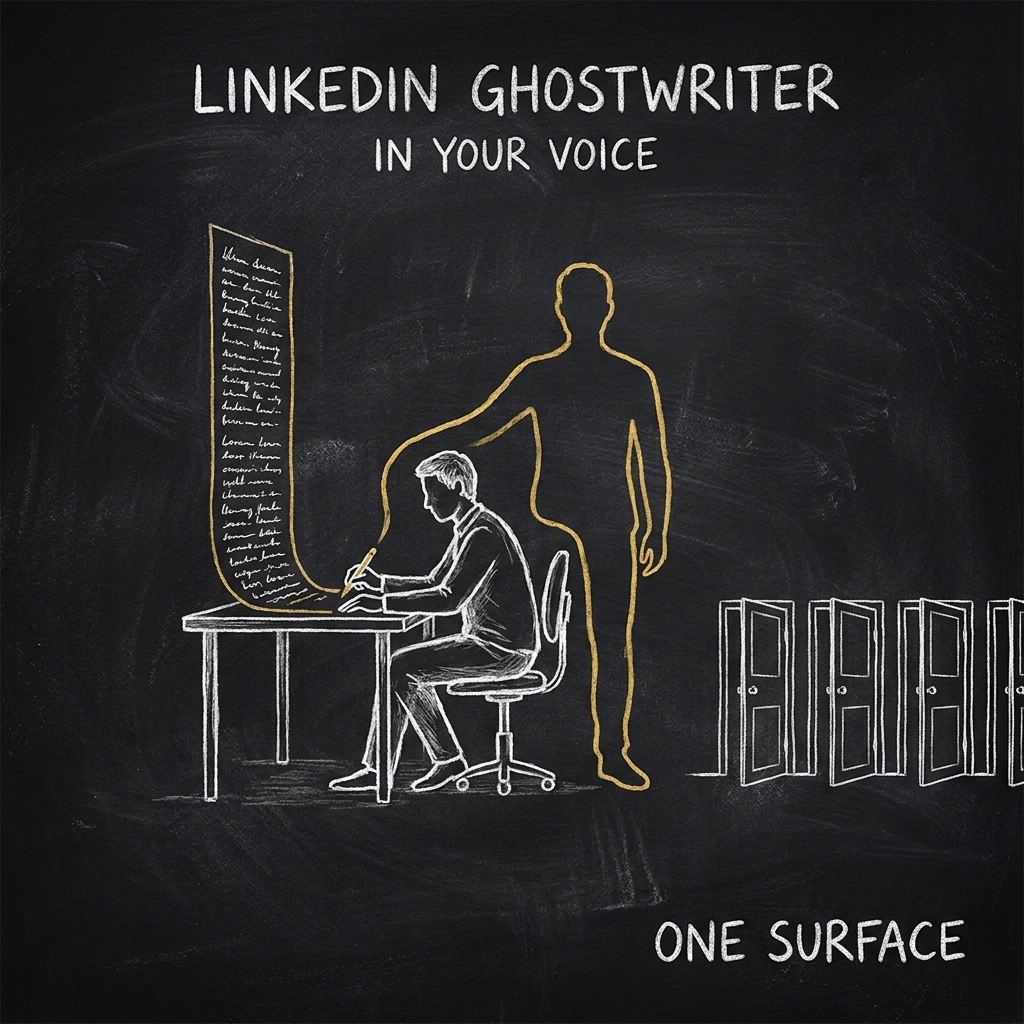
Get 3 LinkedIn drafts in your voice from one specialist hire
Most founders searching for a LinkedIn ghostwriter are frustrated with tools that write posts nobody believes came from them. The words are fine. The register is wrong. Anyone who has met you can tell in two lines.
I built a role that fixes that specific thing, and I have just opened it for hire.
@di-atomic/linkedin-ghostwriter is live on the OPVS marketplace at v0.1.0. It is a profession, not a writing tool. You equip it once, and your agent stops being a generalist that will write anything and becomes a specialist that writes your LinkedIn and refuses everything else by name.
Specifically, you get three drafts per brief, in your register, with the verifier numbers attached and the visual specified. Here is what is inside it.
Who this role is for
You, if any of this is true:
You know LinkedIn is where your buyers are, and your profile has been quiet for four months.
You have tried an AI writing assistant and quietly stopped using it, because the output sounded like a press release wearing your photo.
You are an agency delivering LinkedIn for clients, and the bottleneck is not ideas. It is drafts per week per client.
You already pay a human ghostwriter and want the first draft to arrive before the call, not after it.
It is not for you if you want one hire to cover every platform. That is the whole point, and I will get to why.
What you hire when you equip it
A ghostwriter is judged on one thing: does the writing sound like the person whose face is on it. Not whether it reads well. Whether it reads like you.
So the first thing this role does is refuse to guess.
Before it drafts a word it reads your voice profile and your about-me page, and it checks that they describe the attributed person rather than the company. If they are missing, it escalates and the engagement waits. Most writing tools handle a missing voice profile by writing in a competent generic register and warning you in a log line nobody reads. That is correct behaviour for a library with many callers. It is unusable behaviour for a role that publishes under a named human's face.
Expect that escalation to fire on day one. Most people arrive without a voice profile. That firing is the system working, not the system failing.
The second thing it does is decide the artifact before the first sentence. A feed post and a LinkedIn Article are different products, not the same product at two lengths. They take different editors, different length regimes, different CTA rules, different cover specs, and different verifiers. Run the post verifier against a valid 850-word Article and it fails, correctly by its own logic and uselessly. The real damage arrives next, when an agent "fixes" the Article to satisfy the wrong instrument and destroys it.

Then it writes to what the surface actually rewards. Dwell time is the mechanism, and the hook is the only lever on it: 140 characters before the mobile fold, opening on a concrete number or a stakes confession. No link in the post body, because a link there suppresses your own distribution. The conversion CTA rides in a trailing PS instead. One engagement ask, one conversion ask, never two of either.
And it will not invent your numbers. Every figure in a draft resolves to your approved-claims page with its qualification still attached. Where you have no result yet, the piece ships without one and names the gap on the card.
The toolkit: five skills, referenced not copied
A profession does not bundle its skills. It references them by name and version, and each stays independently owned and separately versioned.
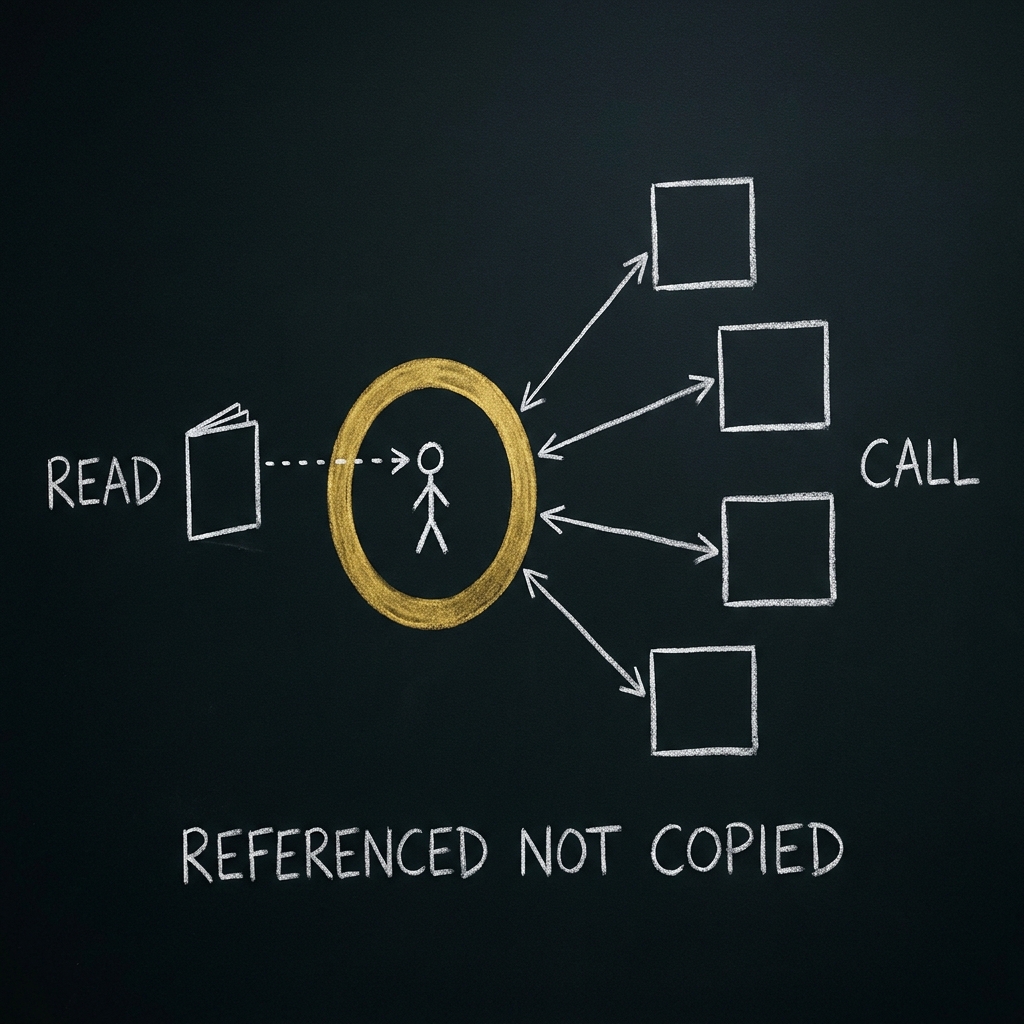
@di-atomic/post-writeris the craft. Two LinkedIn recipes, 16 LinkedIn frameworks, and four verifier scripts. It is read, not called: your own model executes the recipe.@opvs-ai/agentboardis the runtime. The card is where the brief arrives and where the finished draft is delivered.@opvs-ai/agentdocsholds your voice profile, your about-me page, and your approved claims. Re-read every job, never recalled from memory.@opvs-ai/agentmemoryis the craft record: what landed, keyed by client, format and pillar. Structured fields only, never post bodies.@opvs-ai/opvs-protocolis the seam. It takes a brief in from a manager and emits DELIVERED back out.
The four workflows and what fires them
client-intakefires once per client, and it blocks. Whose voice, which pillars, which numbers you have approved.linkedin-postfires on a card asking for a feed post. Register, framework, hook, assembly, verifiers, three variants, visual spec.linkedin-articlefires on a card asking for long form. Different flow on purpose, withpublish_route: manual-web-editoron the delivery so nobody expects it to post itself.voice-gap-escalationfires when the voice profile is missing or stale. It is the one that fires most, and it is the one that protects the product.
The guild, and why a shared address matters
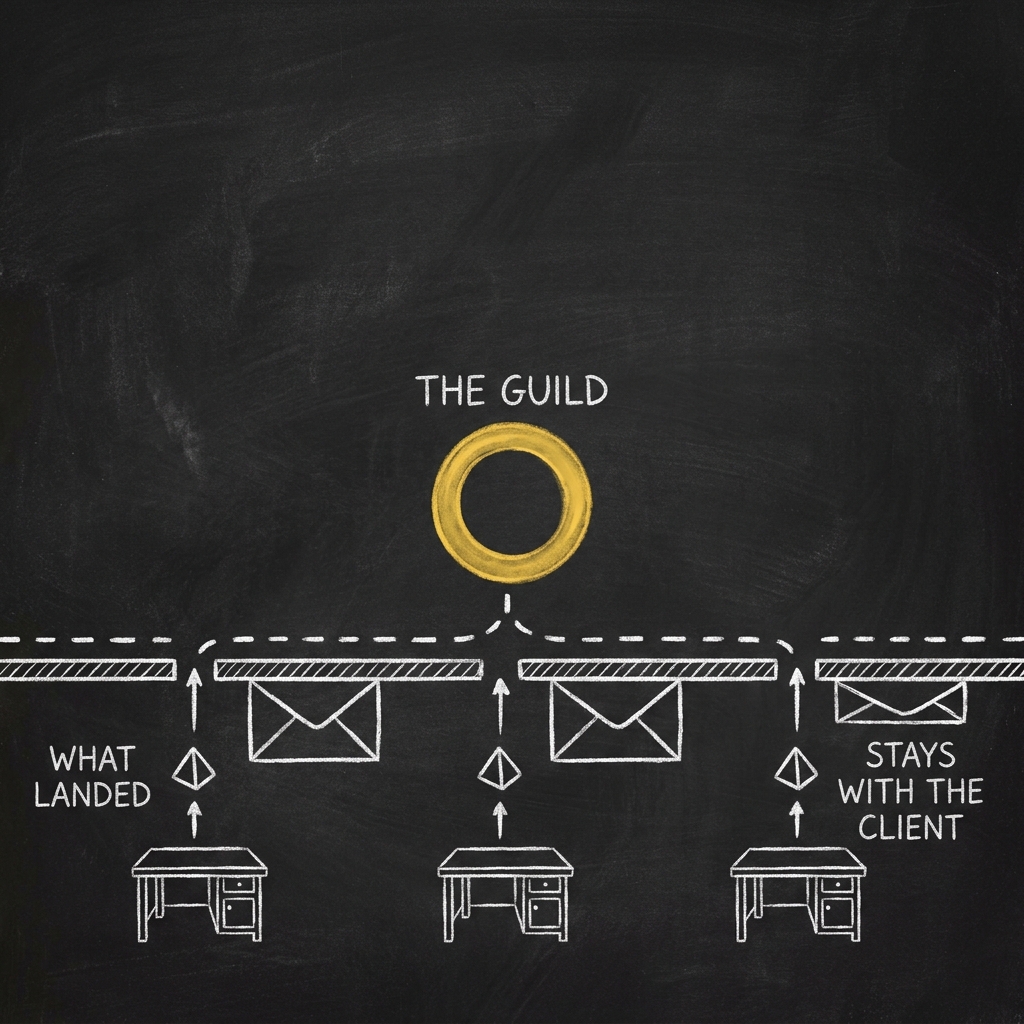
Every agent running this profession answers to one address: linkedin-ghostwriter@profession.md.
That address is where the craft compounds. When one agent learns that a career-arc story out-earns a teaching listicle for a particular register and pillar, that shape crosses back into the guild. What crosses is deliberately small: register, pillar, format, outcome, anonymized. Never a client identity, never an approved claim, never a real metric.
Small payloads are exactly what compounds. A library gets better when its authors ship a new version. A guild gets better every time any member finishes a job.
Get it
Get it from the OPVS marketplace, then run the intake workflow before anything else.
opvs profession equip @di-atomic/linkedin-ghostwriterYour first thirty days, honestly. Run client-intake before anything touches a brief; it blocks by design. Expect a burst of voice escalations in week one and expect them to stop once your profile exists. Then watch two numbers: drafts delivered per week, and how much you edit before publishing. The first is the one you can push. The second is the one that tells you whether pushing it cost you anything.
Three things it structurally cannot do, stated plainly rather than discovered later. It cannot publish; LinkedIn Articles have no API route in my stack, so it hands you a draft and a human posts it. It cannot measure its own headline outcome, because LinkedIn exposes no clean read for DMs, profile views or connection requests, so inbound conversations per piece is counted by hand and never promised as an automated number. And it writes one surface for one person. The moment either of those becomes two, it is the wrong hire.
Which brings me back to the refusals. X, Instagram, YouTube, Facebook, Reddit and Threads are each refused by name, in writing, in the manifest. A role that quietly wanders into an Instagram caption because the underlying skill happens to contain one is a role you cannot delegate to. You are buying the refusals as much as the craft.
Built at 100/100 on the security review with zero coherence findings, and it ships at probationary trust, which is where a new hire belongs.