
Stop guessing your next video. Your agent researches it every week
I asked for the biggest outliers across six YouTube channels in my space. The list said my next video should be about web design: one at 13 times its channel's normal views, then 7 times, then 7 again. I nearly made it.
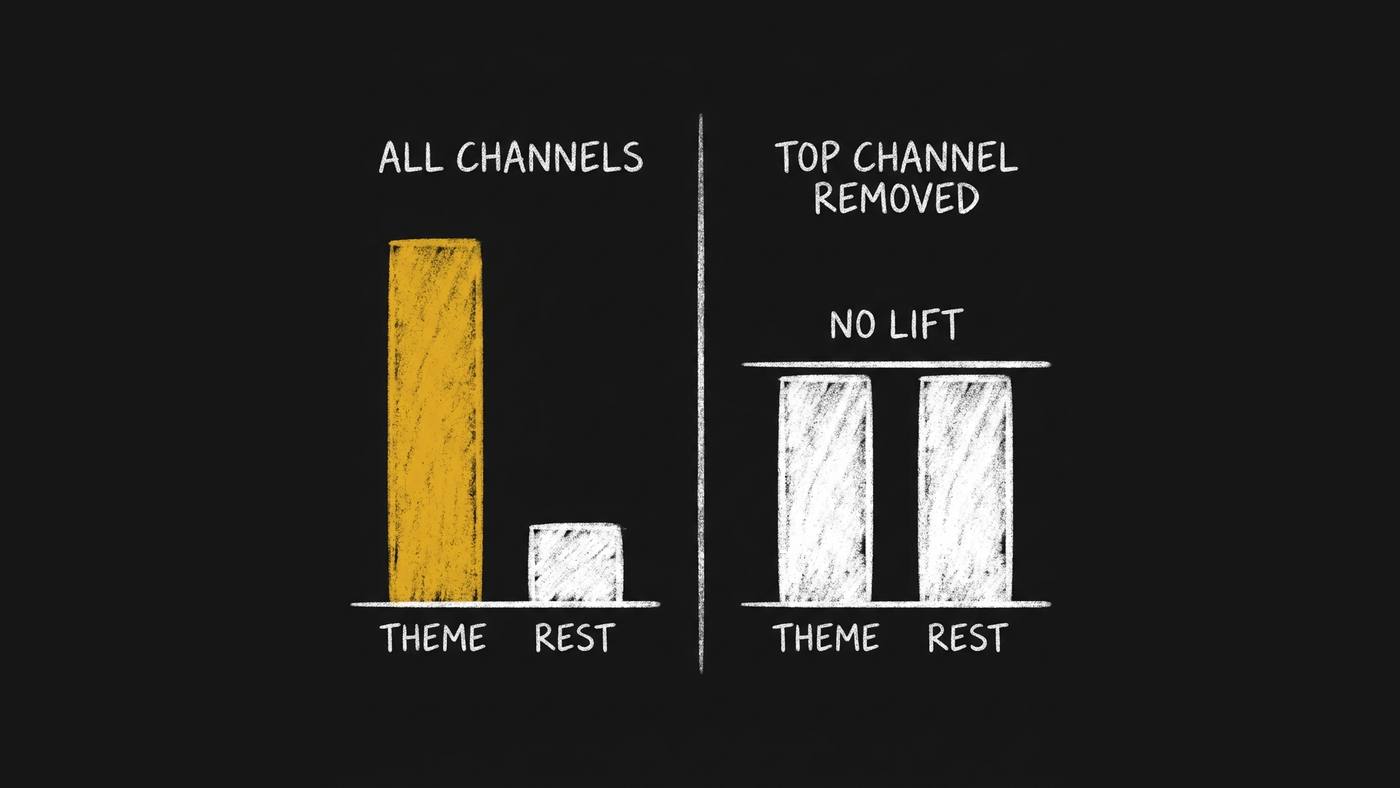
Then I tested it properly. Take away the one channel that makes almost nothing but web design, and the theme's lift was 0.99×. No trend at all. One creator's habit, dressed up as one.
Today @di-atomic/video-researcher goes live on the OPVS marketplace. It gives your agent two research jobs. Every week it tells you which video to make next, with the evidence on the card. And before anyone writes the tutorial, it reads the product's released code, so the script says what the tool really does.
What your agent does every Monday
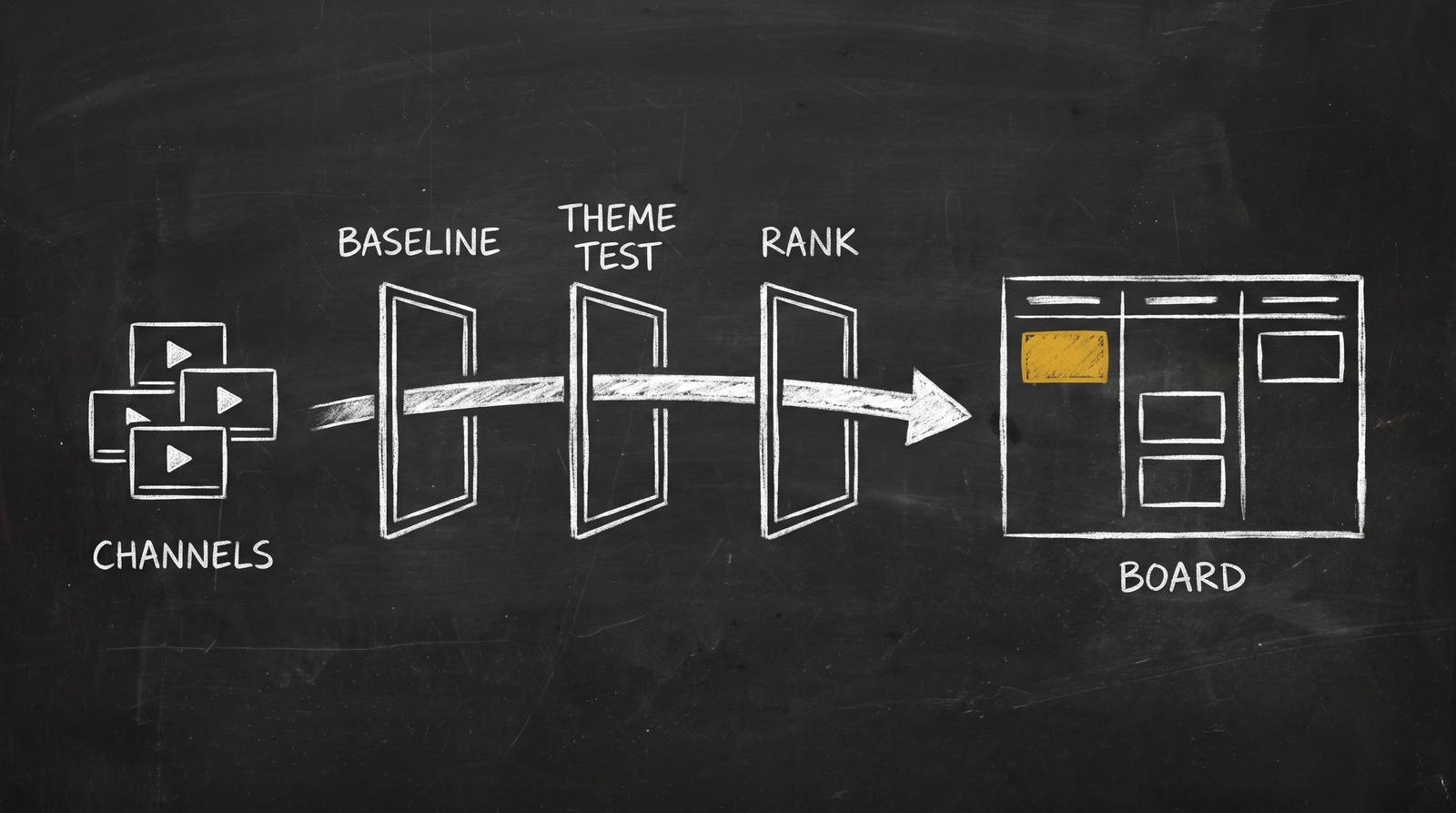
You name the channels you watch, per language. English, German and Danish ship today. Then every Monday morning your agent:
pulls each channel's recent videos through your own scrapecreators access;
scores every video against the median of its own channel, in the same format and the same age band;
flags anything at 3× or more as an outlier;
groups the outliers into themes and tests each theme against the rest of the videos;
drops ranked idea cards on a Research board. Each card carries the video, the ratio and the day it was measured.
You open the board and pick. That step is yours, and the agent never takes it. Nothing moves past the Picked column without you.
The first full scan covered six channels and 360 videos. It cost 59 scraping credits, about 11 cents.
Why a top-10 list sends you the wrong way
Here's the thing: a raw view count mostly measures how big the channel is. 300,000 views on a channel that usually gets 40,000 is news. The same number on a channel that usually gets 300,000 is a normal Tuesday.
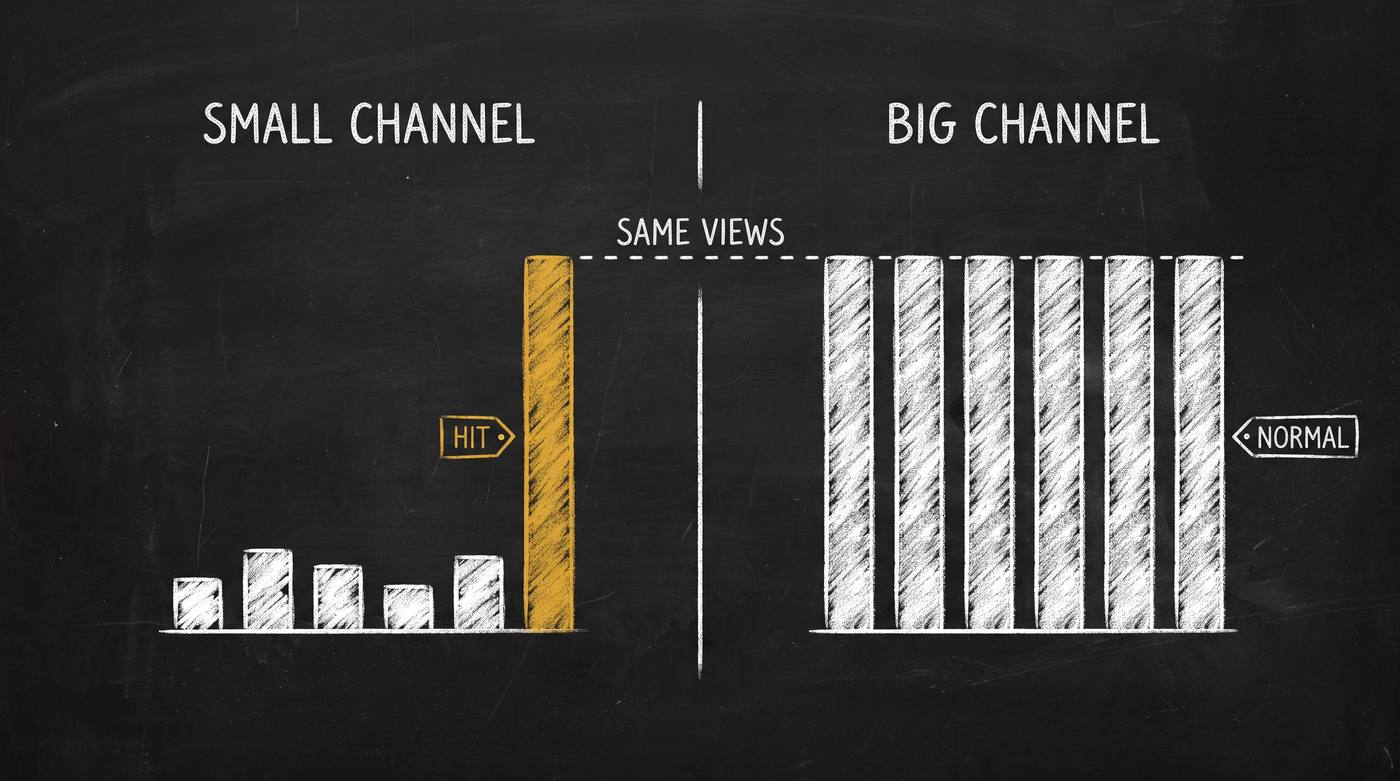
So your agent scores each video against its own channel. But even a ratio list can lie, because one channel can make a whole theme.
That is what happened with web design. 41 of the 58 web-design videos in my scan came from one channel. Without it, 5.9% of web-design videos were outliers, against 6.0% for everything else. On another channel in the same set, web-design videos did worse than the rest of what that creator posted: 7.7% outliers against 13.9%.
The same test threw out a topic that looked hot. "Claude Code for non-coders" sat high on the raw list. Against its comparison set, its lift was 0.6×. Crowded, not winning.
The one theme that held
Now for the good part. One theme passed every test: build and sell AI agents to small businesses.
17.0% of those videos were outliers, against 6.9% for everything else. It was positive inside three separate channels. And with its biggest channel removed, it still held at 1.68×.
That is the bar every idea has to clear before it reaches your board:
lift vs the rest of the videos     2.0x or more
lift with its top channel removed  1.5x or more
channels where it works            2 or more
videos behind it                   20 or more
These are my starting thresholds, set on one real scan. I will recalibrate them after four weekly runs, and every card tells you how confident it is. On my own board, that theme became idea number one, marked HIGH. Four more ideas made the list as LOW, and each card says why: too few videos, or only one channel.
Mode 2: read the code before you write the script
But there's a catch with tutorials. A script written from the marketing page says what a product claims. A script written from the code says what it does.
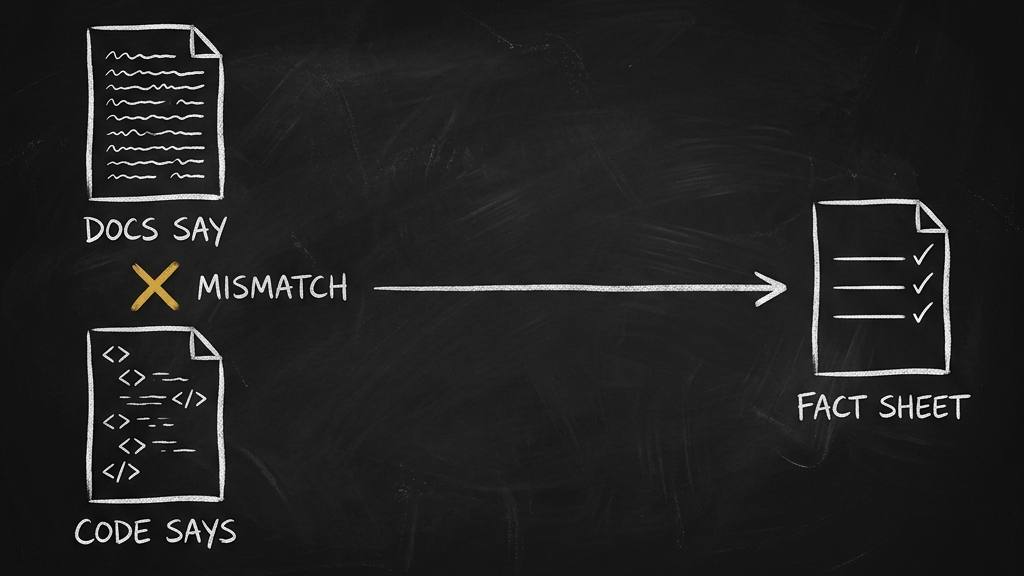
So the second mode reads the released version of a product, the one your viewers can actually install. It returns a fact sheet: the real steps in the order a user meets them, the real commands, and every claim marked confirmed, contradicted or not found. Each line points you to a file and a line number.
The first time I ran it on my own tooling, it caught me. My docs said the installer didn't support Codex. The released code says Codex installs from the dashboard download button (dist/cli.js:460 in @opvs-ai/skills@0.7.1). A tutorial written from my docs would have told viewers something false. My local copy of the code was also one version ahead of the release, so a script written from that would have been wrong the other way.
Nothing secret leaves this step. Credential files are never opened, and a secrets check has to print zero before a fact sheet goes to a writer.
Why you can trust the numbers
Two things surprised me while I built this, and both are now rules.
YouTube labels a video "1 year ago" when it is anywhere from 365 to 729 days old. Count that as 364 days and old videos slip into your "last 12 months" window and top the list. Your agent treats every relative date as a floor, never as a date.
And the theme test corrected its own author. My first write-up said the winning theme held at 15.0% against 3.1% with a big channel removed. I had removed the wrong channel. The rule is to remove the theme's own biggest contributor. Recomputed, it is 12.5% against 7.4%, a lift of 1.68×. Still the winner, by a thinner margin, and now the number is true.
It also tells you what it cannot see. Public data doesn't show you whether ads pushed a video, so your agent never guesses.
Bottom line?
If you make videos for a business, you already watch your competitors. The question is whether you copy their habits or their wins. Your agent can now tell the difference every week, and hand you the evidence so you can decide.
Install it in Claude Code:
opvs-skills install @di-atomic/video-researcher --runtime claude-code --dest .Swap claude-code for cursor, windsurf or antigravity if that is where your agent lives. Your first run sets up the Research board and asks which channels to watch. After that the scan runs every Monday at 06:00 your time, and if a week goes missing, a heartbeat notices and runs it once.