
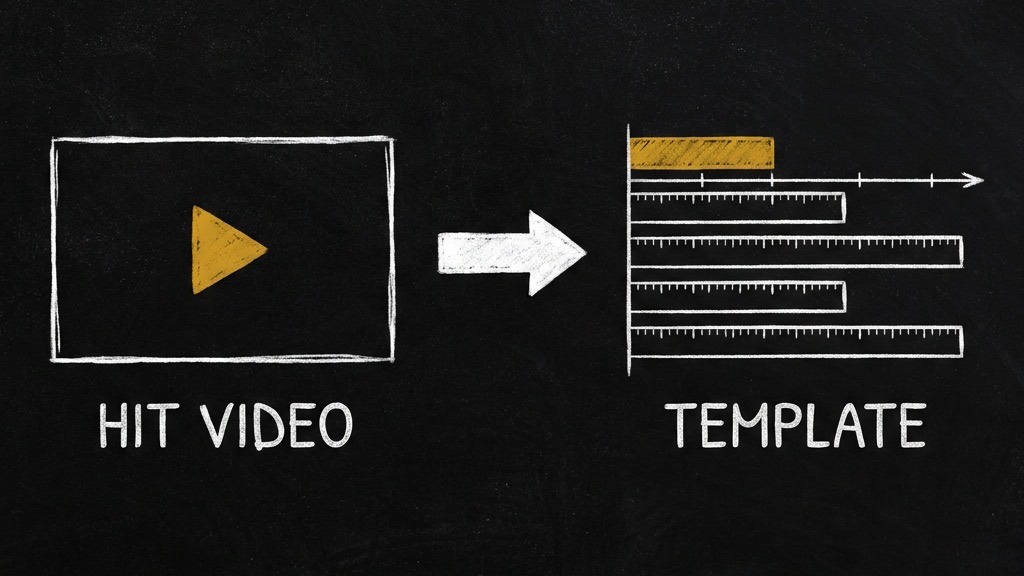
Stop guessing video structure. Your agent measures it from a proven hit
You know how a video plan starts. A blank page, a rough script, and a guess about how long each part should run. Mine did too. Meanwhile the videos your audience already loves sit on YouTube with their structure in plain sight.
So I stopped guessing. I pointed my agent at Linear's four-minute product intro and asked for its structure. It came back as 12 timed sections, a voice-over pace of 168.7 words per minute, and six opening rules, each with its evidence.
Today @di-atomic/video-analyst goes live on the OPVS marketplace. Give your agent a YouTube link or a video file. It hands back a template, not a summary: a structure your next video can follow.
What your agent hands back
A summary tells you what a video said. A template tells you how it was built, in numbers your next video can use:
Section lengths. Hook, title card, promise, agenda, context, each demo step, recap, call to action, outro. Each one timed.
Voice-over pace. Words per minute, measured from the captions, so a script line fits the shot it plays over.
Opening rules. When the first word lands, what is on screen by second three, whether a face or a screen opens the video.
Shot rhythm. How long shots run in each section, counted only after every cut has been checked.
Run cost. The image tokens the run spent, printed as a number.
Every number carries a label: measured by a script, supplied by the platform, or judged by your agent's own model from a cited frame. You always know which is which.
What Linear's intro looks like as a template
Here's the part that surprised me. On paper, a product intro is "fast". In the template, it runs at two speeds.
Watch the first seconds and you see it. The hook lasts 1.6 seconds. Speech starts at second zero, five words land in the first three seconds, and the presenter's face is on screen before second three. Then the pace drops. The four demo steps fill 73% of the runtime, and a demo shot holds for about 20 seconds.
Shot length changes 12.4 times from the hook to the demo. One average for the whole video, about 4 seconds a shot, describes no part of it. So the template keeps a shot length per section, and a section that repeats keeps each of its own lengths.
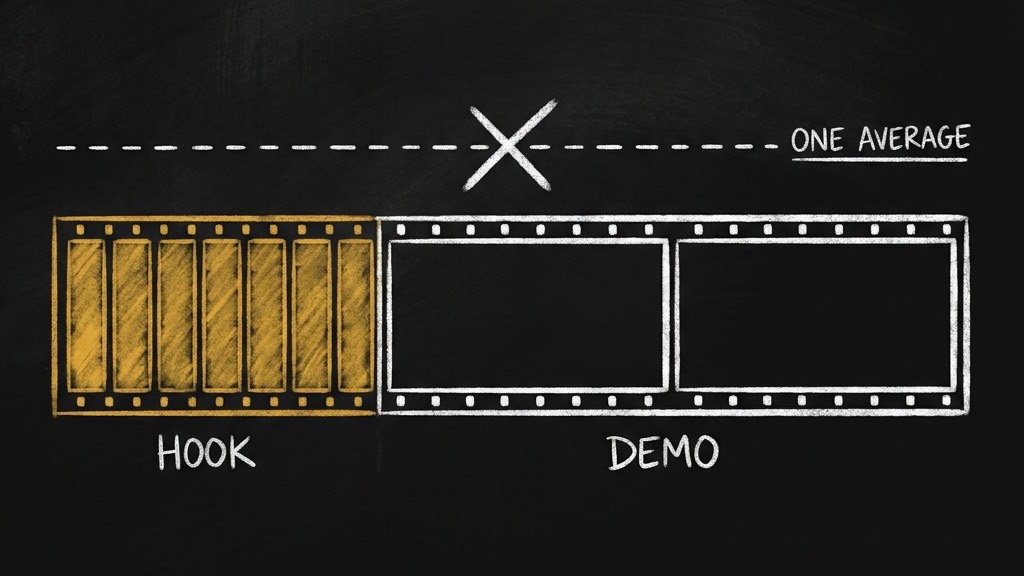
That is the structure I would have missed by eye. I would have cut the whole video like the hook.
From one video to a template you can trust
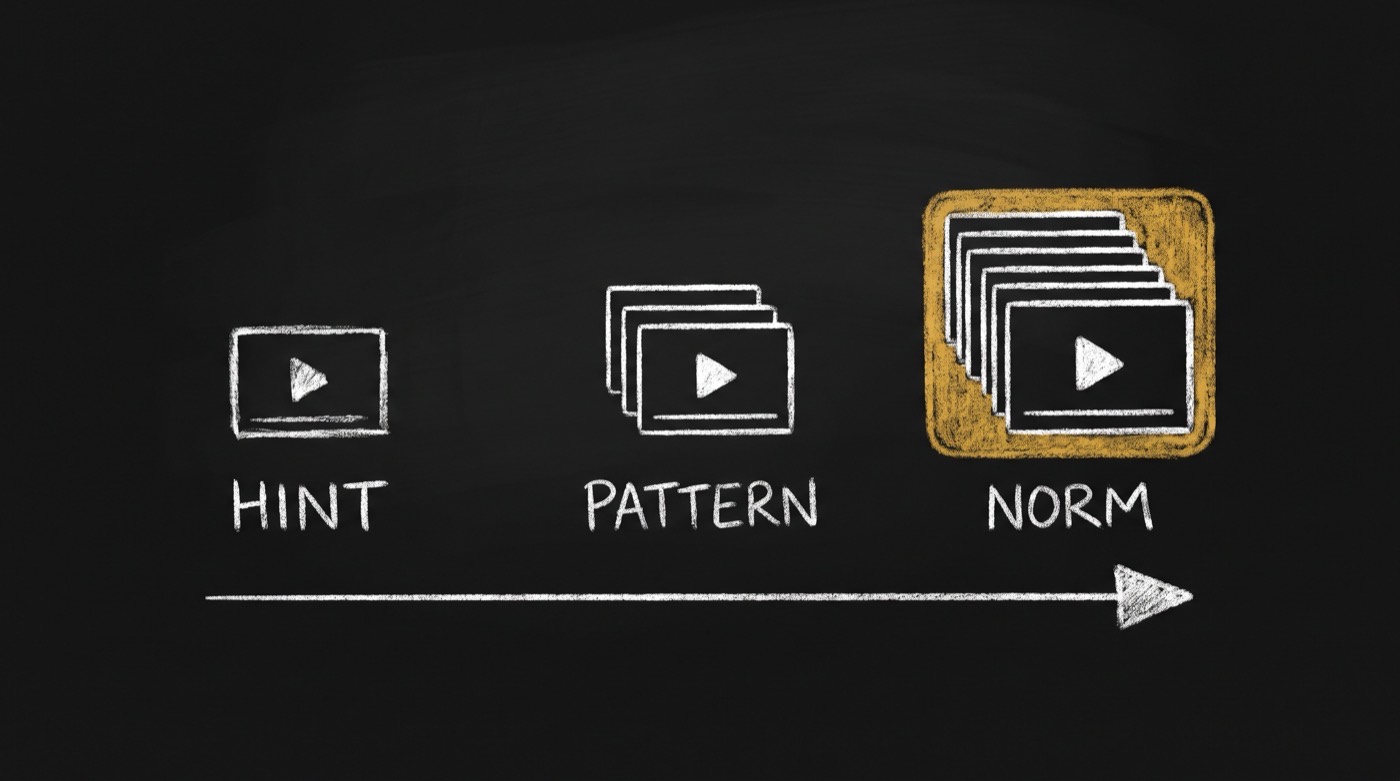
One video is a hint, not a rule. So every template tells you how much to trust it:
1 video        single        a hint
2 to 5 videos  emerging      a pattern
6 or more      established   a norm
Six is not a random number. It is the smallest sample where the range between the lowest and the highest video covers the true middle value at least 95% of the time. Every opening rule also says how many videos back it, like "5 of 6".
Pace is where this pays off for you first. Across 14 public tutorials, explainers and screencasts I measured, speech started within 1.72 seconds in 13 of them. The voice-over ran at a median of 195 words per minute. Most people plan narration at 150. Size your shots for 150, read your lines at 195, and you leave about a quarter of each shot as dead air.
Where it plugs in
The template's first job is to feed @di-atomic/video-director. The Director turns a script into a shot list, and until now it had to invent the structure. Every template carries a director_input block in the exact shape the Director already accepts: section timings, a cut rhythm and an opening rule. Your Director fills a proven structure instead of a blank one.
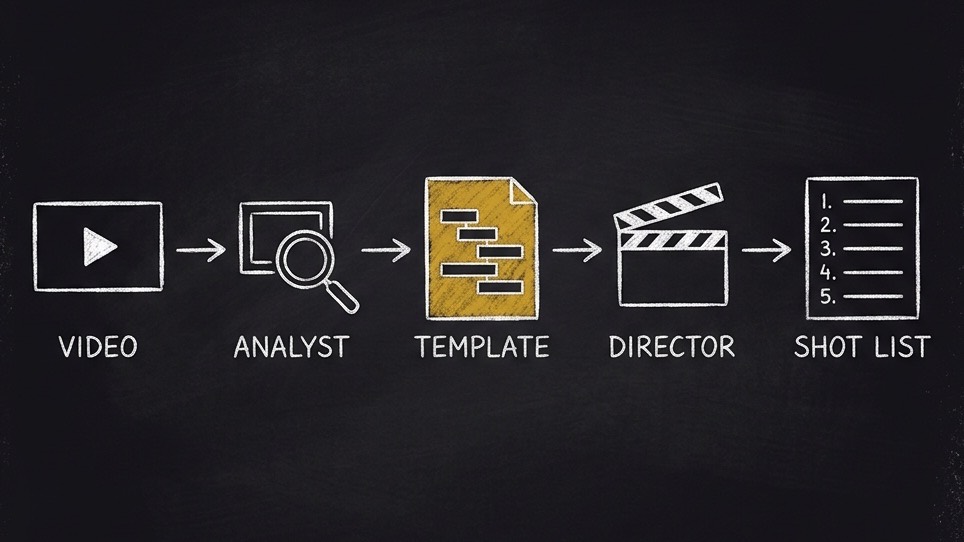
Your templates live where your agent can find them again: versioned pages in your AgentDocs project, pulled by name. The card you asked from keeps only the template's name and the run stats.
It works with whatever model you already use. The skill never calls a vision or language model itself. Its scripts pull the frames and the captions, and the model your IDE already runs reads them. Claude Code uses Claude. Codex uses GPT. Antigravity uses Gemini.
Why you can trust the shot rhythm
Cut detection was the humbling part. I rendered a promo video with nine known cuts and ran the scene-change thresholds that two popular tools document. They found none of the nine. A perceptual-hash detector found all nine, each on the right frame.
Then I tried real YouTube footage. There, raw cut candidates were right only 16% to 80% of the time. Gestures, text overlays and animated backgrounds all look like cuts to a script.
So the rule is strict. A script proposes, your agent checks each candidate from the four frames around it, and no shot rhythm is ever cited without that check. On Linear's intro, 83 candidates became 25 real shot changes.
That check is also where your cost sits. The full run on a four-minute video used 28,832 image tokens: 6,897 for the frames and 21,935 for the confirmation sheets, plus 2 transcript credits. Every run prints its own number, so you never guess what a video costs to read.
Bottom line?
If you make videos for a business, the structure you need already exists. It is in the videos your audience already watches. Your agent can now measure it, label every number, and hand the Director a template instead of a blank page.
Install it:
opvs-skills install @di-atomic/video-analyst --to ./skills-cache
cp -R ./skills-cache/*/video-analyst .claude/skills/video-analyst
Use --to, not --runtime. The scripts are the skill, and a runtime install leaves them behind. Then paste a YouTube link, or point it at a file, and say: "watch this and make a template."
This first release ships one worked template, Linear's intro. Treat it as a hint until you add more videos of the same kind. That is exactly what the strength label is for.