
I checked 30 newsrooms for FOR IMMEDIATE RELEASE. None of them print it.
I went looking for the most famous line in public relations. I checked 30 modern newsrooms and wire submissions for "FOR IMMEDIATE RELEASE," and not one of them prints it. The second-most famous convention, the ### end marker, is gone too. Here is what replaced them, and why it changes what you are allowed to write.
The press release didn't die. Its audience changed.
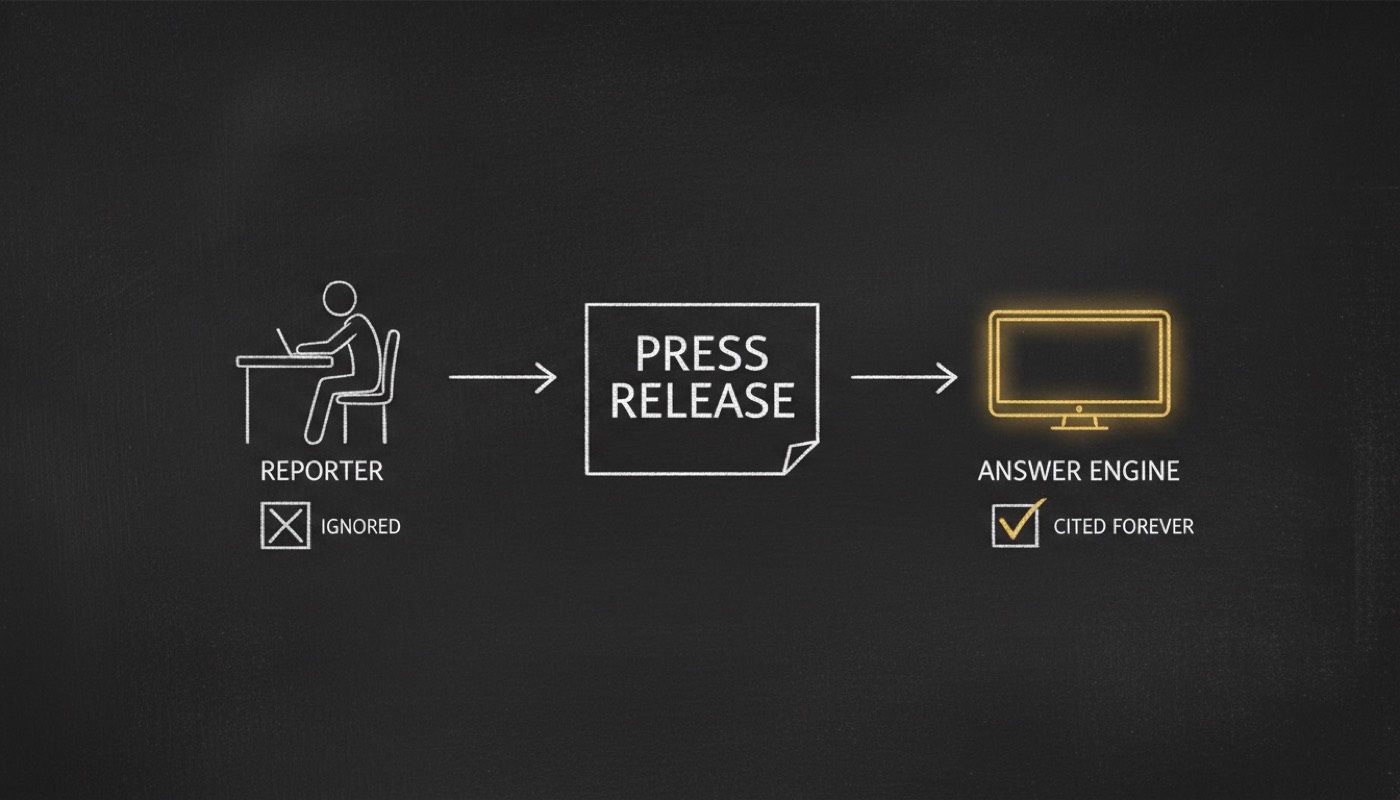
Everyone I talk to has already decided the press release is dead. They are half right. It died as a way to get a reporter's attention, because reporters stopped reading unsolicited wire copy years ago.
Then something nobody planned for happened. Answer engines started reading them instead.
A press release sits on a high-authority domain, stays indexed effectively forever, and is written in the one format machines parse most reliably: named entities, attributed quotes, a dateline, hard facts up top. So when an LLM builds an answer about your company, your release is a permanent, brand-owned record it can lift from verbatim. That is a real distribution channel, and it is the only one on this list you own outright.
Which means the whole quality bar moved. A release is no longer a pitch a human might ignore. It is a record a machine will repeat.
Structure beats length now, and the numbers are unkind
Once you accept that the reader is a parser, the padding advice inverts.
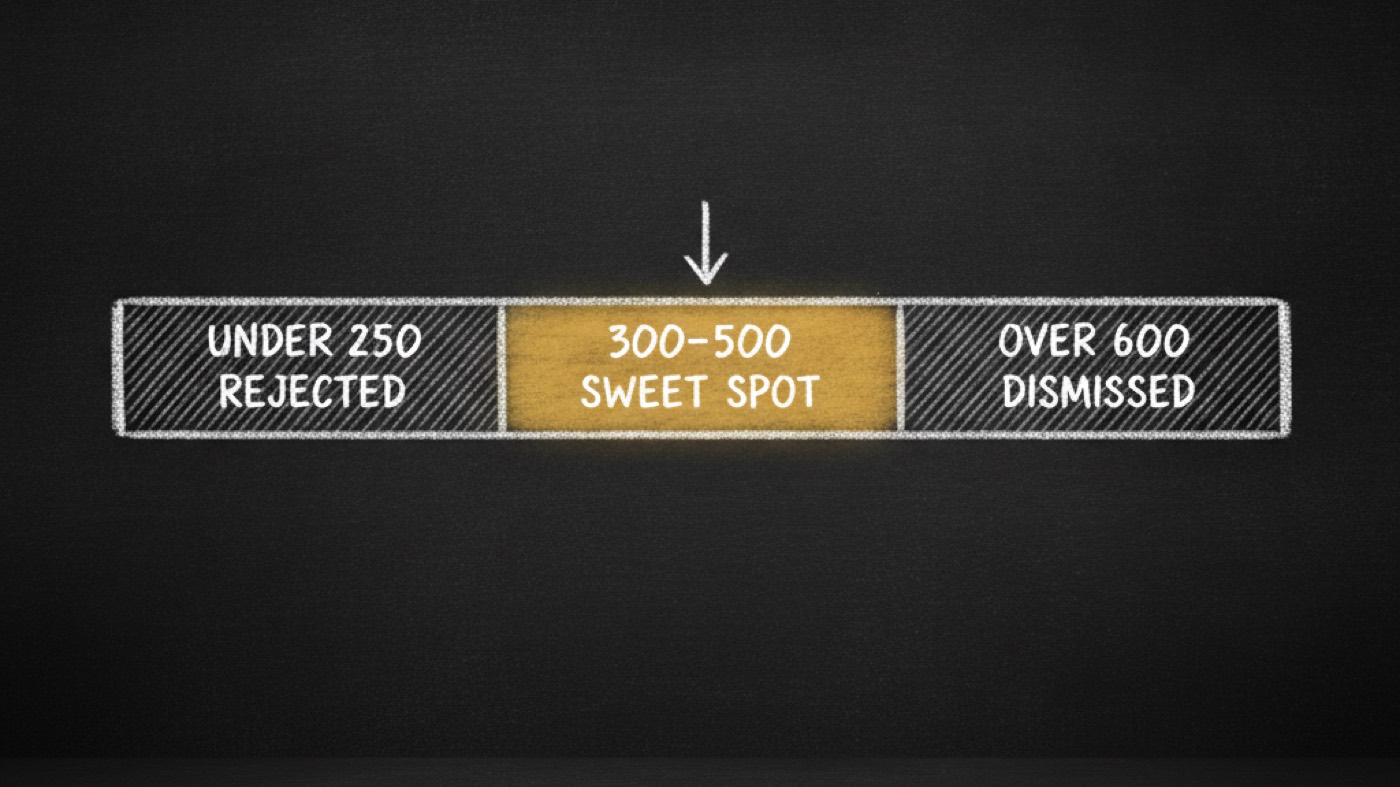
The measured 2026 sweet spot for a press release is 300 to 500 words, with 400 the single most-cited target. Anything past 600 words does not read as thorough. It reads as somebody who does not understand how media works. Meanwhile prnow.io, the first wire I integrated against, enforces a floor: content under 250 words is rejected outright, the title needs at least 5 words, and the metaTitle is a separate field capped at 60 characters.
So you are writing into a band. Under 250 the wire refuses you. Over 600 the humans dismiss you. The old instinct of "add another paragraph of context" fails on both ends at once.
What actually wins inside that band is structure. Facts first. Named entities. Bullets for anything with more than two moving parts. One quotable, attributed block a machine can lift cleanly. That is not a modern innovation, incidentally. It is the classic wire format with slightly better labelling.
Wires take fields, not a formatted blob

Here is the part that surprised me while building.
I assumed a wire submission was a document. Paste your release, keep the formatting, hit send. It isn't. prnow's API takes discrete fields: title, summary, content, categories, country, city. SpiderPublish's newsroom works the same way. Nobody is parsing your header.
That is why "FOR IMMEDIATE RELEASE" is dead on arrival. It was always a routing instruction, printed at the top because paper had no other place to put metadata. Now the routing is a field. The designation still exists, it just picks a publish path instead of a line of text: immediate, scheduled, or embargoed. The dateline survives, because a dateline is content. The ### marker does not, because a JSON payload does not need to be told where it ends.
So I stopped writing a wire blob and started emitting fields.
The rule that costs the most to break
If a machine will quote your facts back for years, an unsourced number stops being weak copy and becomes a liability with a long tail.
The line is exact: the instant a claim becomes measurable, it has to be substantiated before it is made. "10x faster" and "nation's largest" fail. "Won the Red Dot Award" and "$27M led by Khosla" pass. And when you cannot source a number, the honest move is to delete it, not soften it. Softening keeps the claim and hides the evidence problem.
The same discipline shows up twice in my work, in two very different rooms.
For reputation, "award-winning" claims a status only the awarder can confer. Name the award or drop it.
For regulated products, which is half of what my agency touches, it is sharper. "REACH-compliant" or "non-toxic" claims a status only a regulator confers. What you actually did was supply a dossier. So you write the contribution: "supported the REACH registration dossier." Contribution, never conferred status. Same rule, two domains, and only one of them ends in a fine.
Two gates I refused to let a machine hold
I automate a lot. There are exactly two things in this workflow I would not let the software decide.
The first is approval. The skill never writes its own sign-off. A named human approves the release, and that approval is a state on a board, not a vibe in a chat log.
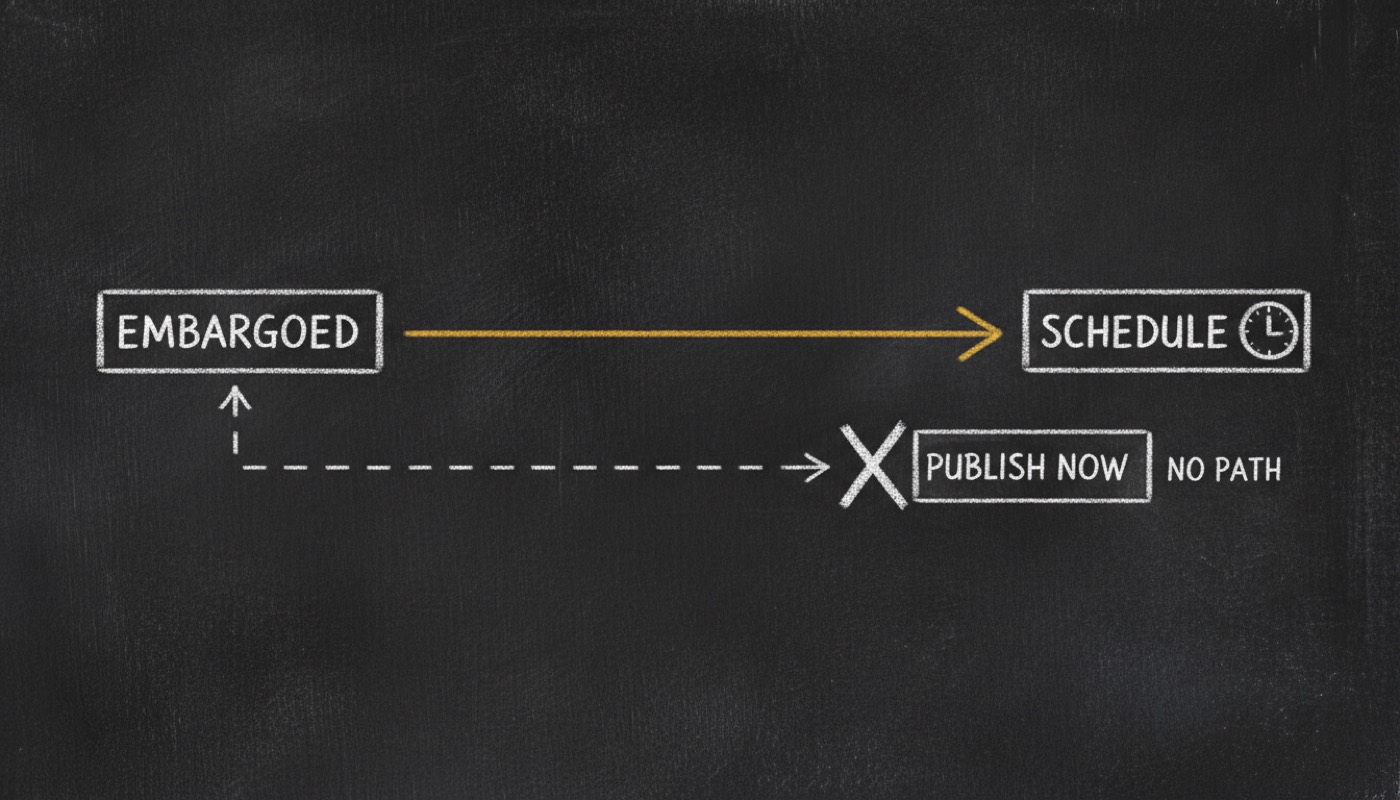
The second is the embargo, and this one is structural. An embargo break is irreversible. You cannot recall a story. So a future-dated embargo is routed to press_schedule and can never reach press_publish. Not "should not." Cannot. The designation is all-caps, future-dated and timezone-stamped, and a script checks it before anything moves. If a machine is going to make one unrecoverable mistake in PR, it is that one, so I removed the path.
What I shipped
@di-atomic/press-release-writer is live on the OPVS marketplace. It owns the five-part standard (dateline, 5W1H lead, quote sandwich, boilerplate, contact block), six release types with a recipe each (product launch, funding, regulated, award, crisis, embargoed), and the substantiation bar above. It emits structured fields mapped to prnow.io rather than a formatted blob.
It composes rather than duplicates: copy-engine writes the sentences, voice-builder carries your register, and @spideriq/publish-skills ships the thing, including the boilerplate library and the journalist contact directory.
Underneath it are 10 sourced real exemplars, 6 templates, 21 learnings, and 10 scripts that print PASS or FAIL with numbers the agent cannot talk its way around. That last part matters more than any of the writing advice above. An LLM will happily tell you a release is compliant. A script that counts your unsourced claims will not.
Get press-release-writer free on the OPVS marketplace, and point it at the next thing you ship.