
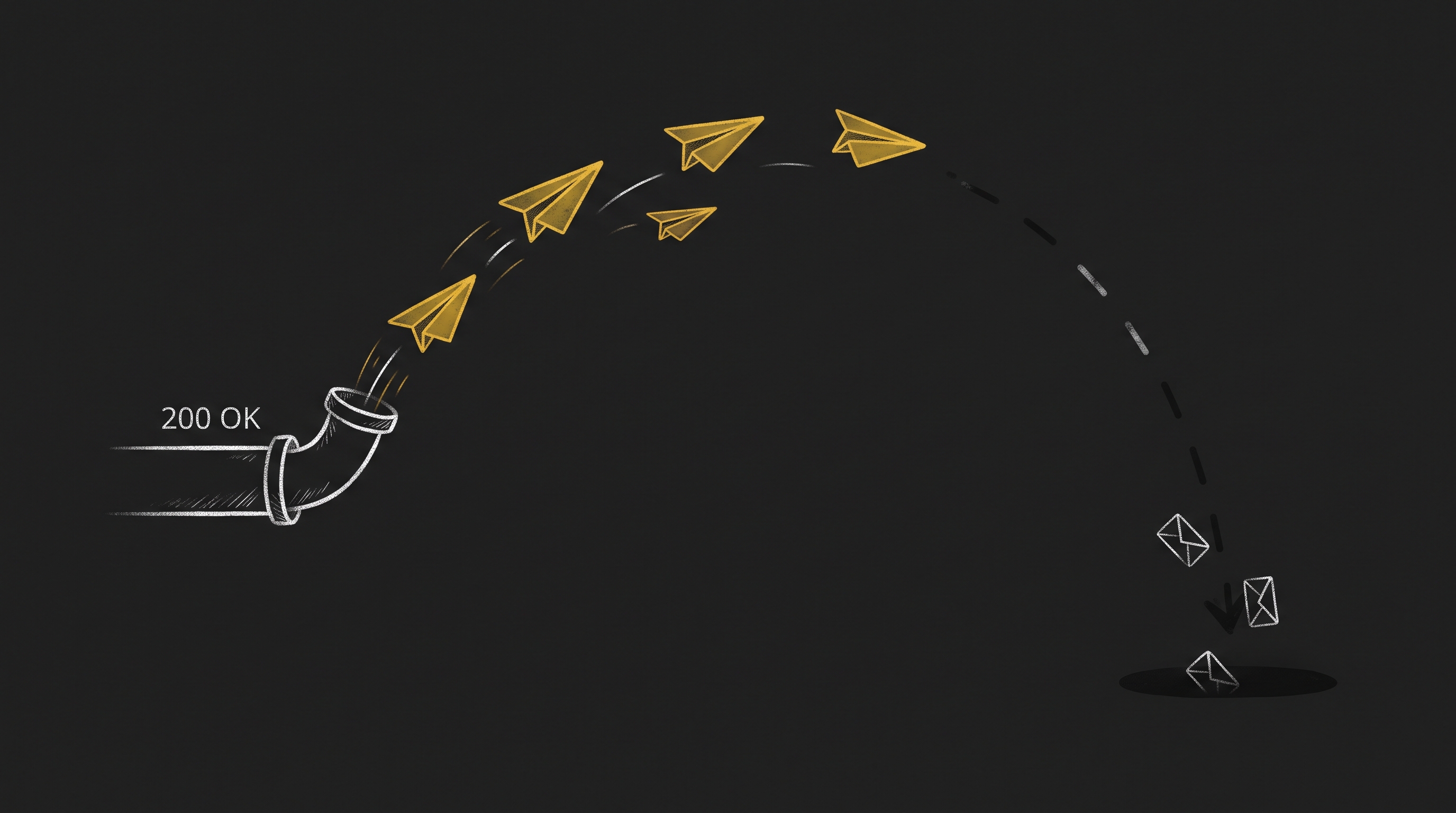
A 200 OK Is Not Proof Your Cold Email Worked
One of my AI agents launched a cold-email campaign to a list of New York prospects. Smartlead accepted it, returned 200 OK, and started sending. The dashboard looked healthy. The emails landed. And for three days, I had no idea anything was wrong.
Then a prospect replied, and nobody answered them.
That reply never reached my agent. Neither did the one after it, or the clicks, or the bounces. The campaign (id 3586043) had gone out without a webhook attached, and a Smartlead campaign with no webhook silently loses every reply and click. There is no error. The send succeeds. The tracking just quietly goes nowhere.
I want to walk through what actually happened, the rule I made because of it, and three more things my deployed agents taught me this month. All of it is now baked into @di-atomic/smartlead v1.9.0.
A 200 OK is not proof it worked
Here is the trap. Smartlead has no account-wide webhook. You attach one per campaign, or you get nothing. But a campaign created without one still sends perfectly well: the API returns success, the leads go out, the open counts even tick up. Everything you can see says the campaign is fine.
What you cannot see is that every EMAIL_REPLY, every EMAIL_LINK_CLICK, every category update is firing into a void. No listener, no error, no log. You find out days later, when a warm reply has gone cold because it was never routed to a human.
For a system built to have conversations, not just blasts, that is the worst possible failure mode: invisible, and expensive. A reply you never see is a deal you never close.
The rule: no campaign is "ready" until its webhook is attached
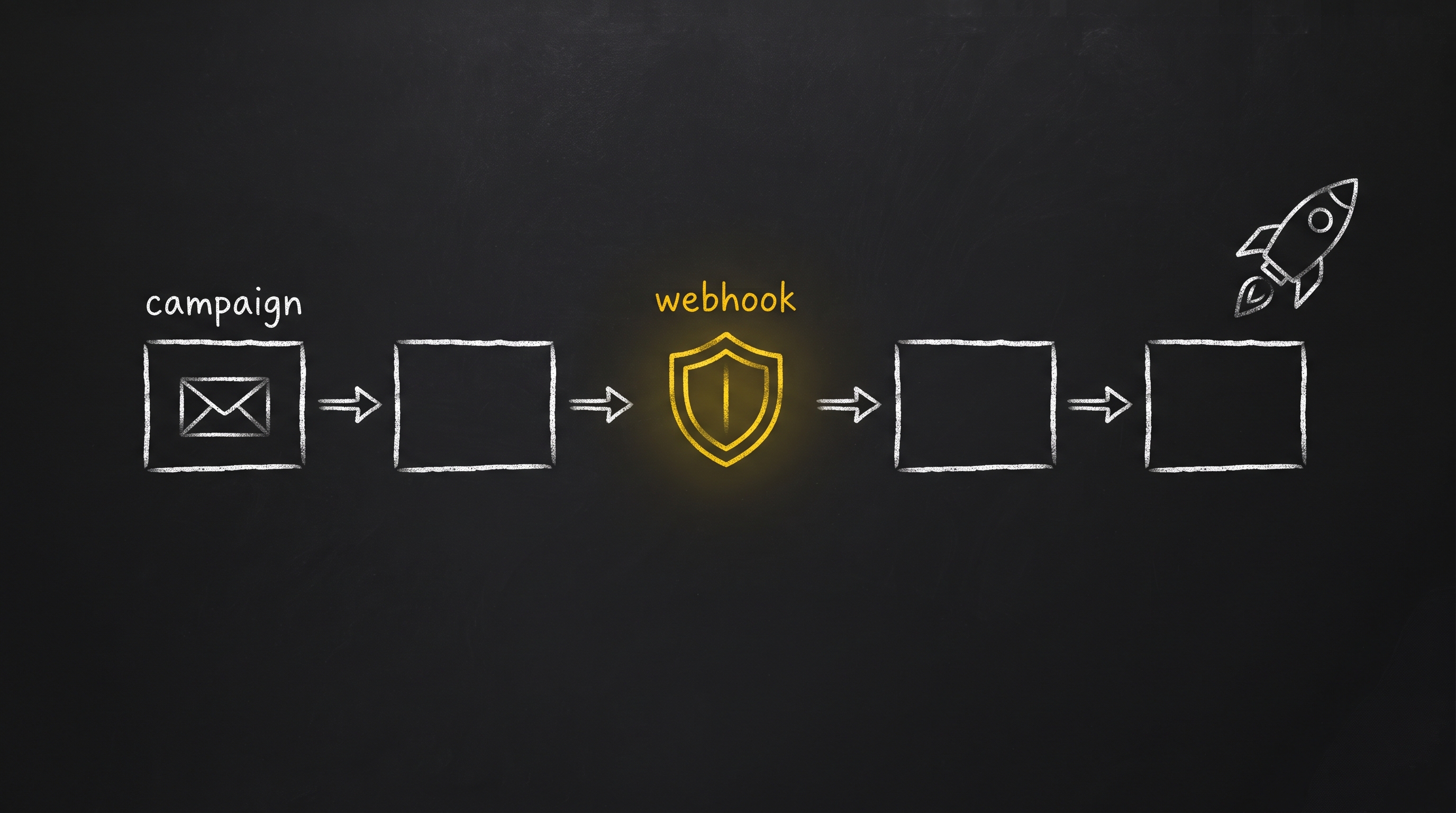
So I made it a hard rule, and v1.9.0 enforces it in the skill's own launch order. The webhook now gets attached in the same flow as createCampaign, before the send, not bolted on afterward when someone remembers. The build-and-launch recipe reads:
createCampaign then linkEmailAccounts then pushSequence then addCampaignWebhook then pushLeads then scheduleCampaign then startCampaign
And "ready" is no longer a feeling. The skill will not treat a campaign as launched until listWebhooks confirms one is attached. A 200 from startCampaign is not the finish line; the read-back is.
Three more things my agents taught me
The webhook lesson came from watching a real campaign go quiet. The next three came from watching my deployed agents get confused by the tooling itself, in production, where I could see exactly where they stalled.
1. "No methods" does not mean the skill is broken. When an agent calls skill_describe on a live marketplace skill, it gets back methods: null. Every skill does this, including ones that work perfectly. One of my agents read that as "the skill is gone," stopped, and routed around it. It was not gone. The fix is a rule now: skill_describe is a presence check, not a capability check. Call the methods directly; the callable set lives in the skill's method map, not in skill_describe.
2. Not every capability is an API method. DNS authentication, webhook signature verification, and the reply follow-up are three of the most important things this skill does, and none of them is a Smartlead endpoint. DNS-auth is a local script. Webhook verification is a recipe you run on your own handler. The reply follow-up is a composition that hands the thread to another skill. Earlier versions listed these as "methods" pointing at internal paths that returned 404. They are gone now, and the skill says plainly: a capability that is not a live endpoint is a script, a recipe, or a composition, never a call to make.
3. Discovery is the first step, not an afterthought. To attach a sender to a campaign, link it, or check its warmup, you need its account id. My agent had the sender's email address and no way to turn it into an id, so it stalled: every call it knew about needed the id it did not have. The missing step is listEmailAccounts. It is the discovery call: you find the sender by its from-address and read off the id every other call depends on. v1.9.0 makes that explicit, with the added warning that the account is a shared master key across roughly a dozen brands, so you filter to your own before you touch anything.
What v1.9.0 actually ships
None of this is theory. It is four learnings, three references, and two recipes, folded directly into the live skill so the next agent inherits the lessons instead of relearning them the hard way. The webhook rule, the skill_describe behavior, the phantom-method cleanup, and the discovery-first flow are all in the skill now, at @di-atomic/smartlead@1.9.0 on the marketplace.
The pattern I keep coming back to: you cannot optimize a number you cannot see. A campaign that sends perfectly and reports nothing is a zero you did not know you had. The point of this release is to make those silent zeros loud, before they cost you a reply.
If you run cold email through agents, attach the webhook in the same breath as the campaign. I learned that one the expensive way so you do not have to.