
My AI writes the whole cold campaign. I still approve every one.
Here's the thing about handing cold outreach to an AI: I want the volume, but I don't want it firing emails in my name that I never saw.
That tension stopped me for a long time. The whole point of an outreach agent is speed — draft the strategy, write the sequence, send at scale, all while I'm doing something else. But speed with no oversight is exactly how you torch a sending domain, or send a tone-deaf pitch to a client you were about to close. You can't un-send a cold campaign.
So in the latest version of outbound-engine, I fixed the part that was actually holding me back. It wasn't the writing. It was the trust.
The AI drafts everything. You still approve it.
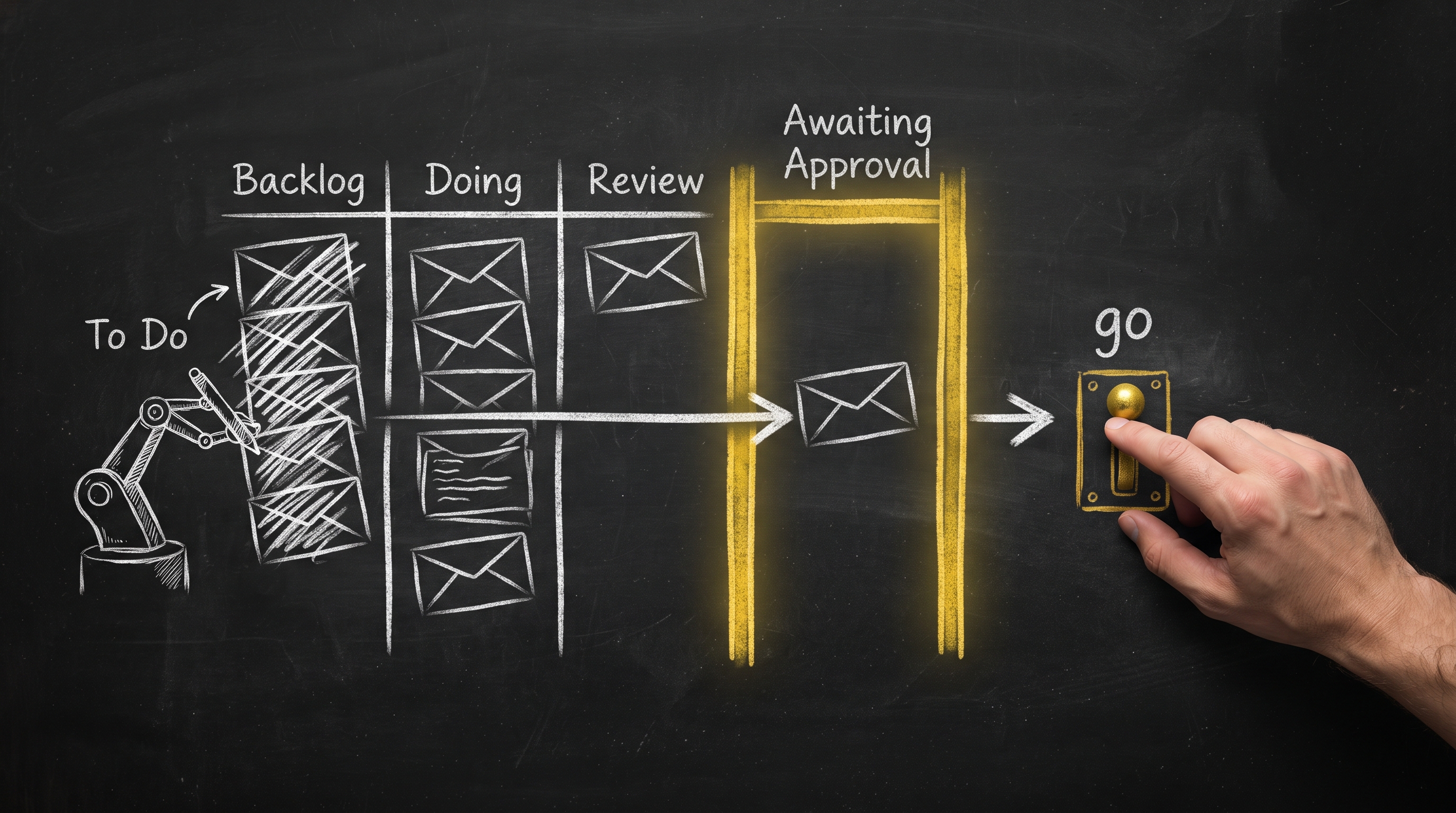
outbound-engine now builds you a board — a real one, on the workspace you already own. Every campaign is a card. The agent does all the heavy lifting: it picks the framework, writes the whole follow-up ladder, runs its five checks. And then it stops.
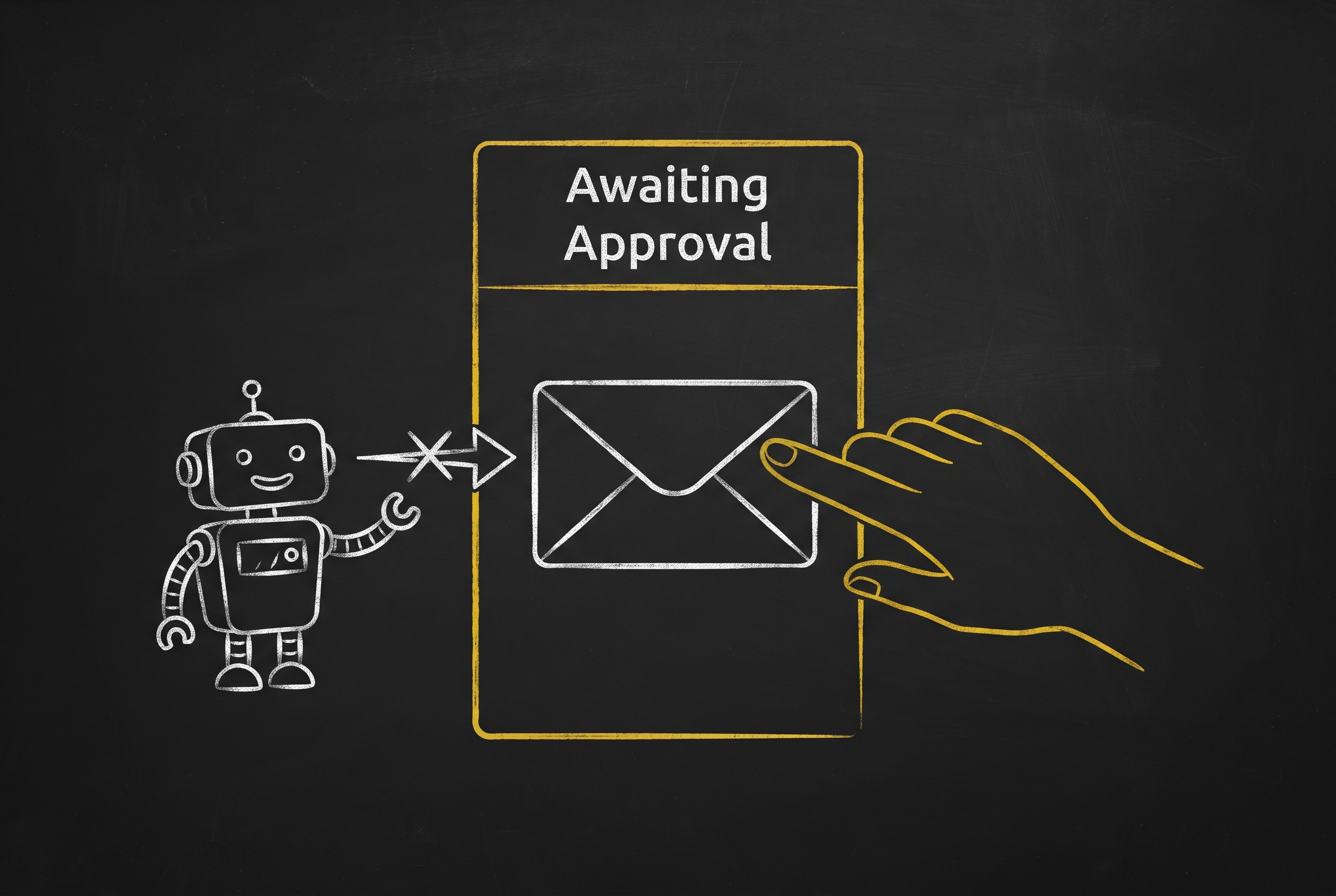
It stops at a column called Awaiting Approval. That column is yours. Nothing gets drafted to send, nothing warms a domain, nothing goes out — until you read the plan on the card and sign off. The agent literally cannot move a card out of a column you own. That's the whole design.
You get the speed of an agent and the go-button of a human. Both.
How it sets itself up
The first time you run a campaign, the agent notices you don't have an outbound board yet. It doesn't just create one silently — it tells you what it wants to build and asks first:
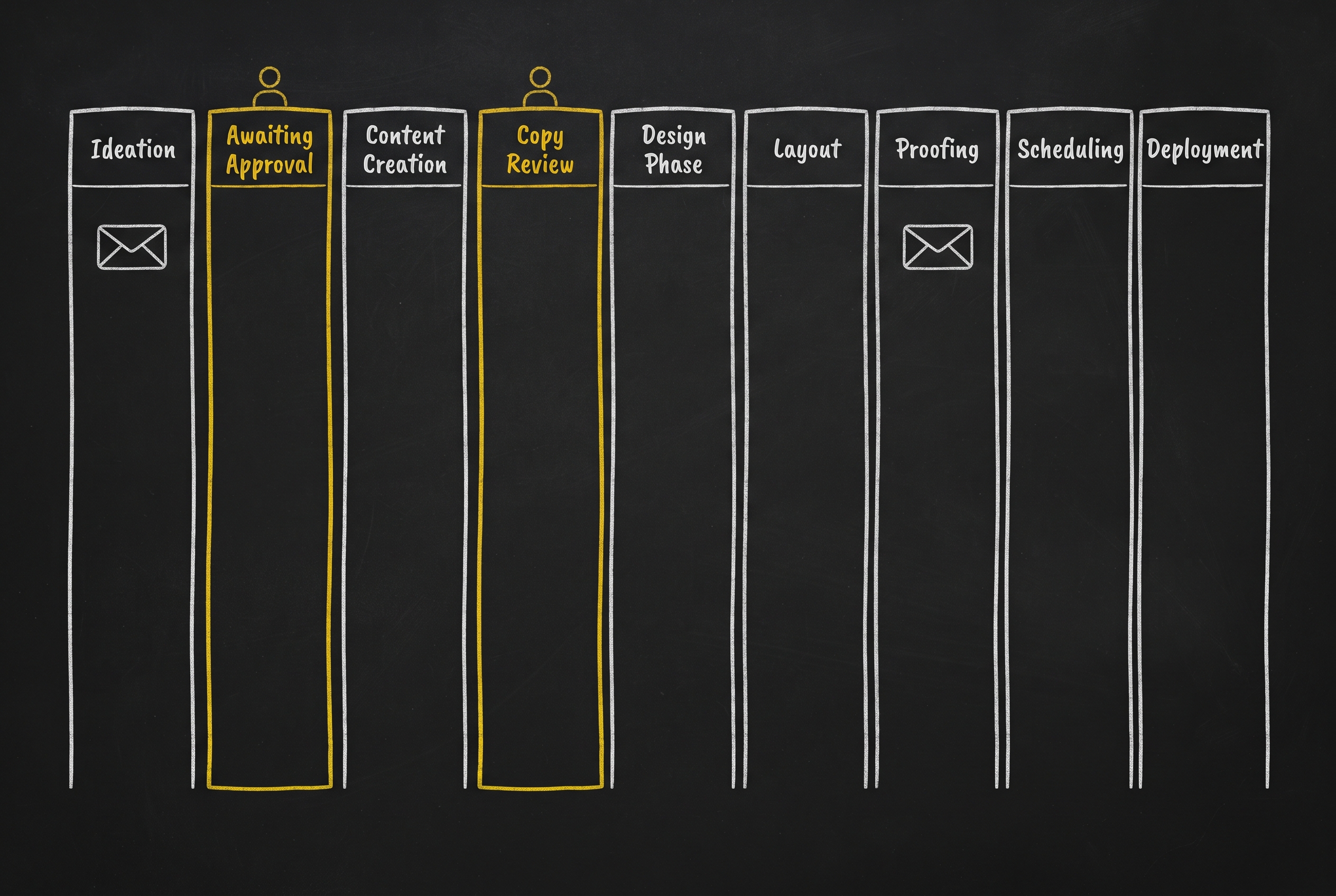
"Here's the structure I recommend: a board with nine columns — Planned, then your Approval gate, then Drafting, then your Copy Review, then Warming, Sending, Replies, Done, and a Paused lane. Each campaign is one card. The plan — framework, target list, cadence, the numbers — lives on the card so you can read it. Nothing sends without your OK. Create it?"
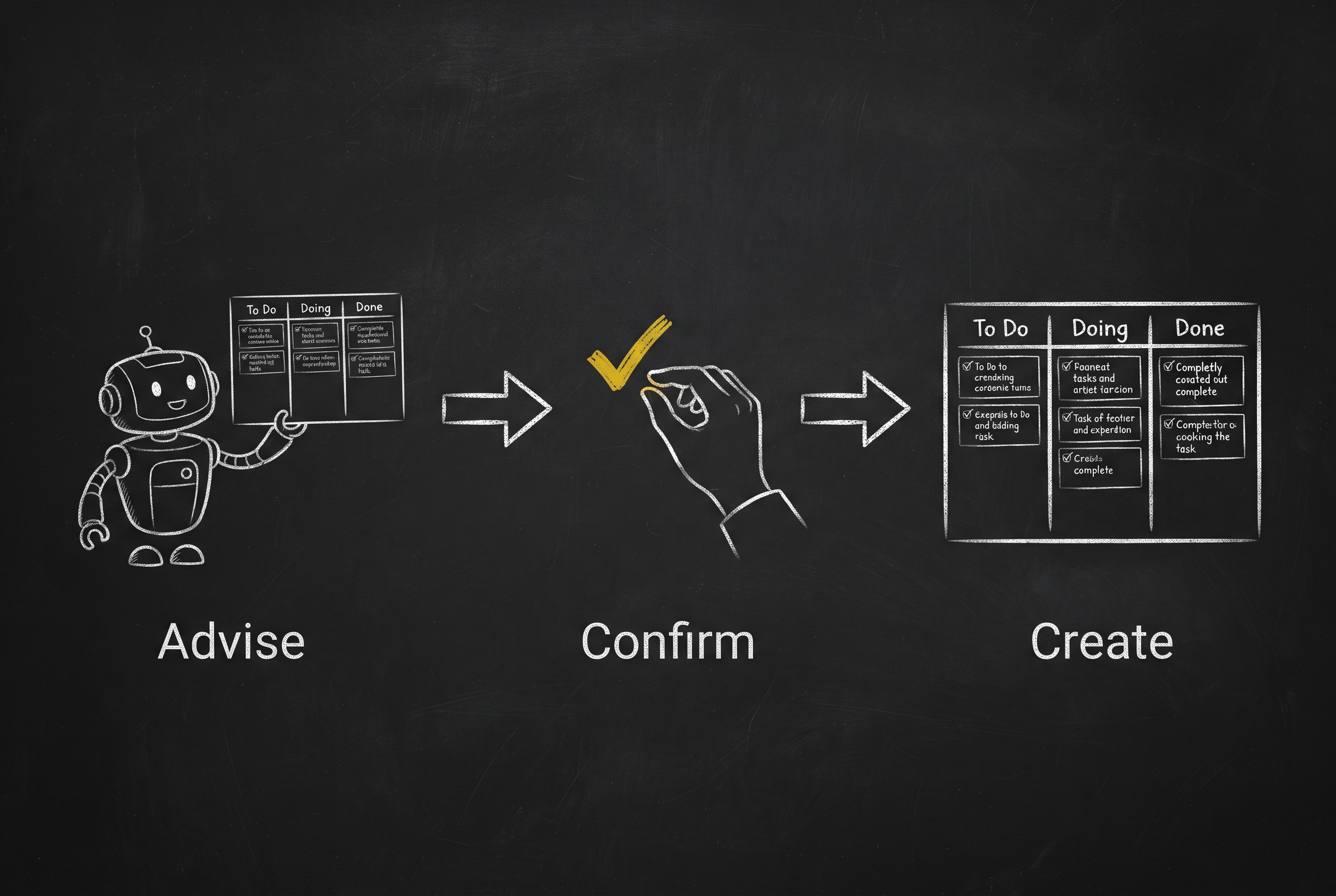
You say yes, it builds it. That's the pattern I now use for everything: advise, create, confirm. The agent proposes, you approve, then it executes. You're never surprised by something it did on its own.
Why a board, and not just a chat message
Because you want to see the work, not just trust that it happened.
A card on a board is visible. You can open it, read the strategy, check the target list, see how many emails it plans to send and over how many days. You can watch it move — Planned this morning, Awaiting your approval by lunch, Sending by tomorrow. If a campaign stalls in your approval column too long, the board nudges you. If a reply comes in, it surfaces on the card for you to handle.
A chat message scrolls away. A board is a standing record of what's happening, who approved it, and when. When you're running outreach at the volume that actually moves a pipeline, that visibility is the difference between a system you control and a black box you hope is behaving.
The number you can't optimize
My rule for every tool I build is the same: does it make money, save money, or save time — and does it produce a number I can optimize?
An outreach agent produces the number. It gets you from zero campaigns to a steady flow of them, and you can't optimize zero. But the board is what makes that number safe to chase. It means I can turn the volume up without lying awake wondering what got sent in my name. The AI moves fast; the board keeps me in the loop; nothing ships past a gate I hold.
That's the version I actually wanted to run. Not an AI I have to babysit, and not one I have to blindly trust. One that does the work, shows me the plan, and waits for me to say go.
outbound-engine is live on the OPVS marketplace as @di-atomic/outbound-engine. Trigger it with "build a cold campaign for {ICP}" and the first thing it'll do is offer to set up your board.