
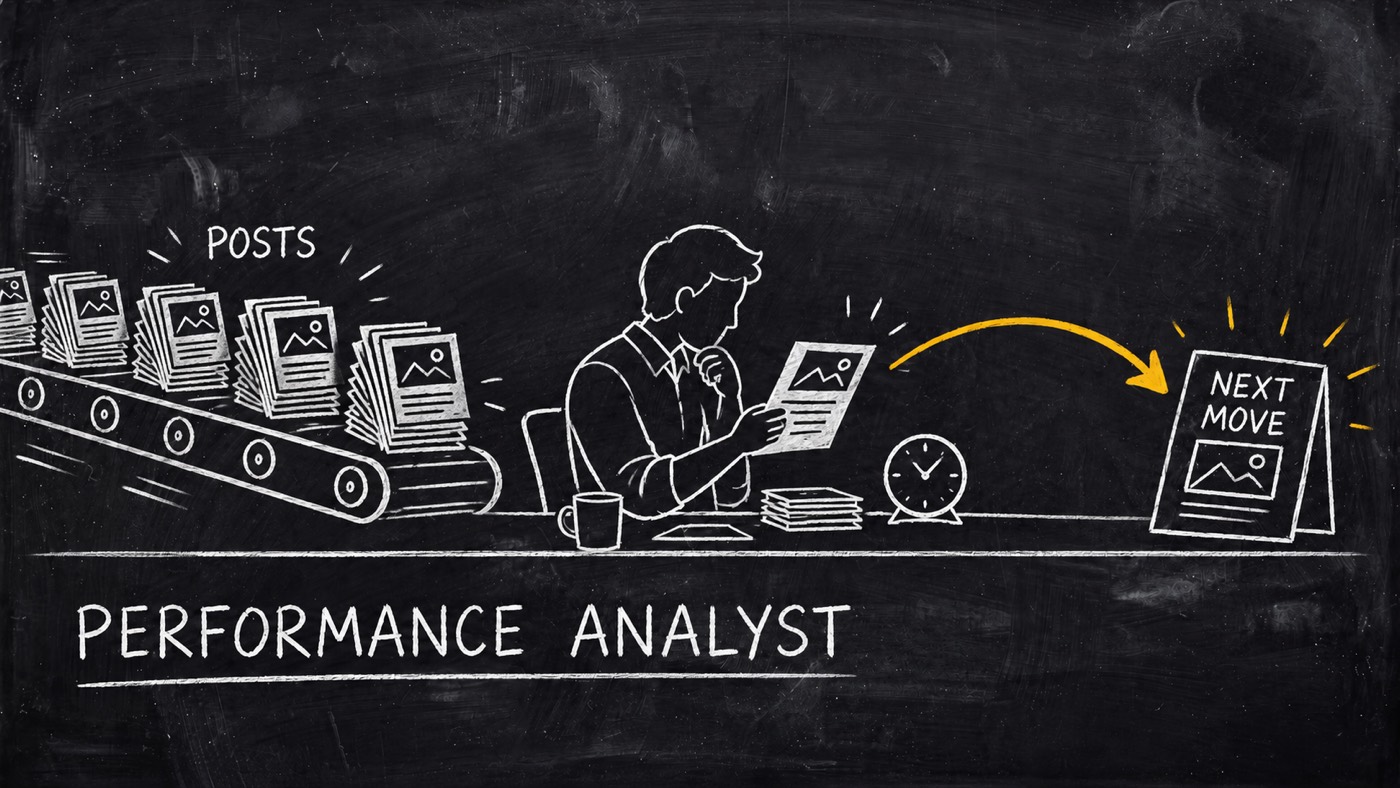
My marketing team won’t stop posting. Someone has to check if it works.
I wanted a marketing team that could keep the content moving. Now the posts keep coming. Articles, short clips, feed posts. Somewhere between the next draft and the next review, I still need to find out which pieces deserve another round.
That sounds like a quick look at the numbers. Then I open the tabs. One platform has views. Another has clicks. The website has visits. A post is still new, another has had a full week, and the two sit next to each other as if that were a fair contest.
I built Content Performance Analyst for the job after publish. You hand it a published piece and the context it needs. It checks the results at fixed windows, compares them with your own baseline and recommends one next move. You can close the analytics tabs.
Give the posts someone to answer to
Your content team has a queue of work. Measuring it should have a place in that queue too. Otherwise, the next urgent piece wins and the last one never gets a proper read.
Content Performance Analyst works from a board. It claims the measurement card, checks what is due, reads the available data and leaves the result where the person running the team can find it. The handoff includes the numbers, their sources and one recommendation.
I gave this role a narrow job. It reads performance. It does not rewrite a weak post, boost a strong one or quietly change the tracking setup. Those actions need their own owner. A recommendation is the end of its job, not permission to act on it.
Same windows. Fairer comparisons.
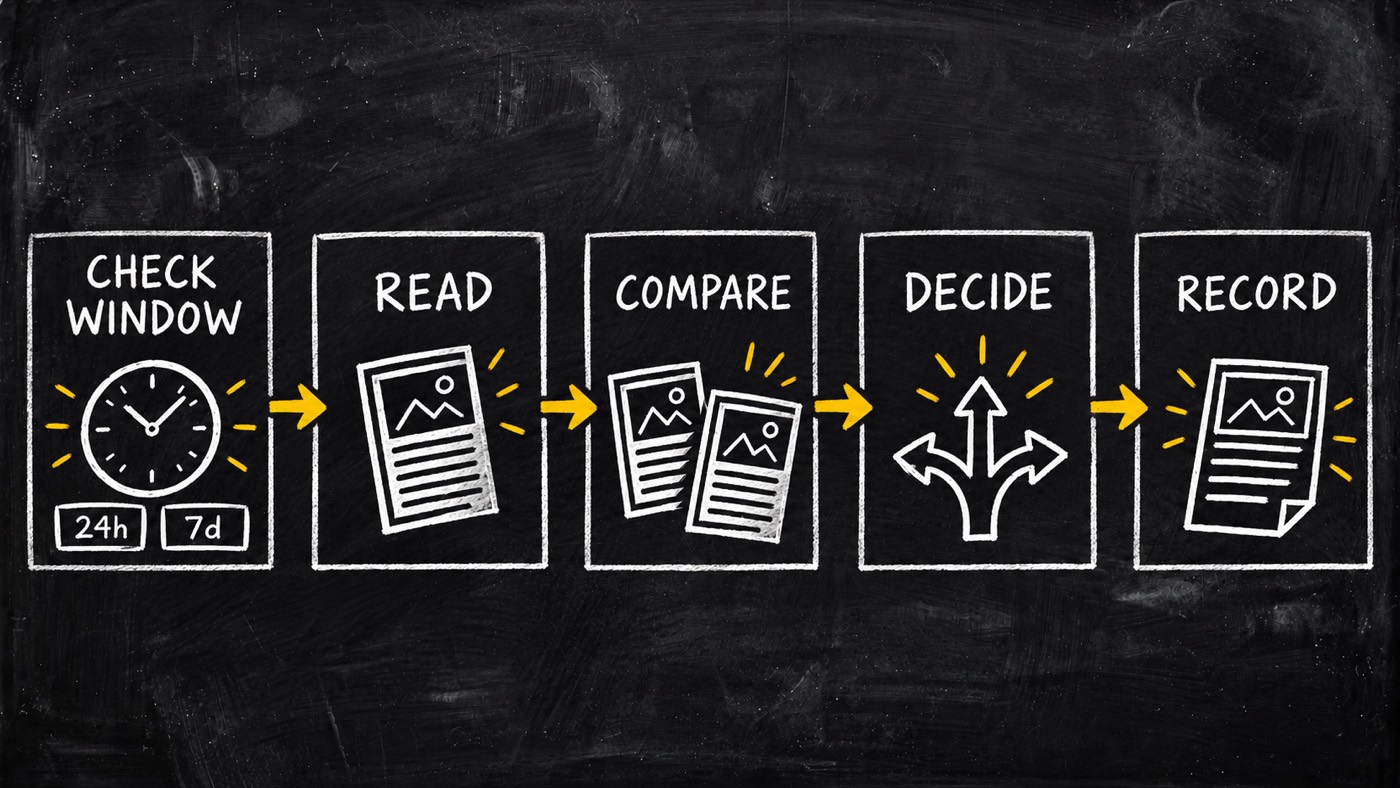
The role reads a piece at 24 hours and again at 7 days. Those are measurement windows, not promises that an agent will wake up on its own. Your workflow needs to bring the card back when the window is due.
If it is too early, the analyst says so and stops. If the window was missed, it reports the gap. It does not recreate yesterday’s result from today’s counter or fill the blank with an estimate.
That matters when you compare two pieces. A week-old article and a day-old article have had different chances to reach people. I want that difference visible before anyone decides which topic to drop.
Every number has a place and a time
A platform counter changes. So does the meaning of a report once you lose the date it was read.
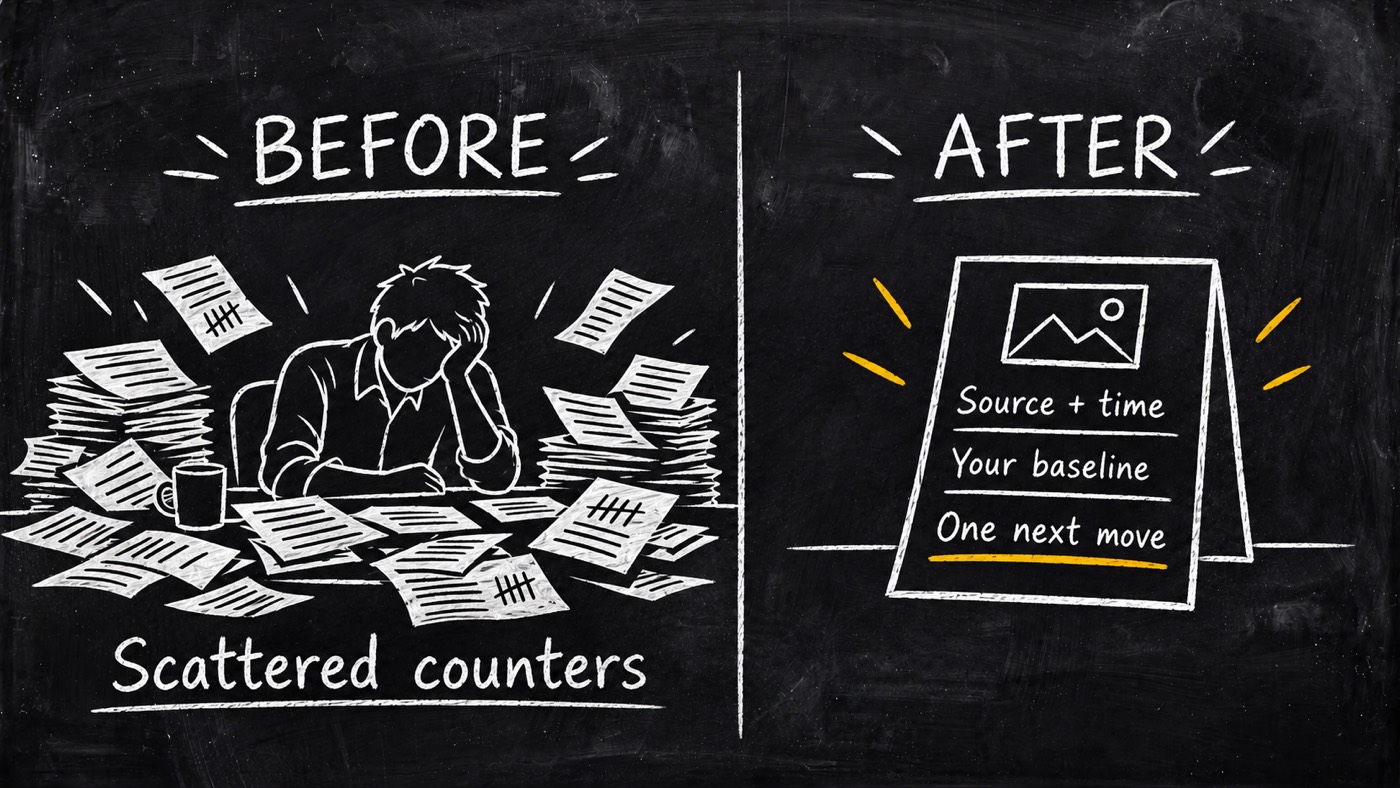
The analyst records where each number came from and when it read it. Depending on the access you provide, that source can be platform analytics, GA4, PostHog or a public counter. The profession does not grant access to those systems. You still need to provide a readable source.
It checks the link tags too. A link without UTM tags is reported as unattributed. The role can use a platform attribution report where one exists, but it cannot turn an untagged visit into a conversion for your favourite post.
“I cannot attribute this” is a useful finding. It gives the operator a tracking gap to fix. Guessing would hide the gap and make the next comparison less useful.
A worked handoff, without invented results
Here is an illustrative task, not a measured customer result:
Measure the published article at its 24-hour window. Use the platform report and the tagged website link. Compare it with this brand’s baseline for articles on the same channel. Recommend one next move.
The analyst first checks the publication time. It reads the sources you supplied and records their timestamps. Then it asks whether the baseline is a fair match for the channel and format.
The report separates what is known from what is missing. If the platform report is available but website attribution is absent, it keeps those findings separate. If the baseline is too thin to support a strong conclusion, it says that too.
The last line is one recommended move, supported by the available evidence. It might recommend testing a related angle when the comparison supports it. It might instead recommend fixing attribution before deciding whether the piece brought useful traffic. The evidence determines the recommendation; the role does not promise a winner.
Your usual result is the starting point
I do not want every post judged against a generic industry average. Your channel, audience and format give the result its context.
Content Performance Analyst compares the piece with your brand’s own baseline. It uses kpi-advisor for metric interpretation and a citable benchmark where one is needed. A small difference inside your usual spread should not become a grand claim about what your audience wants.
The useful outcome is a decision you can trace back to the evidence. This release has no measured claim for revenue lift, time saved or better content performance. Its promise is the work contract: fixed windows, sourced numbers, a relevant comparison and one recommendation.
Six linked skills, one job
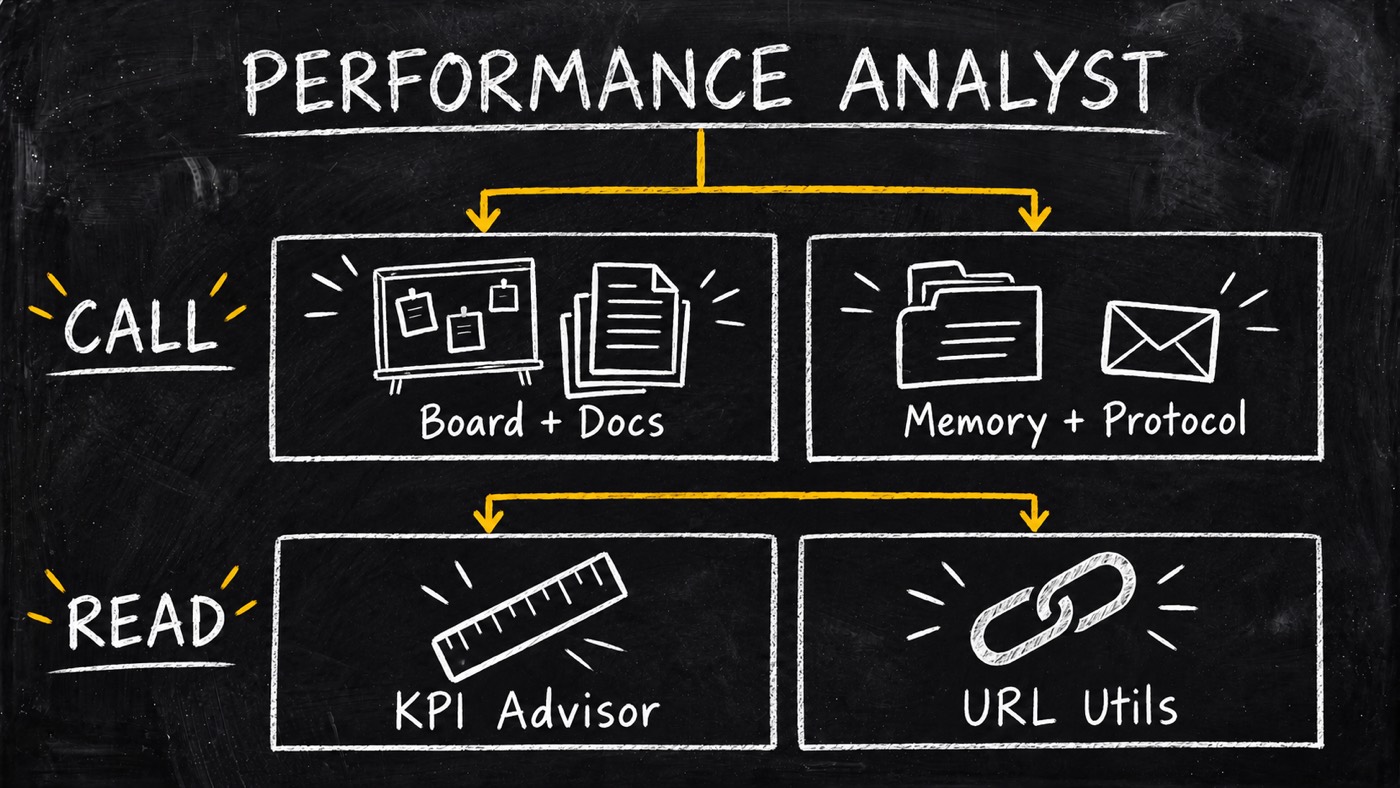
The role calls AgentBoard for the work card, AgentDocs for the measurement page, AgentMemory for the baseline and OPVS Protocol for the handoff. It reads kpi-advisor for judgment and url-utils for link hygiene.
Those skills support the job. You do not need to supervise six separate tasks to ask which published piece earned another look.
Hire the analyst. Keep the decisions visible.
Content Performance Analyst 0.1.0 is a beta profession with a probationary trust state. Start with one published piece, a due measurement window and sources the agent can read. Review the report before using its recommendation to guide the next piece.
I built it so the marketing team can keep posting while someone checks what the work tells you. Give the next measurement card to Content Performance Analyst, or inspect the marketplace package.