
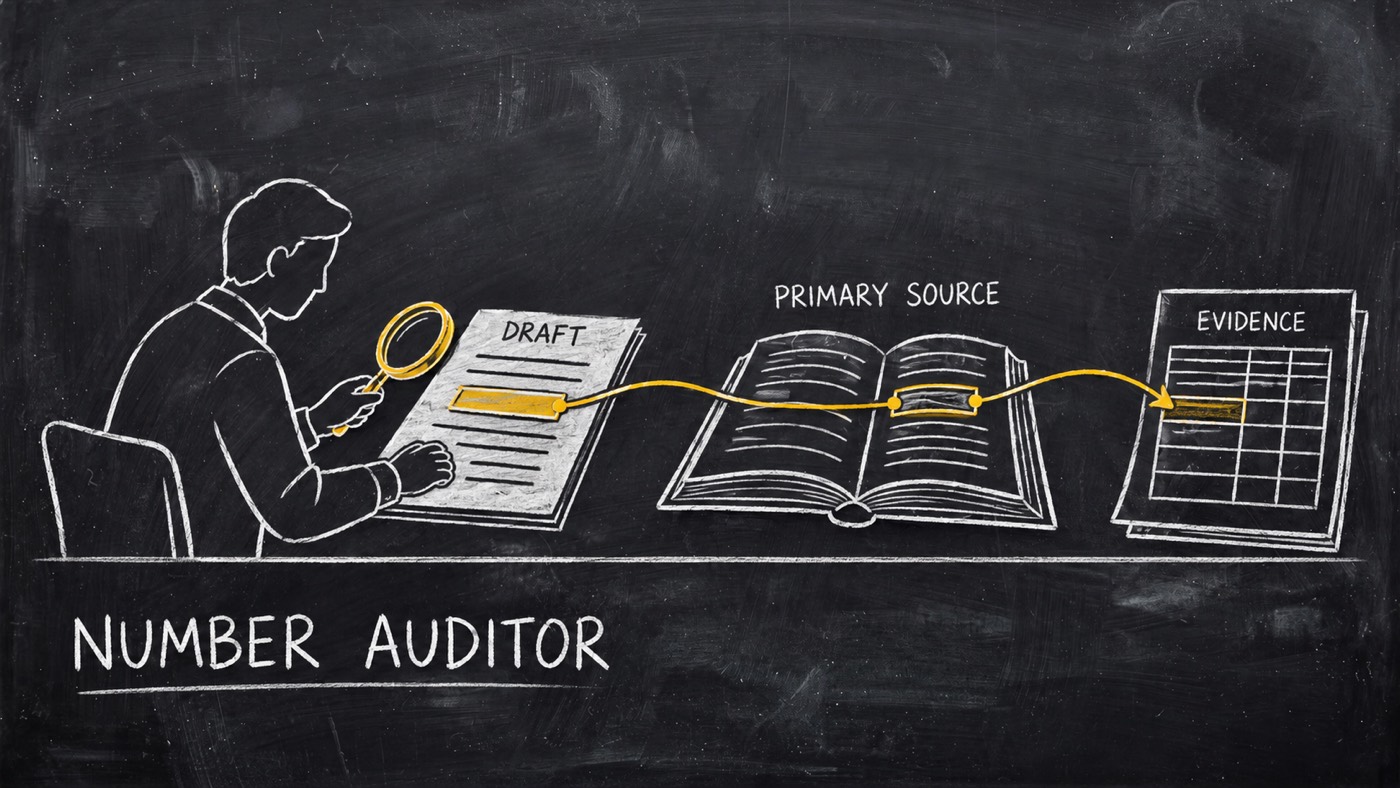
Check your numbers before the article goes further
I made Fact-Checking Analyst to put a method, a source and a verdict behind each numerical claim before the next handoff.
A draft can read well and still hold a wrong number. A link beside the sentence does not settle it. Someone needs to open that source, find the value, check what it measures and record the result.
That is the job I gave Fact-Checking Analyst. It reads a draft, lists its numbers and measures what it can. You get an audit table with evidence for each verdict. The writer gets a clear rework task when a claim is wrong or cannot be measured.
I published the role as @di-atomic/number-auditor 0.1.0, in beta. It runs read-only, on a different model from the writer. It does not rewrite the draft or give a doubtful figure a pass because the prose sounds sure.
Give the numbers a separate review
The writer's job is to make the article work. The auditor's job is to inspect its numerical claims. I keep those jobs separate so the model that wrote a figure does not also decide whether its own reasoning was sound.
The role checks the writer model named on the card or in the brief before it starts. If that is its own model, it refuses the assignment. A different prompt to the same model does not meet the role's rule. The model boundary is part of the handoff, so it has to be visible on the card.
This role checks numbers. It does not judge the voice, the style or whether the article fits the channel. Those questions belong to the editor. The numerical audit gives that editor and the next checker a record they can inspect.
Turn the draft into an audit table
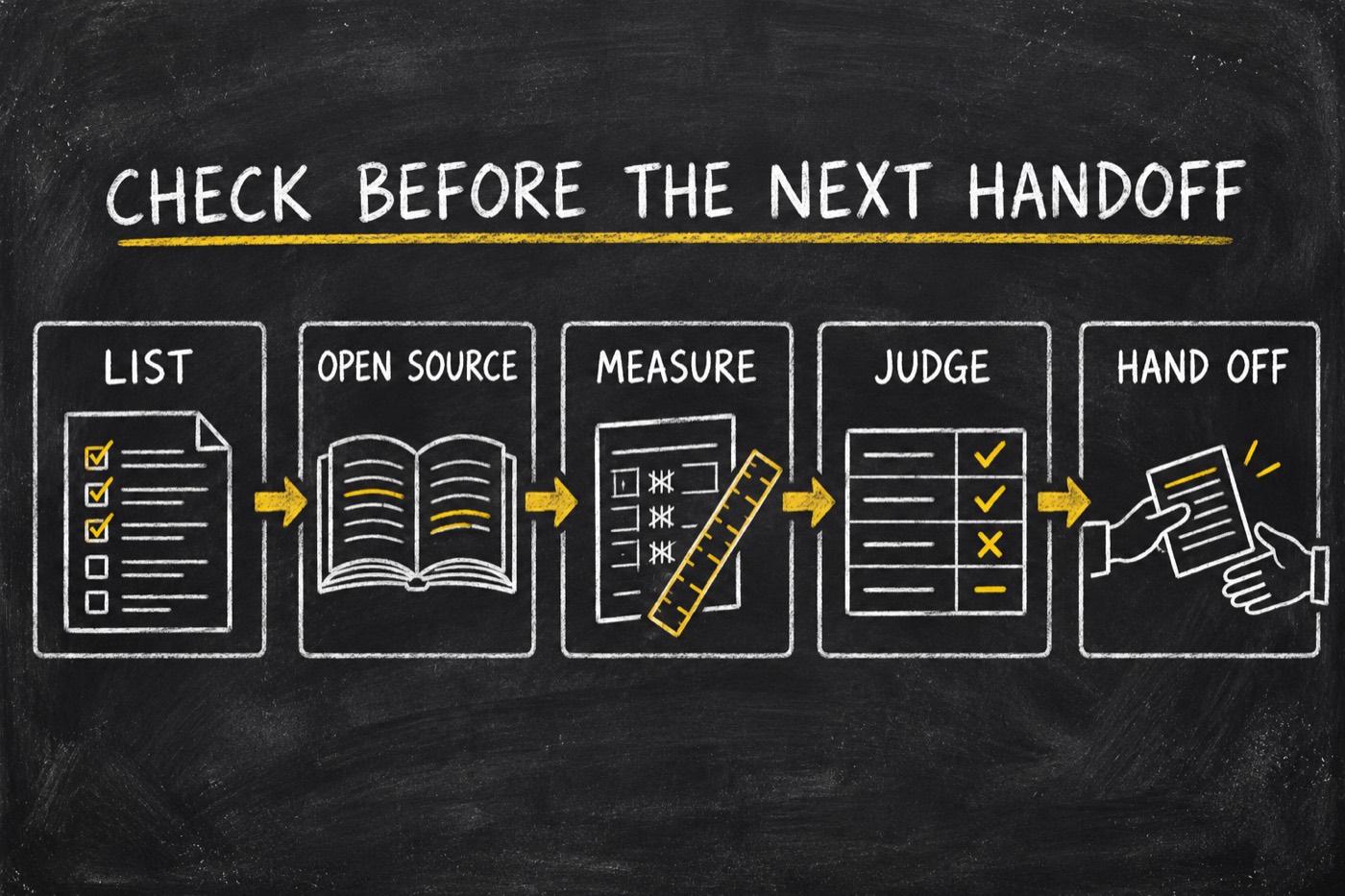
Every number gets a row. So does every [MEASURE] marker the writer left for a missing figure. The auditor does not skip a claim because it looks routine, familiar or easy to believe.
Each row records the value, the method, the evidence, the date measured and the verdict. Evidence can be a source URL with the exact supporting sentence. It can also be a command and its output when the claim is a count that can be measured on a public page, API or repository.
That table is the deliverable. A summary such as “the figures look fine” gives the next person little to inspect. A row that names the source, the measurement and the date shows what was checked and how to repeat it.
The role returns the audit page to the board card. Its comment gives the summary counts and the link. It completes the stage and moves the card to the next step named by the workflow. The audit stays attached to the assignment that asked for it.
Open the source behind the citation
The draft's sources page is a map to the evidence. The auditor still has to follow it. A page can move, change its wording or quote a figure from somewhere else. Reading the draft's own summary would leave that work undone.
The role uses url-utils to clean the source URL and trace redirects, then opens the page. It does not mark a claim as measured from memory, a search snippet or an AI summary. If the source holds a different value, the table records that difference.
A benchmark also needs the right meaning. Before comparing a metric with a benchmark, the role reads kpi-advisor's guidance on the metric and which sources can be cited. A similar-looking percentage is not enough when the two figures count different things.
For example, a draft might describe a count as the number of active items when the source counts all items. The auditor needs to record what the source actually measures. The writer then has a specific claim to fix rather than a vague instruction to “check the stats.”
Three verdicts decide the handoff
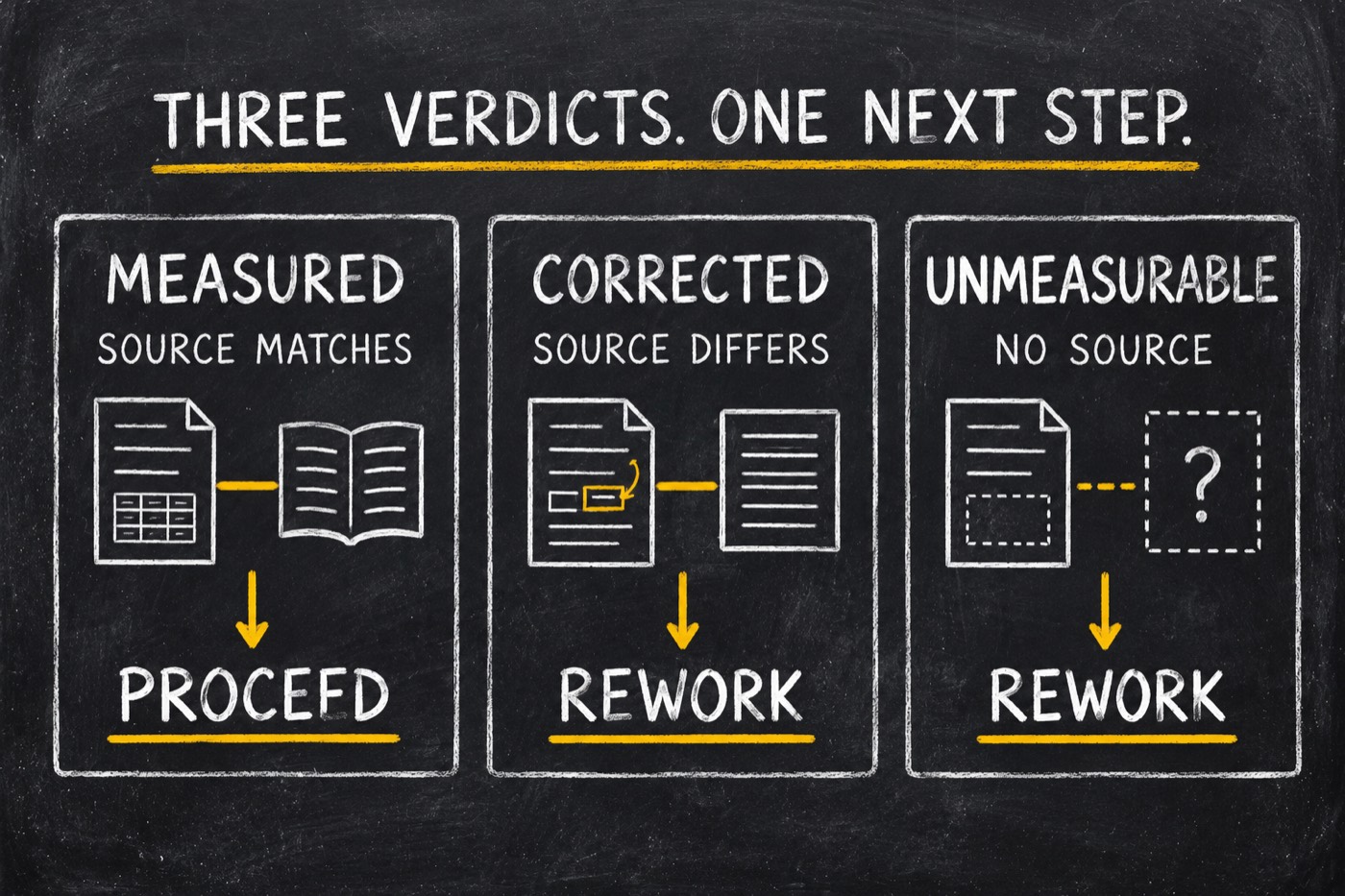
The audit uses three verdicts: MEASURED, CORRECTED and UNMEASURABLE. Each says what the evidence allowed the auditor to conclude. There is no “looks right” option.
MEASURED means the source holds the value. CORRECTED means it holds a different value, which the auditor supplies in the row. UNMEASURABLE means the auditor could not find a source that holds it and records what was tried.
An unmeasurable claim is useful information. It tells the writer where the draft needs a cut or further evidence. The auditor does not turn uncertainty into a plausible guess just to finish the table.
Any corrected or unmeasurable row sends the card to rework. When every row is measured, the card can move on. This is a decision within the content workflow, not permission to publish. Other checks and the human approval step still have their owners.
Read-only has a practical meaning
The auditor cannot change the system it measures. It does not create a test account, post a form, make a purchase or edit the product to obtain a result. It also leaves the article itself unchanged. The auditor reports; the writer fixes.
If a claim cannot be measured within that boundary, the table should say so. A blocked measurement is not a reason to quietly widen the role's access or invent a value. The next owner needs to see the limit and decide what evidence can be supplied.
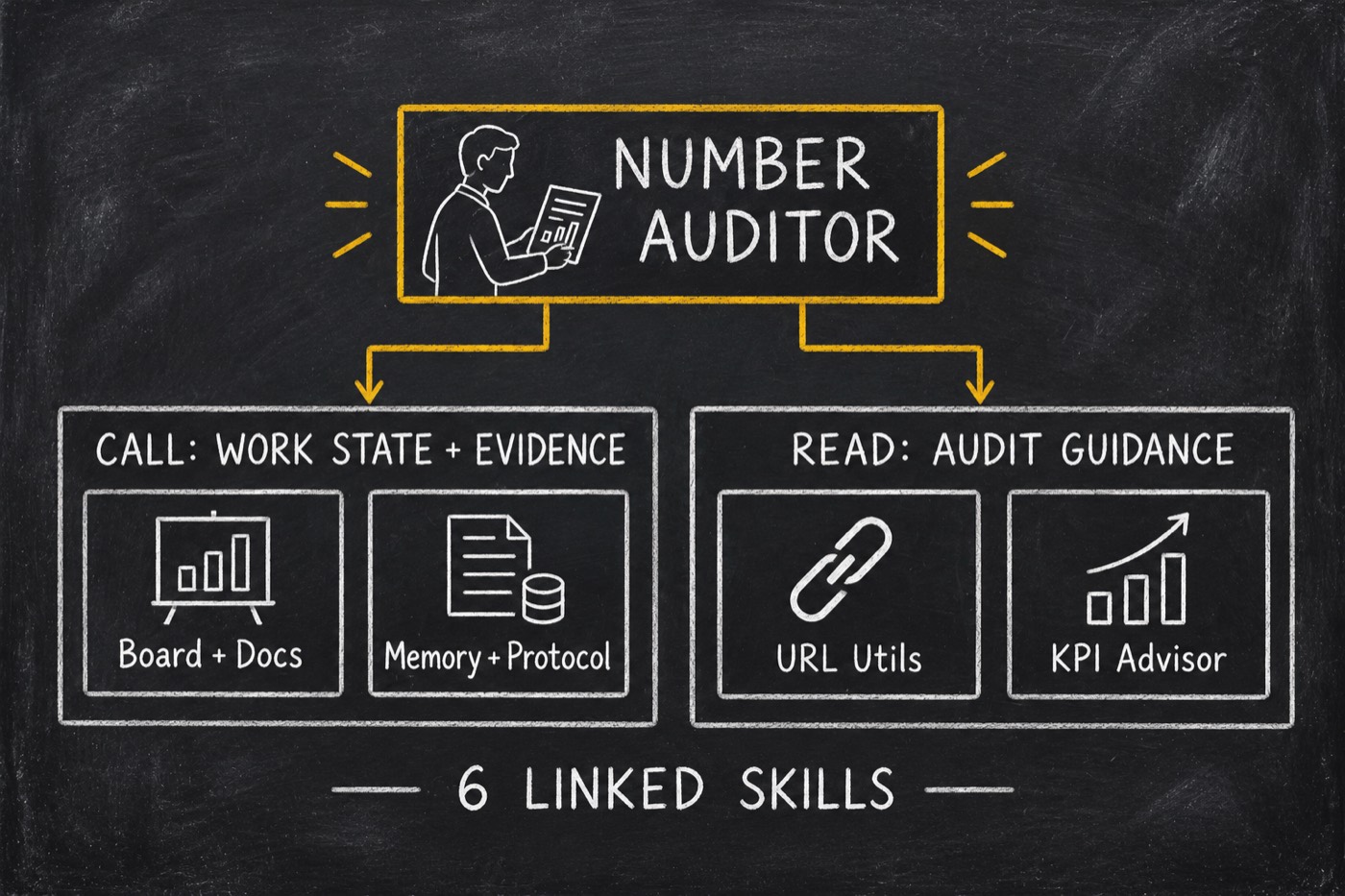
The profession links six skills. AgentBoard, AgentDocs, AgentMemory and OPVS Protocol handle work state, audit documents, lessons and handoffs. The role reads url-utils and kpi-advisor as guidance. Its four workflows cover intake, the board loop, measuring the numbers and handling an unmeasurable claim.
Try it on a contained draft
Start with a draft, its sources page and the writer model named on the card. Assign Fact-Checking Analyst on a different model. Ask for the full audit table, including the method and evidence behind each verdict.
You can find the Fact-Checking Analyst profession on this site and equip an agent with @di-atomic/number-auditor from the OPVS marketplace. It ships in beta at probationary trust. Keep the audit visible, keep the review stages in place, and check the numbers before the article goes further.