
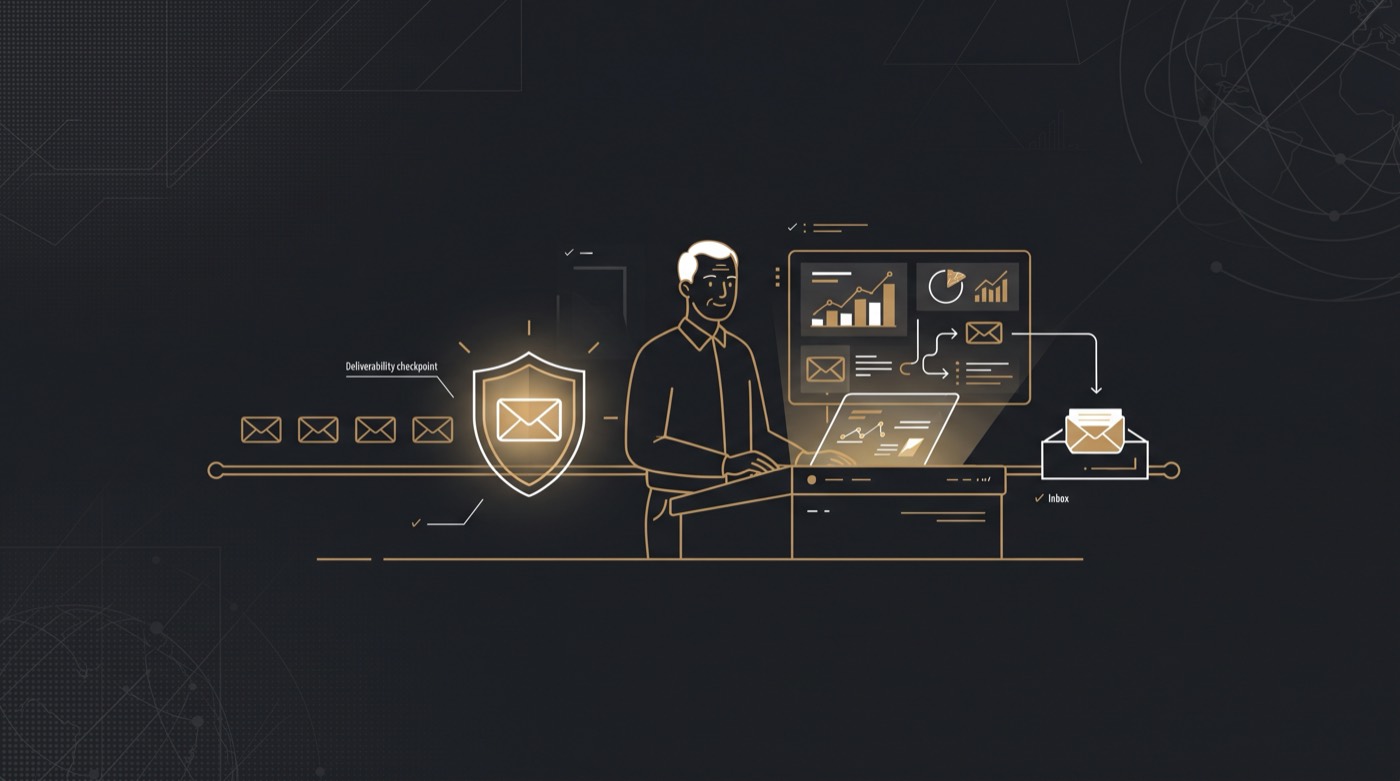
The Email Marketing Specialist: one AI role that runs outbound — and won't send from a cold domain
If you run cold outbound, you already own the tools. A sending platform. A warm-up service. A sequence framework. A place to write the copy. Each one does its job. And still, the results come out uneven — one campaign lands, the next one dies in spam, a client's follow-ups go out a day late, and nobody can tell you why.
That is not a tool problem. It is a nobody-owns-it problem. The tools don't know the order to use themselves. Someone has to run client-intake before the first draft, gate deliverability before the first send, and keep sending health separate from real replies. When that someone is you, stitching it together by hand every week, the seams show.
So I built the someone. @di-atomic/email-outreach is an Email Marketing Specialist — a profession you equip onto an AI agent, and it runs outbound and retention email end to end, per client. It is the first role I would hire for an outbound desk, and the last one I would automate carelessly. Here is what it actually does.
Who this is for
This role is for a brand or an agency that sends email for a living — cold outbound to win new business, retention email to keep the accounts you have. If you manage more than one sending domain, more than one client voice, or more than one campaign at a time, you have felt the tax: the work isn't hard, but the sequencing of it is relentless, and one skipped step quietly wrecks a month of warm-up.
If you send one newsletter a quarter, you don't need this. If you run an outbound operation, you need someone to own it.
What you hire, versus what you install
You can install my sending skills à la carte today — @di-atomic/smartlead for bulk send, @spideriq/mail-skills for one-to-one replies, @di-atomic/outbound-engine for the sequence framework. Install them and you get tools. Good tools. But you still have to be the operator who knows the order.
Equip the profession and you get the operator. It knows the order without being told:
Run client-intake first — capture the client's real templates, approvals, and goals before writing a word, so the sequence adapts from what already works instead of something invented from scratch.
Sequence in the client's voice — not a generic template with the name swapped in.
Gate deliverability before the first send — and refuse to send if the gate doesn't pass.
Own the follow-up ladder — authored up front as part of the sequence, not bolted on after the first email goes out.
Report sending health separately from replies — because a warm-up message is not a lead, and confusing the two is how dashboards start lying to you.
A bundle ships tools. A profession ships tools plus the judgment for when to use them.
The toolkit — eleven skills, linked, not copied
The profession links a toolkit. Each skill stays independently owned and versioned; the role is the composition that already knows which to reach for.
Five it calls to do the work:
@opvs-ai/agentboard— the campaign board, where it lays out the lifecycle columns and moves each send through them.@opvs-ai/agentdocs— the brief and client-example store.@opvs-ai/agentmemory— recalls DNS and warm-up state between sessions, so it doesn't re-learn your domains every time.@spideriq/mail-skills— one-to-one send, reply, and follow-up.@di-atomic/smartlead— bulk send, warm-up, and the deliverability gates.
Six it reads as methodology — it studies them and then executes with its own writing and the call skills. It never calls them like an API; that's a guaranteed error:
@di-atomic/outbound-engine— the sequence framework and QA verifiers.@di-atomic/sales-pipeline— the new-business play, cold to demo to proposal.@di-atomic/retention— the win-back and churn-save play.@di-atomic/copy-engine— email body craft.@di-atomic/hook-generator— subject lines.@di-atomic/voice-builder— the brand voice it writes in.
That CALL/READ split is the whole game. The role knows which skills do the work and which ones are the manual.
The workflows it runs
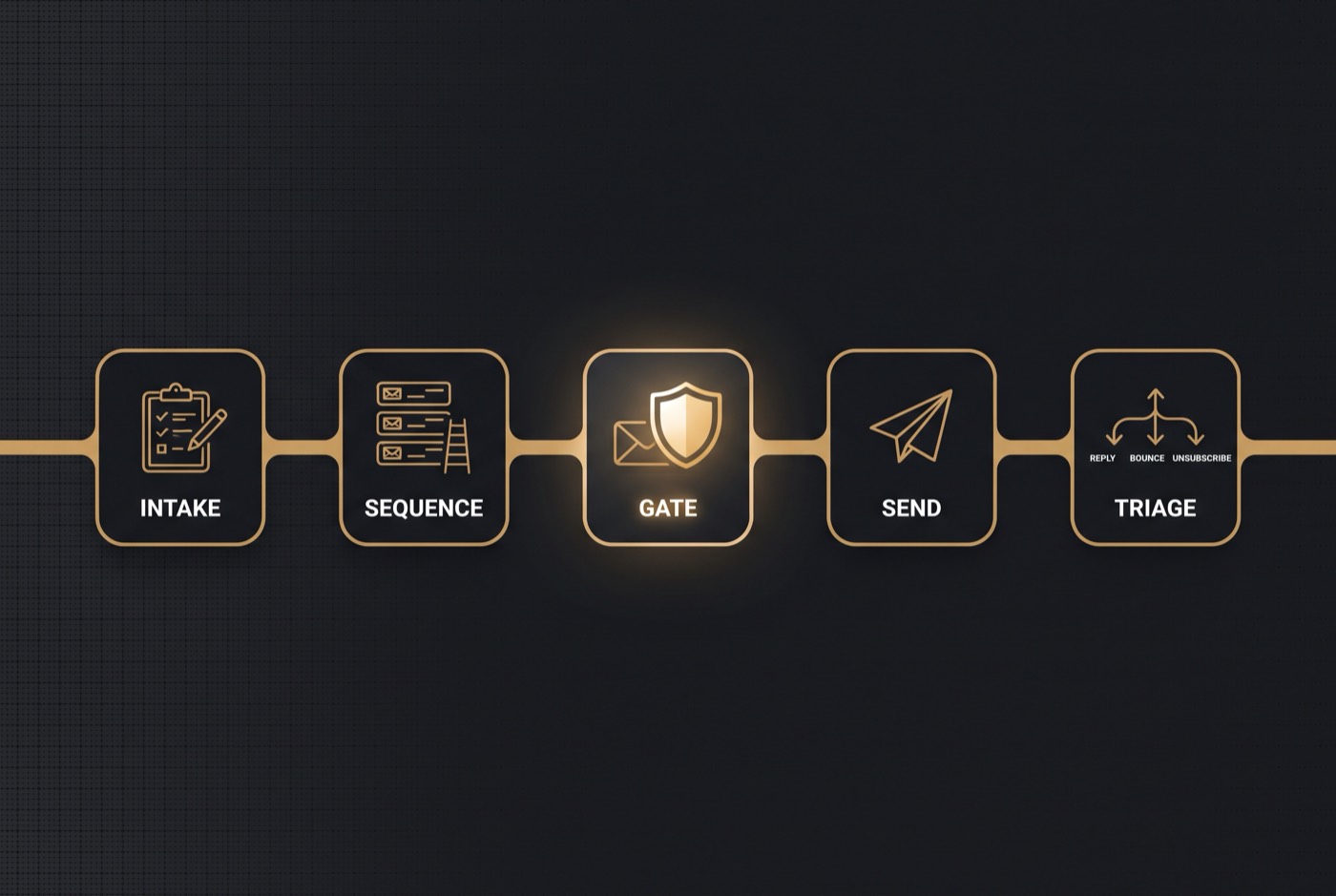
The profession carries a six-workflow library, forked per engagement rather than reshaped in place. Each has a trigger:
client-intake — the first move on any new account. Capture examples, approvals, and goals before sequencing.
cold-sequence — the new-business ladder: a first email plus two or three timed follow-ups, each a different angle.
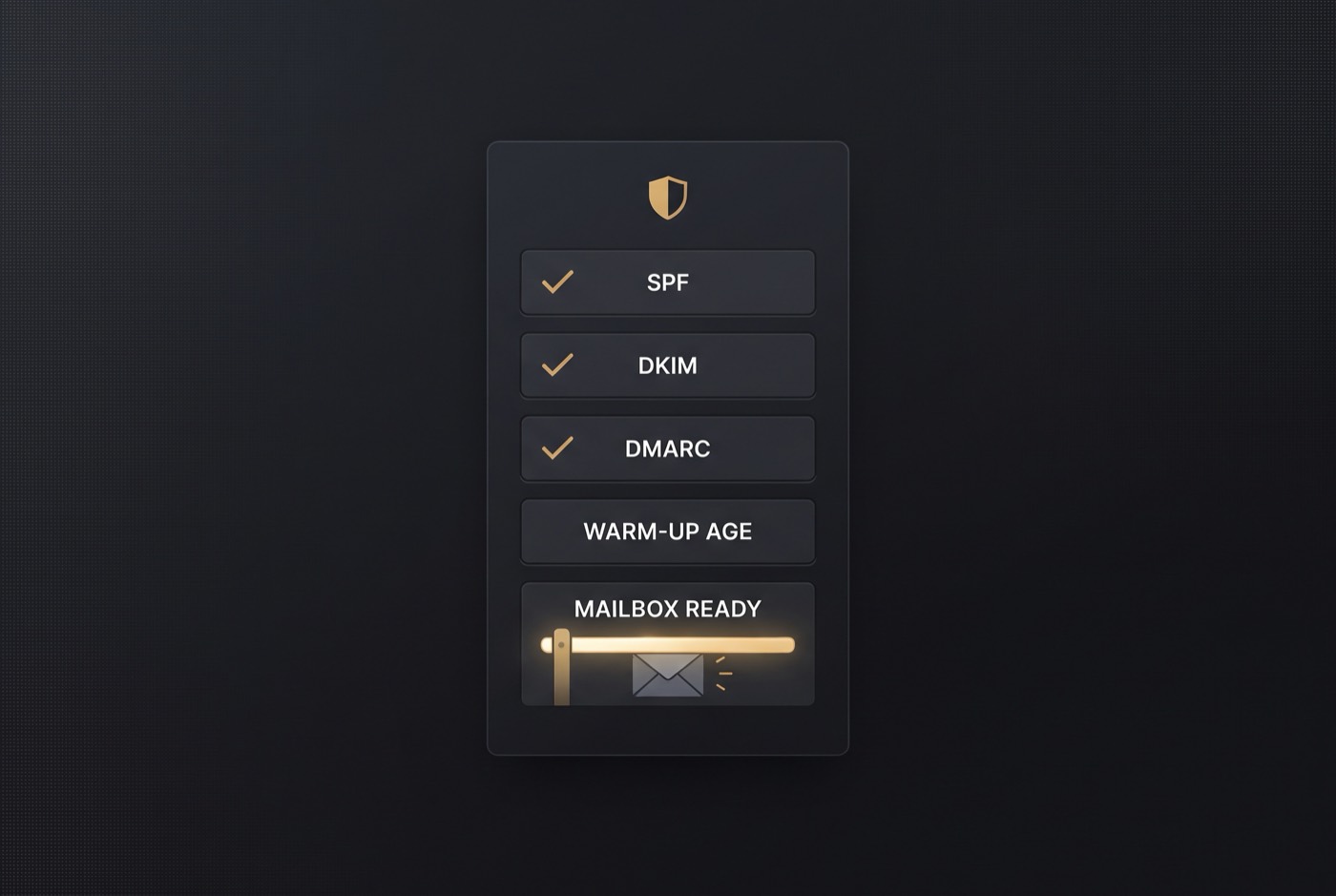
deliverability-gate — the crown jewel. Attach a warmed sender, confirm SPF, DKIM, and DMARC pass, and confirm
getMailboxReadinessreturns ready. If any of that fails, it does not send. This is the one rule I will not let it break: case studies report an unauthenticated domain landing in the inbox only around 38% of the time, so a send that skips the gate isn't a campaign, it's burned reputation.
retention-winback — the churn-save touch ladder for accounts going quiet.
warmup-recognition — keeps warm-up running and, critically, never counts a warm-up message as a reply, a lead, or a follow-up trigger. That traffic is machine-to-machine. Recognize it, keep it going, report it apart.
reply-triage — advances or stops the ladder on each reply, bounce, or unsubscribe.
None of these are code you wire up. They are declarative workflows the role already carries and adapts to your client.
The guild at email-outreach@profession.md
Here is the part a tool can't give you. Every profession opens a guild — a shared address, in this case email-outreach@profession.md, where anonymized craft accrues across every brand running the role. When one deployment learns that a particular gate check catches a bad send, or that a follow-up angle lands for a segment, the pattern promotes to the address. The next brand that equips the role starts further along than the last one did.
Skills ship knowledge. Professions ship knowledge plus a compounding learning loop. The role gets better at your outbound the longer it runs it — and it inherits what every other deployment already learned.
Equip it
If you run outbound, put this role on your next campaign:
opvs profession equip @di-atomic/email-outreachIn the first 30 days, hand it a real client and watch the moment that tells you it's the right hire: the send it refuses to make. A domain that isn't authenticated, a mailbox that isn't warm — and instead of shipping the campaign and hoping, it parks in review and tells you why. That refusal is worth more than any email it sends, because it's the one your tools would have let you make.
Install the tools and you're still the operator. Equip the role and you get one. That's the difference between a bundle and a job.