
Every creator tool ranks by followers. Mine refuses to.
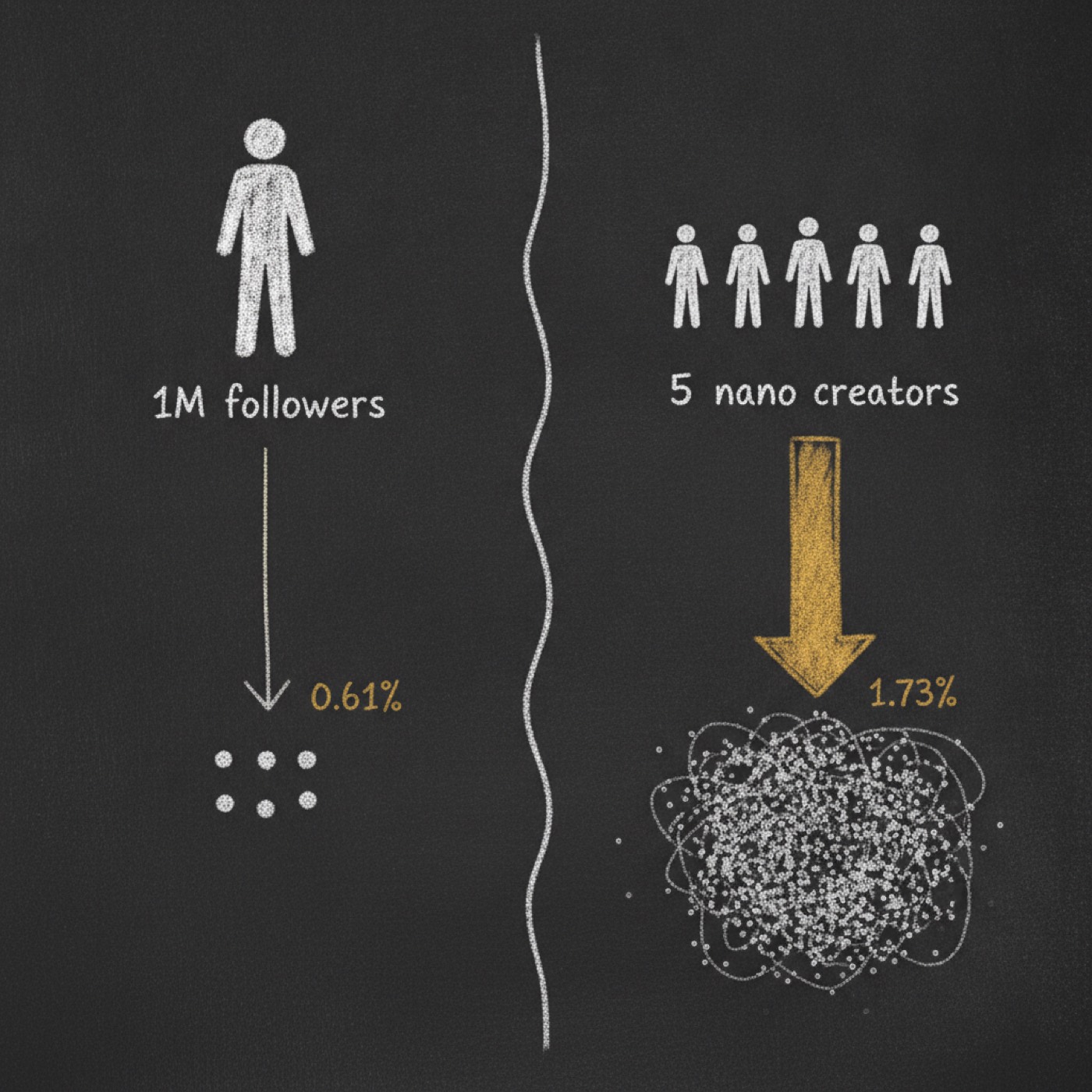
Follower count is a proxy for how long an account has existed, not for who sees the post. In 2024 nano creators averaged 1.73% engagement on Instagram and macro creators averaged 0.61%. influencer-marketing scores every creator against a tier-relative floor and refuses to rank on the number printed on the profile.
For brands and operators who want a creator programme that runs on the stack they already own — and who would rather activate forty small creators than rent one big one.

opvs-skills install @di-atomic/influencer-marketingThen say: “find creators for my product” or “build me a seeding campaign”.
Why a big follower count is not reach
creator: 1,000,000 followers

→ rank #1, pay the macro rate
   engagement: 0.2%
   actually reached: ~2,000

(one asset, one voice,
 one audience, and no way
 to tell it underperformed)
The biggest name wins the budget because the biggest number is the one you can see without doing arithmetic.
20 nano creators @ 2,000 followers

→ scored against the nano band
   engagement: 5%
   reached: the same ~2,000

   cost:    a fraction
   output:  20 assets, not 1
lint-low-engagement-creators → PASS
Same reach, twenty pieces of recyclable content, and a floor that reads the creator’s tier before it judges the number.
A million followers at 0.2% is not an audience. It is an invoice.
What you actually get
An anti-vanity gate
A flat 3% floor would be dishonest in both directions, so the band moves with the tier: nano 5–8%, micro 3.5–6%, mid 2–4%, macro 1.5–2.5%, mega 1–2%. lint-low-engagement-creators.mjs flags anything under its own band and makes you justify it.
Guardrails, not a screenplay
Over-scripting is the single most common reason UGC underperforms — hand a creator a script and you get a person reading a script. The brief ships 3–5 hook options, must-appear and avoid rules, one CTA, and then gets out of the way.
Disclosure as a hard gate
FTC 16 CFR 255, the UK ASA and the EU DSA all treat any incentive as a material connection — cash, gifting, affiliate, perks. Calling it thought leadership exempts nothing. A script checks for the clause, because this is legal liability, not house style.
The two things it got me to change
One campaign, discovery to measured
> "find creators for a skincare launch in DE"

  [I] identify ........ ICP + prior winners recalled from AgentMemory
  [M] map ............. platform picked per region, not defaulted to Instagram
                        longlist built on 1-credit calls
  [P] pick ............ demographics pulled on the shortlist only (26 credits each)
      lint-low-engagement-creators ... 3 flagged below band, 9 pass
      → each creator becomes a deal card: discovered

  [A] author .......... UGC brief (not sponsored) + 5 hook options
      verify-disclosure-presence ..... PASS  clause present, first frame

  [C] coordinate ...... outbound-engine drafts → smartlead sends
                        pitched → negotiating → contracted → content-due

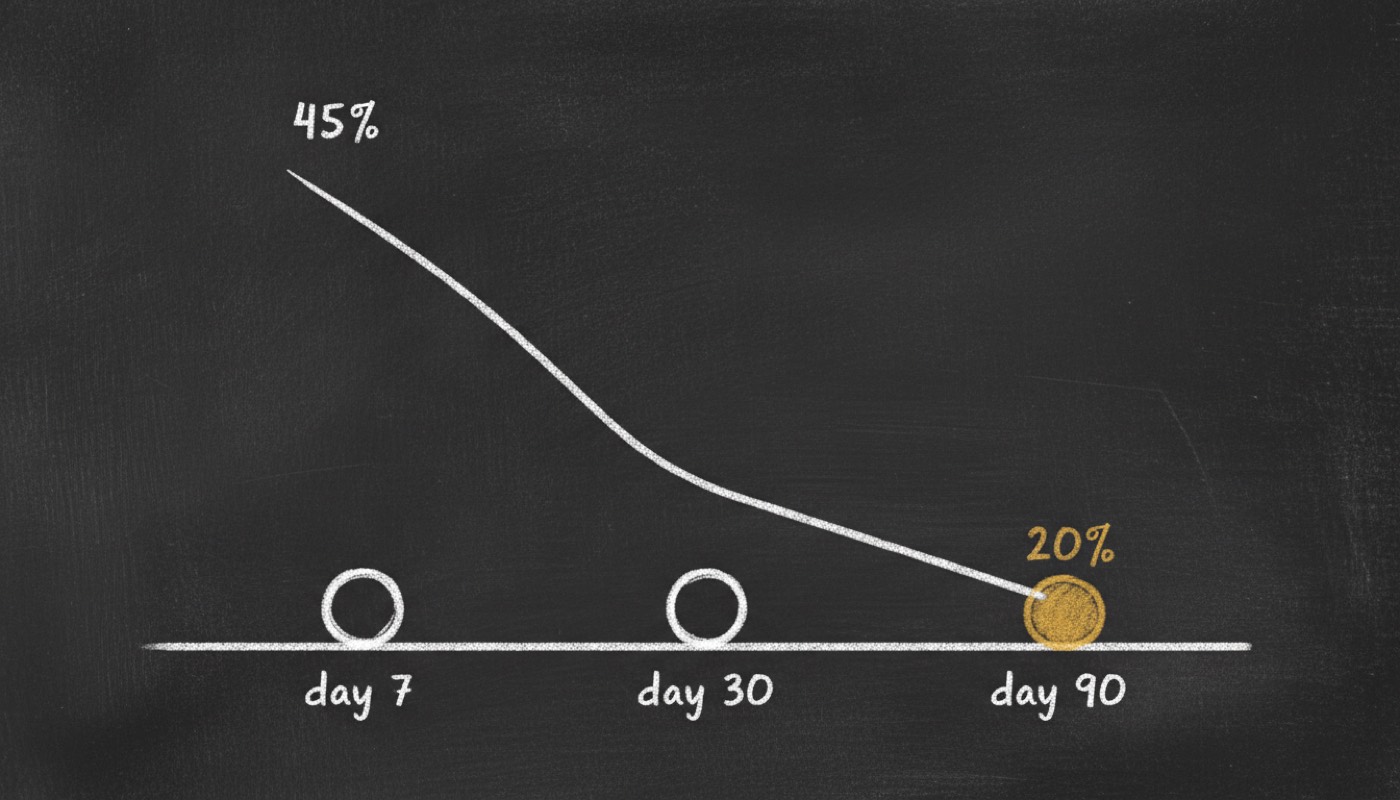
  [T] track ........... 7d posted, 30d RoAS/CPA, 90d LTV
      → measured. the 90-day number is the one reported.
The credit line matters more than it looks: the audience-demographics call costs 26 credits against 1 for most others, so discovery stays cheap and only the shortlist gets the expensive read.
Where it stops

I built this by dogfooding the same stack I run for clients.
influencer-marketing is one skill in the system behind Di-Atomic — the marketing & compliance agency that runs cognitoAI, SpiderIQ and OPVS. If you want a creator programme that activates a fleet instead of renting a name, reports the 90-day number instead of the launch-day spike, and carries disclosure properly — in any of our seven languages, including regulated categories like REACH and CLP — that’s the day job. Let’s talk.
Book a 30-min call with Di-AtomicJust want the skill? Install @di-atomic/influencer-marketing free.