
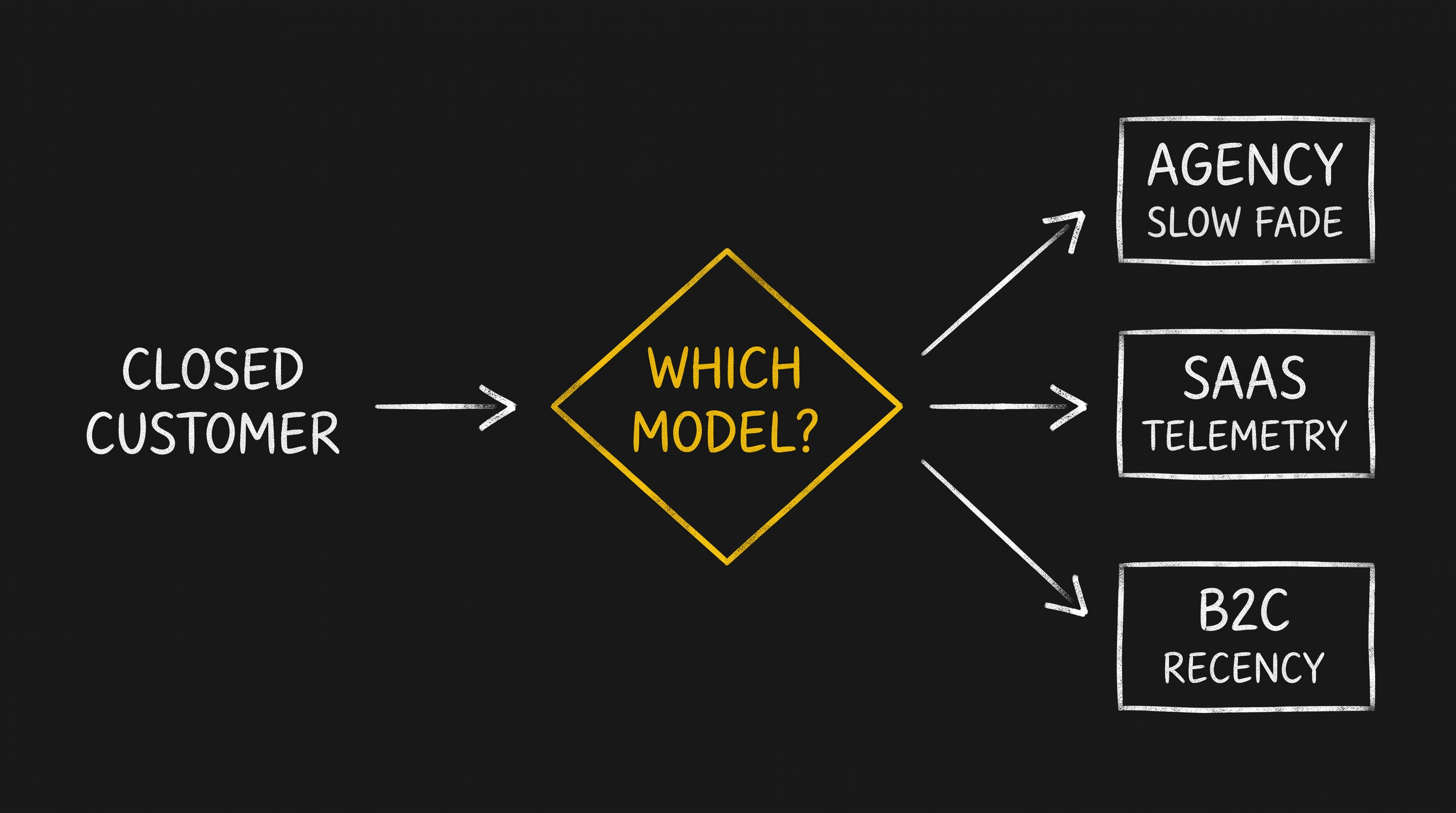
Retention isn't one playbook. It's three, and they disagree.
Every churn tool I looked at sold me the same motion: spot the customer who's leaving, throw a discount at them, and set up a dunning sequence for the failed cards. I nearly shipped exactly that. Then I checked it against my own book of business and realised it would have been wrong for two out of my three customer types.
I run an agency. I sell software. I've sold to consumers. Those are three different relationships, and they break in three different ways. A discount rescues a consumer who drifted off. That same discount, offered to an agency client who's quietly unhappy, tells them you knew the work wasn't worth the price. It's the fastest way I know to get fired.
So @di-atomic/retention branches on business model before it does anything else. Agency, SaaS, or consumer — pick one, and you get a different definition of churn, different signals, a different save move, and a different clock.
Why the one-playbook version fails
The generic playbook isn't stupid. It's just SaaS-shaped, because that's where the churn literature comes from. Read it closely and it assumes three things: your customer has a subscription, they log into a product, and they cancel with a button. Every recommendation hangs off those assumptions.
Now hold an agency retainer against them. There's no cancel button. There's no login to measure. The client doesn't churn on a Tuesday at 4pm; they fade. Meetings start getting rescheduled. Feedback that used to take a day takes a week. The person who hired you moves on, and 51% of clients follow them out the door within the year. By the time a product-telemetry model notices anything, you've already lost the account.
The clock is different too. In agency work, 43% of the damage happens in the first 90 days, before anyone would think to run a retention motion at all. A tool that starts watching at the renewal date is watching the wrong month.
Consumer is its own animal in the other direction. There's no relationship to score and no usage to read. There's recency of purchase, and there's whether the brand still means something to the buyer.
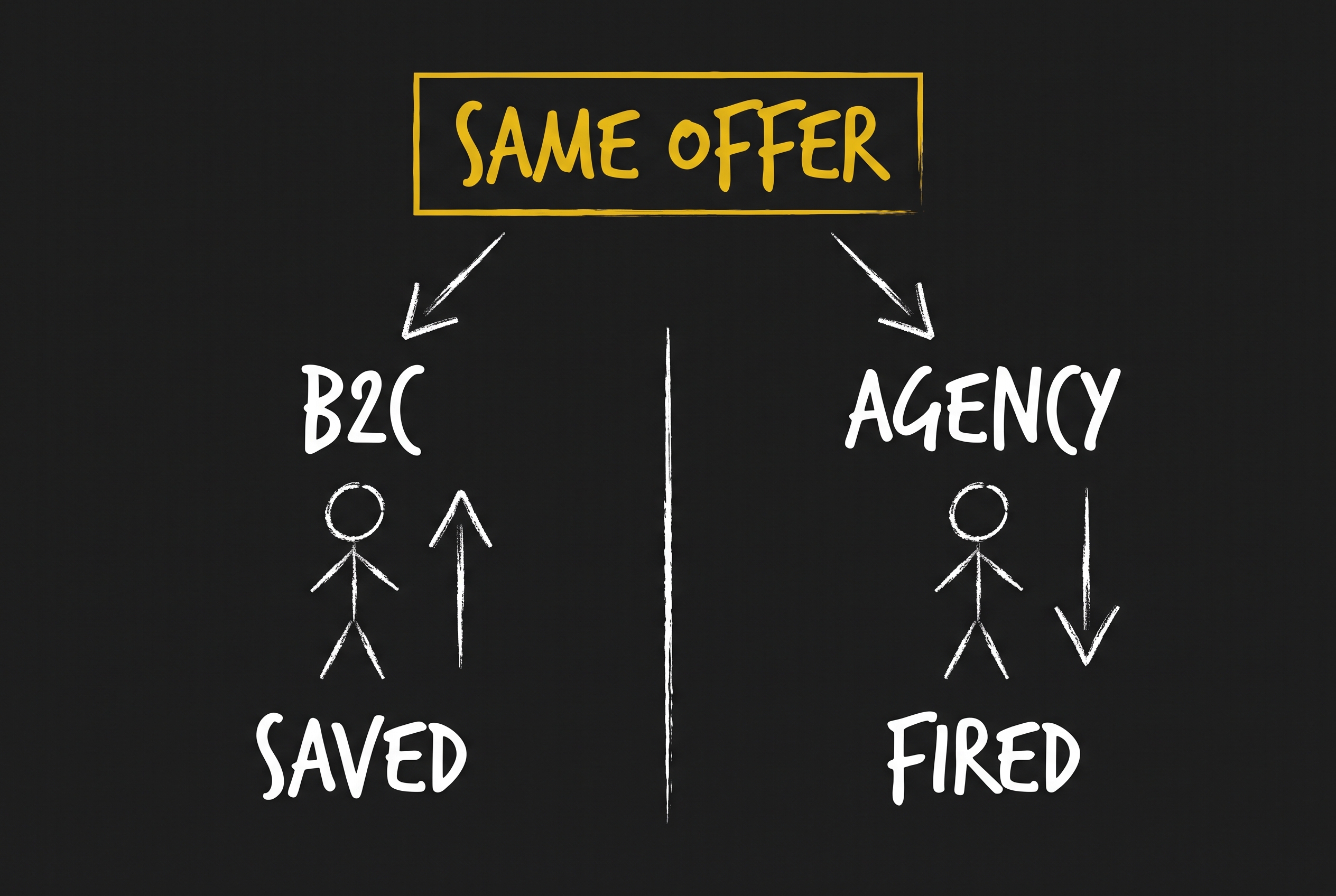
The reframe
Three motions, then. Not one with a few settings.
For agency clients, you score the relationship, not the logins. Response latency, meeting-reschedule rate, whether your champion is still in their seat. The save move is almost never a price cut. It's an executive review, a re-scoped plan, a conversation with the person who signed. A spreadsheet maintained by someone who actually knows the account beats an automated risk score here, and the skill says so out loud.
For SaaS, activation is the lever, and the reason code decides the offer. Price-and-value churn will take a discount or a downgrade. Frustration churn will not — someone who's angry at your product reads a discount as a bribe to keep tolerating it. That one needs a human. And for high-lifetime-value accounts, letting them talk to the founder beats any automated offer you can construct, as long as the unit economics hold. Nobody should be escalating a nine-dollar account to a founder.
For consumer, recency is the signal and the ladder is the tool. The win-back window sits somewhere around 60 to 90 days, and identity does more work than price does at the top of it.
The proof I keep coming back to
Two numbers changed how I build this.
The first: somewhere between 20% and 40% of SaaS churn was never a decision. It's expired and failed cards. Around 40% of cards get replaced in a given year, and every one is a customer who wanted to stay and got quietly logged out of the relationship. Fixing that is cheaper than any save offer and far cheaper than replacing the customer. It's the highest-return work in retention, and it isn't persuasion at all — it's plumbing.
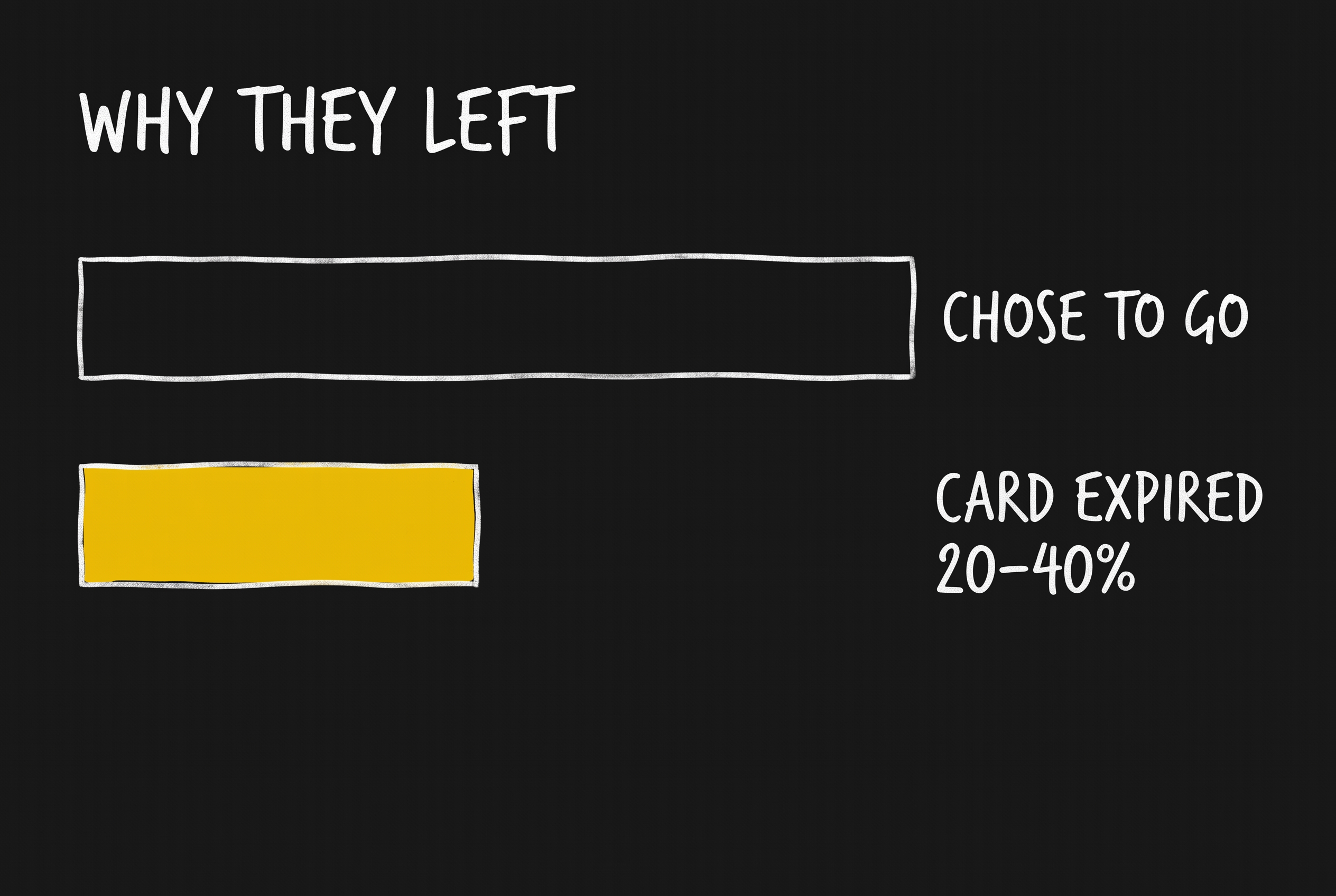
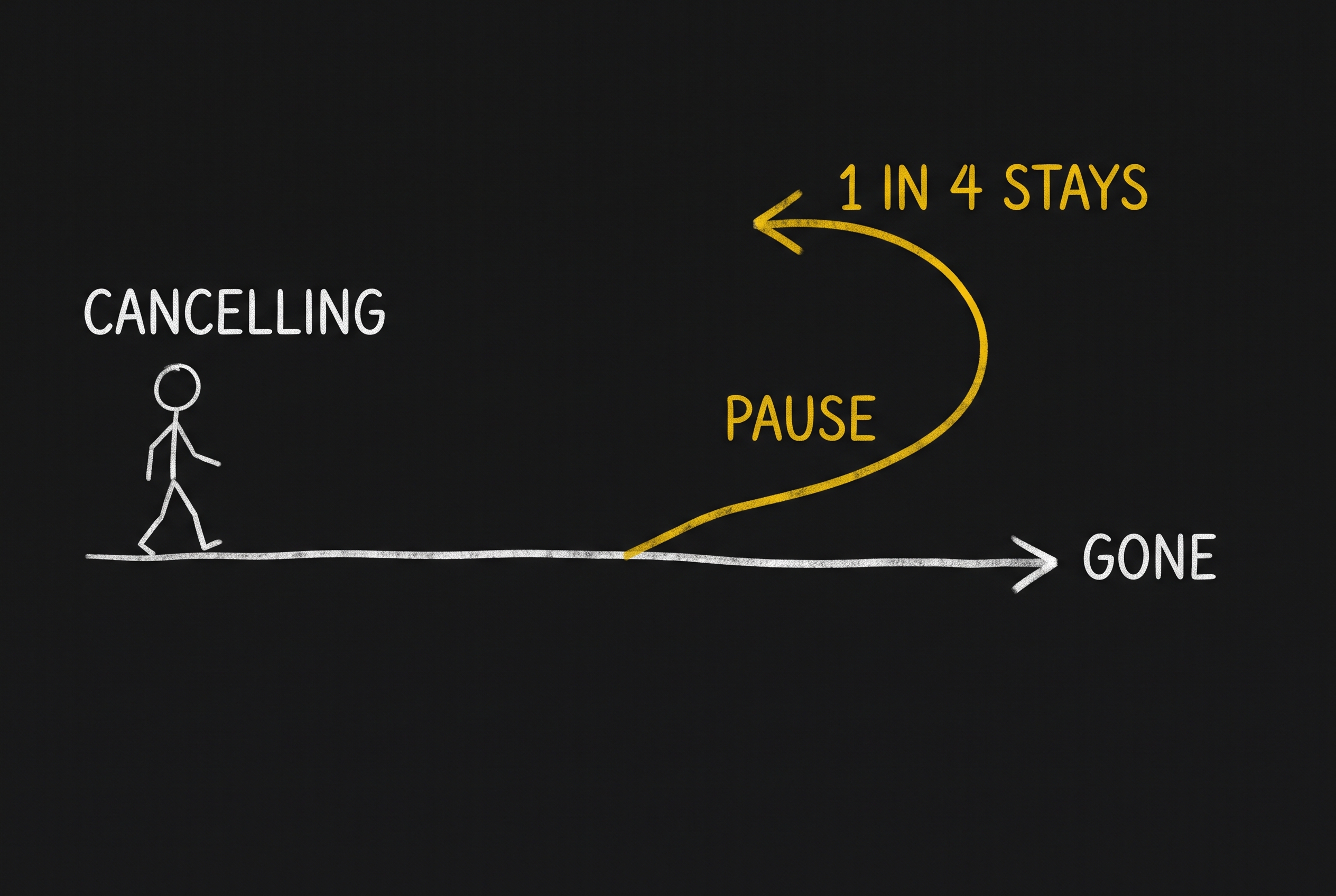
The second: when you put a pause option in front of people who are cancelling, about a quarter of them pause instead. They were never lost. They were busy, or broke, or between projects. The industry reaches for a discount first and offers pause as a footnote, which has it exactly backwards. Pause costs you nothing permanent. A discount resets what the customer thinks your work is worth, forever.
I built the whole skill on evidence like that: 70 exemplars, each one carrying a real number and tagged with the business model it came from, so the agency advice can't leak into the consumer path. Twenty-one learnings. Four scripts that fail the build when a rule gets broken — including one that catches a discount aimed at an agency client and one that stops a referral request going to someone who's already unhappy.
What it actually does, and what it doesn't
This skill is guidance-only. There's no API to call. It decides and composes, then hands the work to the peers that already do it well: outbound-engine builds the sequence, smartlead sends it, copy-engine writes the words, voice-builder sets the register, and SpiderFlow runs the clock. State and recall sit on the OPVS coordination layer, so what worked for a segment last quarter informs the next decision instead of evaporating.
It's compliance-aware where that matters. California's automatic-renewal law lets you show a cancelling customer one save offer, not a maze of them, and the skill treats that as a hard limit rather than a suggestion. For regulated products, the claim limits carry through from copy-engine.
What it won't do is pretend it can read a billing system it isn't connected to. Payment-failed events arrive by webhook. Per-processor recipes aren't written yet, and I'd rather say that than imply coverage I haven't built.
Where I'd start
If you only do one thing, do the boring one. Go and find out what share of your lost customers left because a card expired. For most subscription businesses it's a fifth to two-fifths of the total, and it's sitting there costing nothing to recover.
Then, before you write a single save offer, answer the question the rest of the market skips: which of the three businesses are you running? Because the offer that rescues one of them will lose you another.
@di-atomic/retention is live on the OPVS marketplace. Ask your agent to score an account's churn risk and it'll tell you which motion it's in before it tells you what to do.