
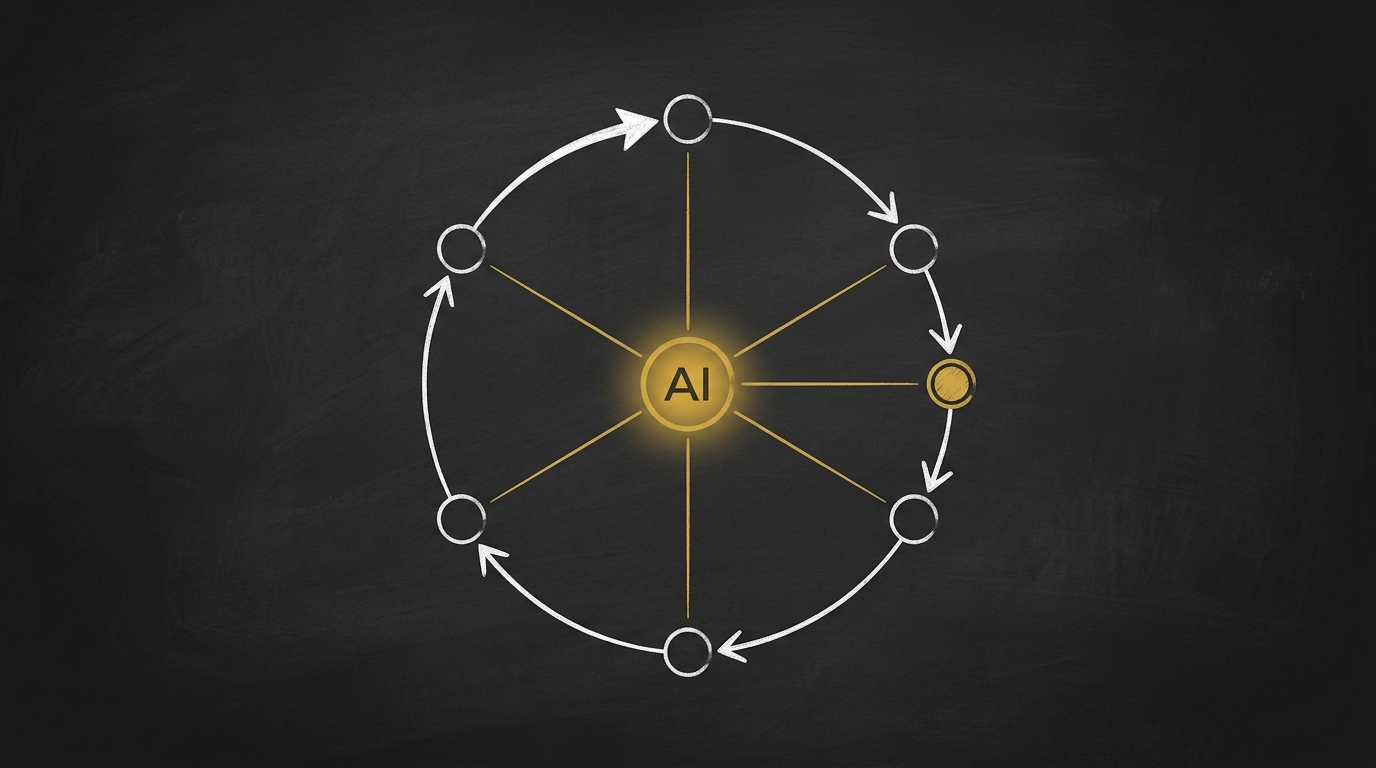
Posting more isn't a social strategy. Running the whole loop is.
If you run social for a brand, you already know the treadmill. Post more. Post daily. Post on one more platform. More becomes the whole plan, and the plan quietly becomes noise.
I stopped believing volume was the strategy a while ago. Volume is fuel — you can't optimize zero, so you do need attempts on the board. But attempts without a loop around them just burn. The strategy is the loop: what you learned last week deciding what you post this week. So I built that loop into one skill, and I want to show you exactly how it runs.
It's called @di-atomic/social-media-manager, and I think of it as the whole social-media department compressed into one AI you supervise. It doesn't write the posts or make the images itself. It runs the department — it decides the plan and points each specialist tool at the right job, one lap at a time.
Before the loop: which platforms are you even on?
That question is what v0.2.0 added, and it is the one I had been quietly leaving to whoever was holding the calendar.
Most brands are on six platforms because somebody opened the accounts once. Effort spreads across all six, none of them gets real traction, and the conclusion people reach is "we have saturated our market." Almost always what they mean is that they have saturated one channel at their current volume. The three questions worth asking any stalled channel are whether you could advertise more, advertise better, or advertise somewhere new.
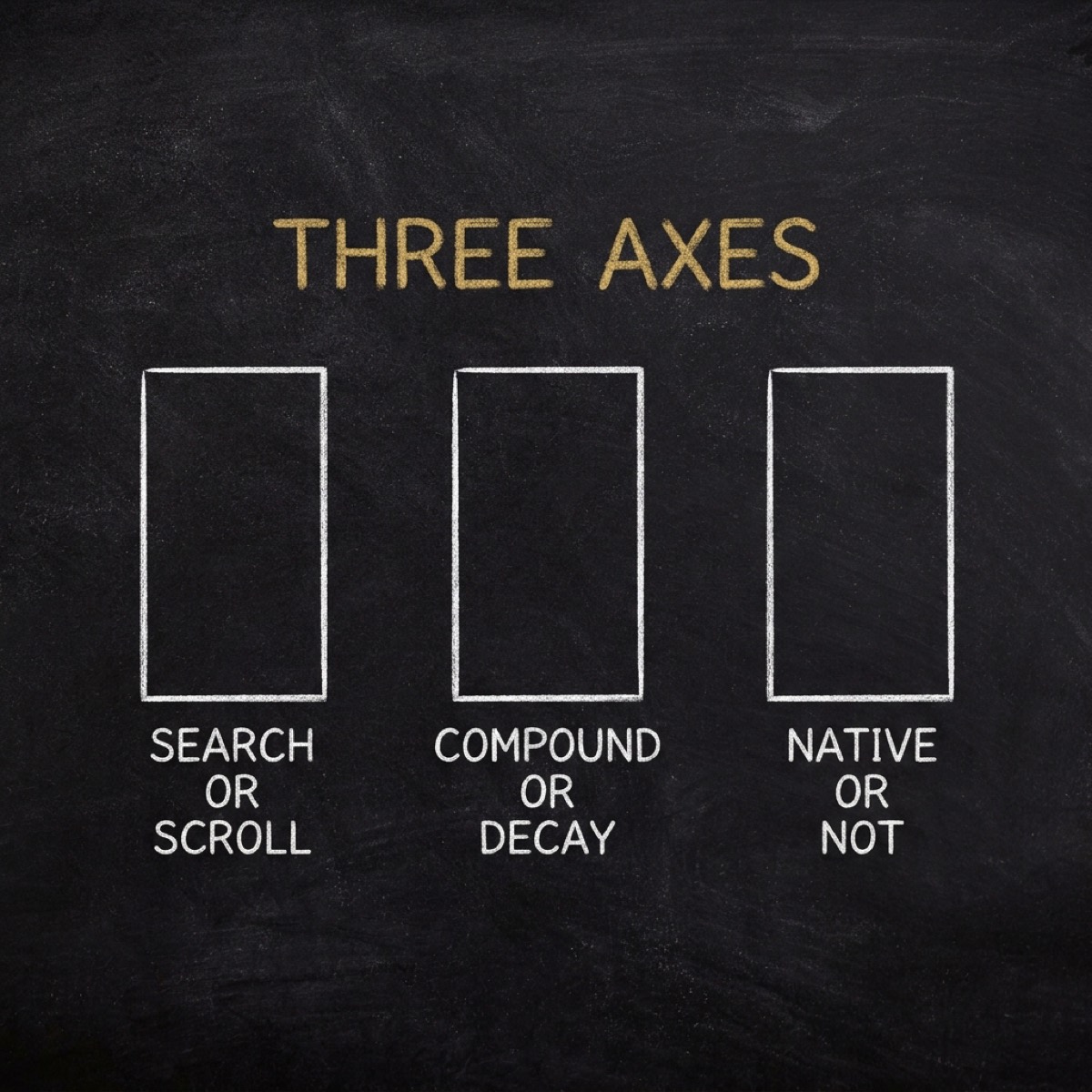
So the skill now settles the channel question first, on three axes rather than on taste.
Is your buyer searching, or scrolling? Search congregations hand you people who are already trying to buy, and in exchange push you toward being the cheapest option on a comparison list. Interest congregations carry no intent at all, so the hook and the offer do all the work. A few platforms are genuinely both, and those are usually the highest-value picks.
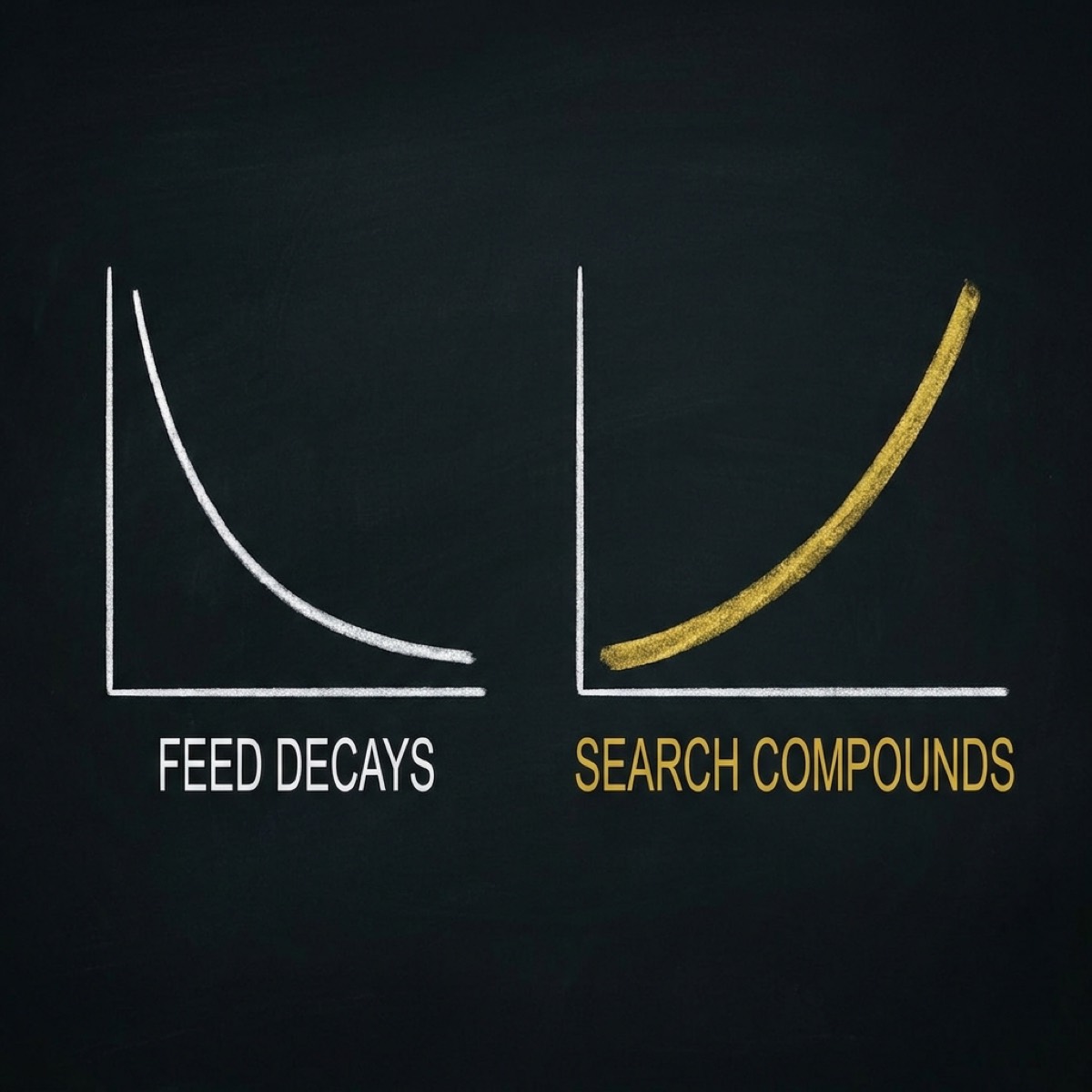
Does content there compound, or decay? A feed post shows for a few days and is gone. A search-indexed asset keeps accumulating. Two videos for a product that stopped selling years earlier still returned traffic in a single month. That makes this a resourcing decision rather than a taste one, and it is why most brands should own at least one compounding surface.
Is the format native to whoever has to make it? The tie-break is which platform that person already consumes on their own time. Both sides have to pass: the format native to the maker, and the congregation native to the platform. A rebranded podcast that got cross-promoted from every owned list still shrank, because podcast listeners and video watchers do not migrate on request.
The output is not a list of platforms with their demographics attached. You already know LinkedIn skews B2B. It is a verdict: one primary channel, a sequence for adding the next one and the gate that one has to clear first, and an explicit not-now list. The not-now list is the part that actually changes behaviour, because dropping a channel is a decision nobody makes without a written reason they can show someone.
One thing I deliberately did not do: ship LinkedIn and TikTok playbooks. The source material excludes both by name, so writing them would have been invention dressed up as research. What ships instead is the framework the playbooks are built from, which is the better answer anyway. Ask what the platform's goal is, what strategy serves that goal, and what it is rewarding right now. Tactics rot within a year. Those three questions do not.
The loop, not the feed
Once the channel is settled, here's the lap it works, every planning cycle:
Recall. Before it plans anything, it asks memory one question: what actually won for this brand, on this platform, last time? Which hook angle, which format, which posting time. A cold start falls back to sane defaults; a warm brand plans from its own results, not from generic best-practice.
Plan. Every planned post becomes one card on a shared content calendar. The card carries everything the post needs — platform, format, schedule, status, the caption, the image link. The calendar is the plan. No spreadsheet, no second scheduler.
Create. Now the specialists go to work in order: pull the brand voice, draft the body, sharpen the hook, adapt the format per platform, generate the image or video. Each of those is its own shipped skill — voice, copy, hooks, posts, media — and the manager just conducts them.
Review. This is the part I refuse to automate. Nothing reaches a real account until a human approves it in the review column. The AI plans, writes, and designs freely — then it stops and waits for a person to sign off. Speed never buys a bypass here, because the fastest-moving posts are the ones most likely to be off-brand.
Publish. On approval, one action pushes the post — or schedules it — across every connected platform. The card flips to published and keeps the reference for the record.
Learn. After the post runs, the winning hook, format, and time get written back to memory. Which feeds the next Recall. Which is the entire point.
That last arrow — publish back to recall — is why this is a loop and not a checklist. Run it four times and it plans like someone who's watched your last four weeks. Because it has.
What's actually under the hood
I'm allergic to gating the mechanism behind a "comment CODEWORD," so here's the real build. This one skill composes eleven peer skills — six of them Di-Atomic's own content skills, the rest the OPVS coordination layer — plus the content-calendar board and live trend data from social scraping. It carries thirteen ready-made playbooks: channel selection, weekly planning, trend-driven posts, reply mining, competition monitoring, cross-platform fan-out, a crisis pause, and more. You don't configure any of that. You say "plan my week," and it picks the playbook.
Alongside those sit four platform playbooks — X, Instagram, Facebook and YouTube — each split along the pattern that turned out to hold everywhere: every platform has an acquisition surface where you meet strangers and must not sell, and a home surface where the audience is already yours and selling is fine. Getting those two backwards is the most common way a decent account stalls.
Two rules inside it are load-bearing, and both came from watching a real deployment rather than a whiteboard.
First, the review gate is a human, full stop. A script checks that the gate exists on every post; a person does the actual approving.
Second, only permanent image links ever touch a card. Generated images from a provider often come back on links that expire in hours. Put one of those on a post scheduled for next Tuesday and you've published a dead image. So the loop insists on the stored, permanent link — the asset that's still there when a human reviews it and when it finally goes live. Small rule. It's the difference between a clean feed and a broken one.
One more, added with the strategy layer: every figure in those new references carries an evidence class marking it as a practitioner claim rather than a benchmark. The material comes from marketing books, and a number from a marketing book is not a number from a study. Nothing in there gets handed back to you as data.
Why a loop beats a bigger calendar
Back to where I started. You can always add another post. What you can't add, by posting harder, is judgment about which post to make next. That judgment only exists if something remembers what worked and feeds it forward.
That's also what makes this measurable in the way I care about. Every lap produces numbers — which angle earned saves, which time earned replies, which format earned shares. Vanity counts don't qualify; a follower total on its own is not a win. Pair every result with an outcome, and now you have something to optimize. And you can't optimize zero.
So the honest pitch isn't "post more." It's: pick the one channel worth holding, run one lap well there, let it remember, run the next lap smarter. Do that fifty times and the compounding does the heavy lifting.
Try it
@di-atomic/social-media-manager is live on the OPVS marketplace. Install it, point it at a brand, and ask it which platforms that brand should be on — then ask it to plan your week, and watch it stop at the review gate and wait for your yes. That pause is the feature.
I'll keep showing the mechanism as it sharpens. If you run social for anyone — your own brand or a roster of clients — this is the loop I'd hand them, and the channel question is the one I'd make them answer first.