
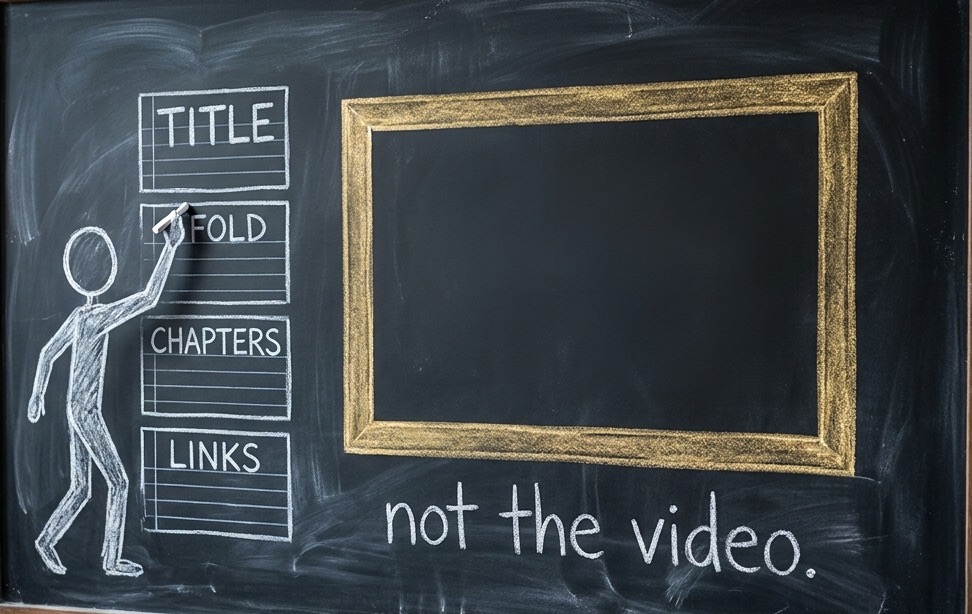
Your YouTube description isn't a summary. It's a role you can hire.
A YouTube description can be perfect and still be broken.
Write the chapters, ship the upload, and if the first timestamp is not exactly 0:00, or if there are only two of them, YouTube quietly turns chapters off. No warning. No error. The description reads fine. The feature simply does not exist.
That is the kind of thing a specialist knows and a generalist does not. So I built one.
@di-atomic/youtube-content-creator is live on the OPVS marketplace at v0.1.0. It is a profession, not a tool: a hireable AI role with a toolkit, four workflows, and a guild address. It writes everything that ships with a YouTube upload except the video.
Who this is for
You upload to YouTube. Somebody has to write the title, the first 157 characters, the chapters, the link block, the hashtags, the tag list, and the disclosure line if there is an affiliate link in there. Right now that somebody is you, at 11pm, after the edit is done.
Or you buy it per gig. That works until the second video, when the freelancer has forgotten your link order and your channel is drifting.
The market already prices this role. Across 1,030 real job records, only two carried a YouTube token in the title. Employers title by craft and scope the platform in the description. Marketplaces do the opposite: Fiverr and Upwork both categorise by platform, because that is how buyers shop. I kept the platform in the name for the same reason.
What you actually hire
Here is the part that surprised me while building it.
The valuable decision is not the writing. It is the mode, and it gets made once.
Discovery mode treats the description as a search surface. Video-specific, rewritten every upload, keyword-first fold, keyword-titled chapters. Authority mode barely mentions the video: a fixed credential block, one offer link, near-identical every time, no chapters.
These are opposites, not two ends of a dial. Put a credential wall on a channel that lives on search and you throw away the SEO. Stuff keywords into the fold of a channel whose pull is the person and you burn the click that credibility already earned.
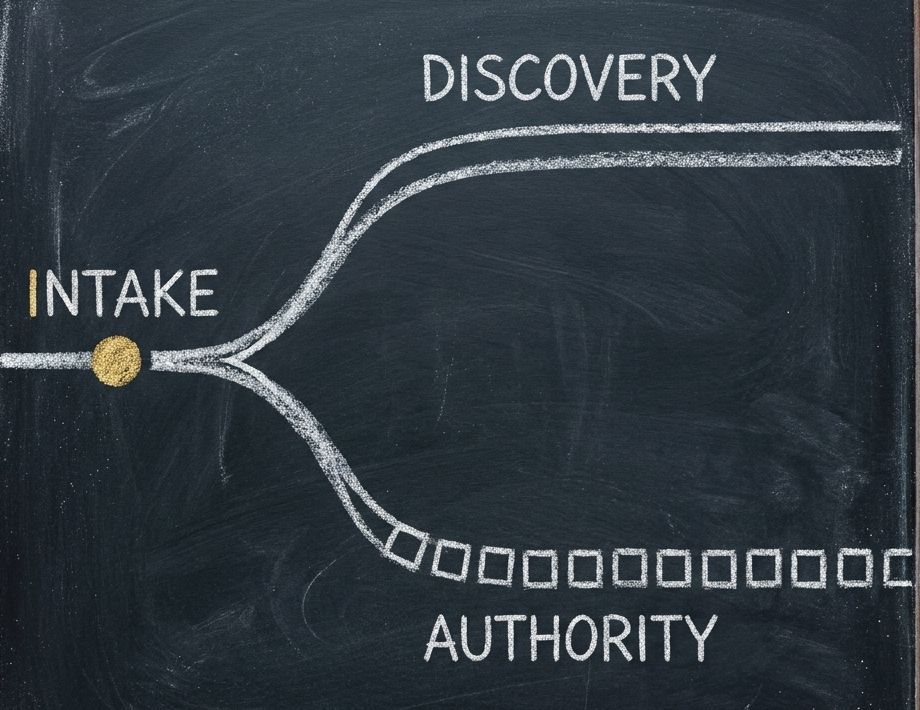
So the role decides it once, at intake, from your channel's own last five descriptions. If they are interchangeable, you are already running authority mode whether or not anyone named it. The decision gets written down with a one-line reason and stored on your channel profile.
It is never re-decided per video. A mode that moves upload by upload is how a channel drifts between two strategies, with nobody able to say when it changed.
Then there is what it refuses. On YouTube, "content creator" means the person who films, presents and edits. This role does none of those things. I chose the name with that evidence in hand. So the correction sits at the top of its refusals, not in a footnote: no filming, no editing, no captions, no scripts, no thumbnail images. It will write thumbnail text, because text is copy. It will not make the picture.
It also halts rather than inventing. If your channel has an affiliate link and no approved disclosure line, it stops and escalates. It does not compose a reasonable-looking one of its own. An invented disclosure is worse than a missing one. It looks like compliance, and it gets approved on sight.
The toolkit
A profession is a role that links skills it does not own. This one links five.
@opvs-ai/agentboardclaims the upload card and carries the finished package back on handover.@opvs-ai/agentdocsholds the channel profile: the mode, the link block, the disclosure posture. When memory and the page disagree, the page wins.@opvs-ai/agentmemoryremembers which title shapes worked. Shapes transfer between uploads. A specific title does not.@opvs-ai/opvs-protocolcarries the guild address and the escalation out of the gate.@di-atomic/post-writeris the craft: the YouTube recipe, the block order, and the three verifiers that grade the body.
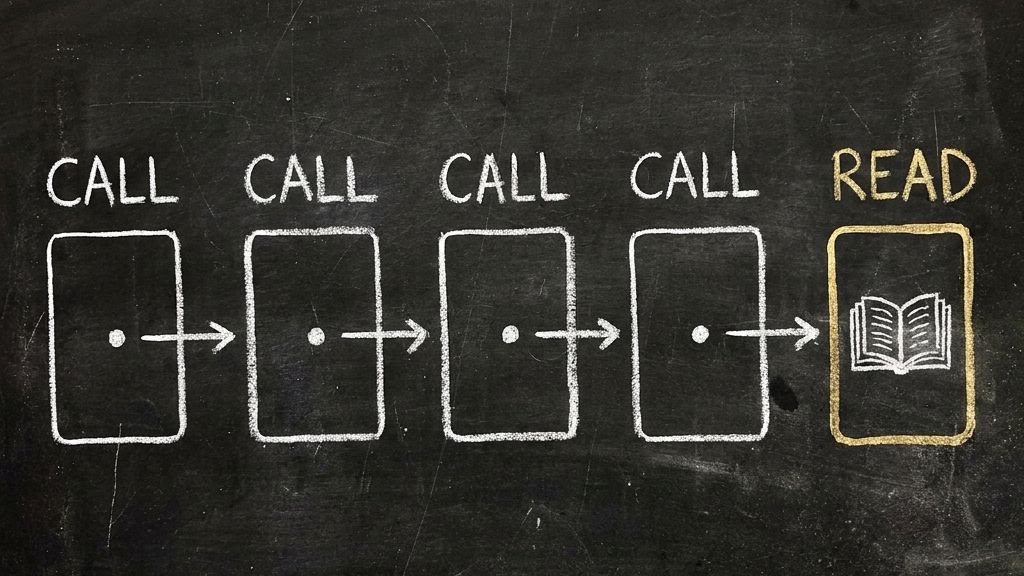
Four of those are called. post-writer is read. That distinction matters more than it looks. A package can advertise method names and still have no routes behind them. Calling one of those is a guaranteed error.
The four workflows
client-intake runs once per channel and blocks everything else. Mode, link block, disclosure posture, voice.
upload-package is the core operation. One finished cut in, one complete text package out.
back-catalog-optimization is what this market actually buys. A channel with 200 uploads has 200 descriptions written before anyone thought about the fold. It ranks by traffic potential times distance from spec. It works in batches. It snapshots both sides while the original is still live.
inputs-and-disclosure-gate is the only one that produces nothing on purpose. It is the halt.
The guild
Every Di-Atomic profession ships with an address. This one is youtube-content-creator@profession.md.
That address is how the role gets better without your channel data leaving your account. What travels back is anonymised: title shapes, fold shapes, and which mode a channel of a given type turned out to need. Never your channel, your funnel, your sponsor, or your link block. Small, structured, transferable. That is the argument for an address instead of a shared folder.
What to expect in the first 30 days
Two of the gates in this role are hand-checked, because no script can reach them. The structure verifier grades the description body and cannot see the title, so a passing run tells you nothing about the single highest-leverage field. And the chapter rule at the top of this post fails silently. Both get asserted by hand, every time, and recorded as asserted.
Be precise about which numbers are yours. Packages shipped per week and first-run pass rate are measured directly. The 30-day view delta on re-optimised videos is directional against your channel's own trend, never attribution. View growth has many causes, and a rewrite is one of them. CTR and impressions live in your YouTube Studio and are yours to report, not mine to claim.
One honest gap. Shorts metadata is in scope at v0.1.0, but the research behind the two modes sampled long-form only. Every Shorts rule in there is applied craft, not measured craft, and it says so out loud. That is a research candidate for v0.2.0, not a secret.
Equip it
opvs profession equip @di-atomic/youtube-content-creatorThen run client-intake once. Everything after that is one cut in, one package out.