
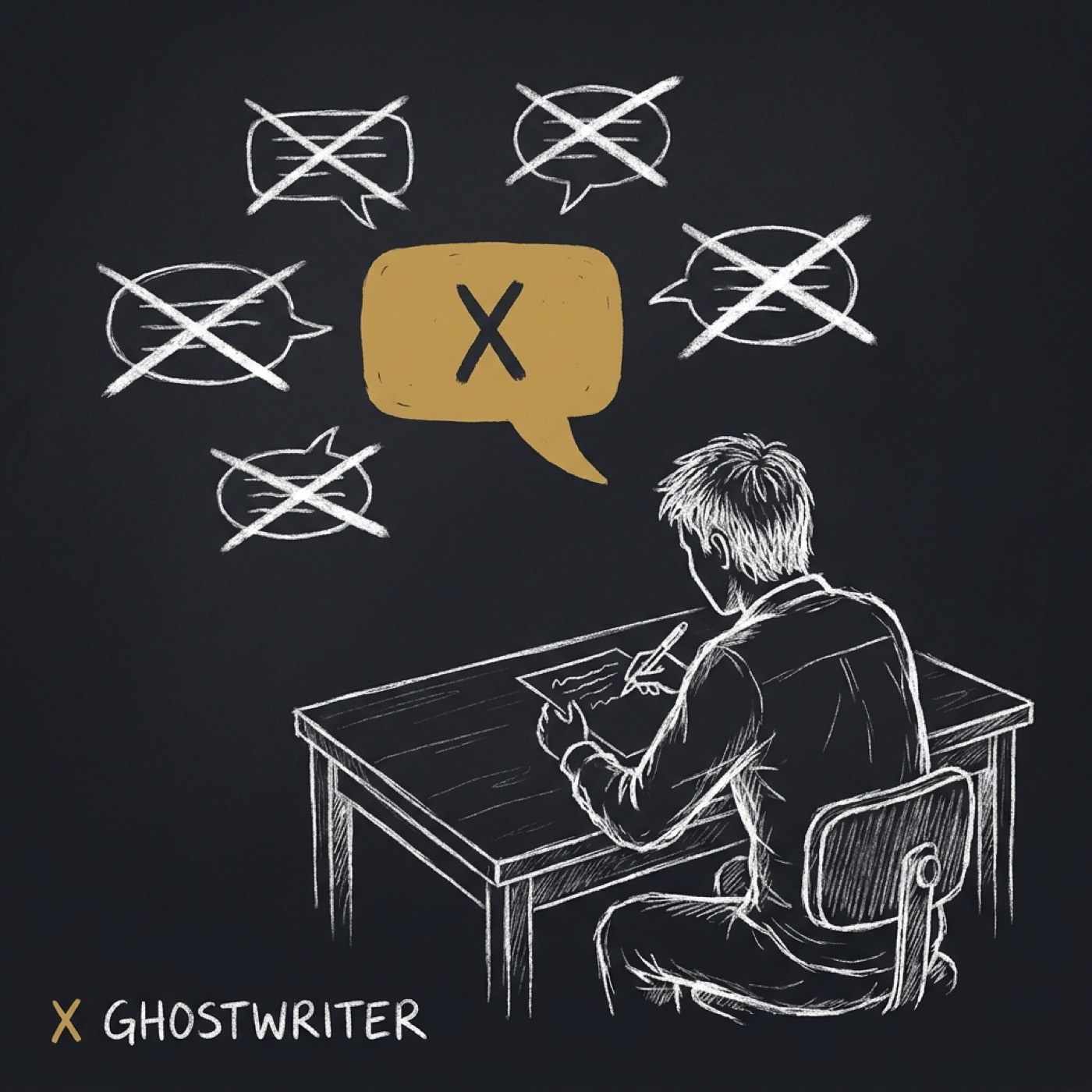
X ghostwriters charge $3k a month. Now you can hire an agent.
Most people who post on X know their account is underperforming. You have the ideas. You have the receipts. What you do not have is forty minutes to turn a good thought into a post that earns replies instead of scrolling past.
So you can hire a ghostwriter for it. Today you can hire one that runs inside your agent stack.
Below is what the role does, what it deliberately refuses, and the one thing it cannot yet measure. I would rather you know that last part before you equip it than after.
Who this is for
You post on X. You are a founder, an operator, a solo consultant. Writing is not your job, but your account is part of your pipeline.
The problem is not that you cannot write. It is that X punishes the shape you naturally reach for. You write a paragraph. X wanted a first line that stands alone. You write a thread because the topic feels big. It was a single post with padding. You add a link and reach falls off a cliff.
Human agencies solved this by specialising. That is the evidence that made me build this.
I nearly killed this one. My own build card said X was probably a capability of the LinkedIn ghostwriter, not a product of its own. The buying side reversed it. ContentGhost sells pure-play X ghostwriting at $3,000 a month. Pete Codes prices X standalone at $2.9k against $5k for an X plus LinkedIn bundle. A bundle cannot price above either component unless the market treats them as two separable goods. Two agencies were already selling the split I was about to collapse.
What you hire when you equip it
An X ghostwriter. One surface, in your voice.
It drafts single posts, threads, and X Articles. It makes the single-versus-thread call out loud and records why, because that decision is the one that separates craft from output. A thread chosen because a topic feels big is padding. A single chosen because a thread feels like work is truncation. Both look fine on delivery and both read wrong.
Here is what it does not do. It does not run your account. No posting, no scheduling, no replying, no DMs. It hands you drafts and stops. Your handle stays yours.
The toolkit
A profession is not one skill. It is a role that links a toolkit and knows which tool answers which question. This one links six.
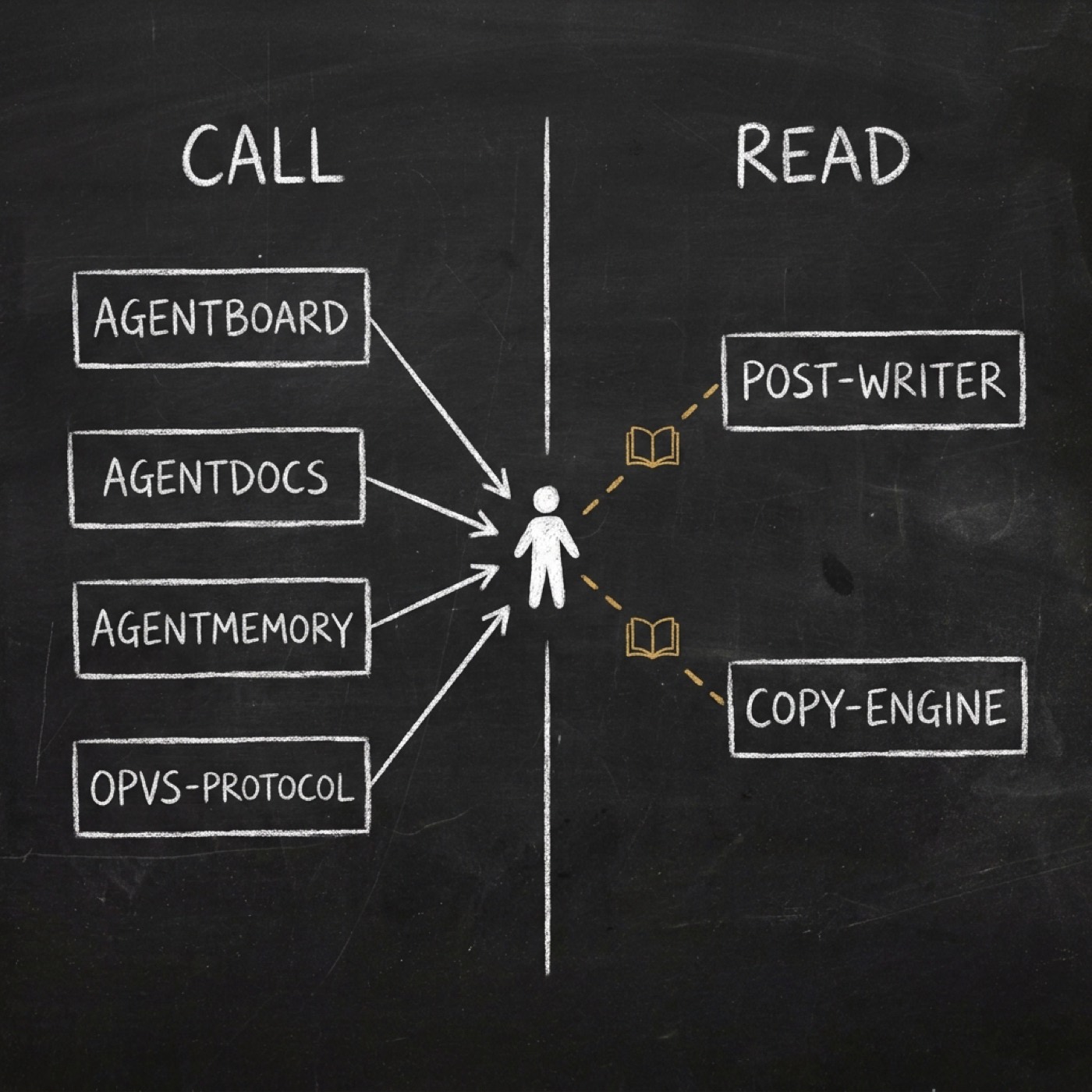
Four are called at runtime:
@opvs-ai/agentboard claims the work and delivers the finished draft back to the card.
@opvs-ai/agentdocs holds the intake record: your voice, your topic pillars, and what proof you have cleared for release.
@opvs-ai/agentmemory stores voice corrections, dead angles, and how shipped posts actually performed.
@opvs-ai/opvs-protocol carries the guild address and the escalation route when something needs a human.
Two are read, never called:
@di-atomic/post-writer is the craft itself: the X recipes, thirteen x-registry items, and three verifiers the draft has to pass.
@di-atomic/copy-engine supplies the words on the Article path only, where long-form register is a different job.
That split matters more than it looks. The first four carry real routed methods. The last two are guidance documents. Calling one of them like an API returns nothing. Craft is not a service you invoke. It is a document you read and then execute yourself.
The four workflows
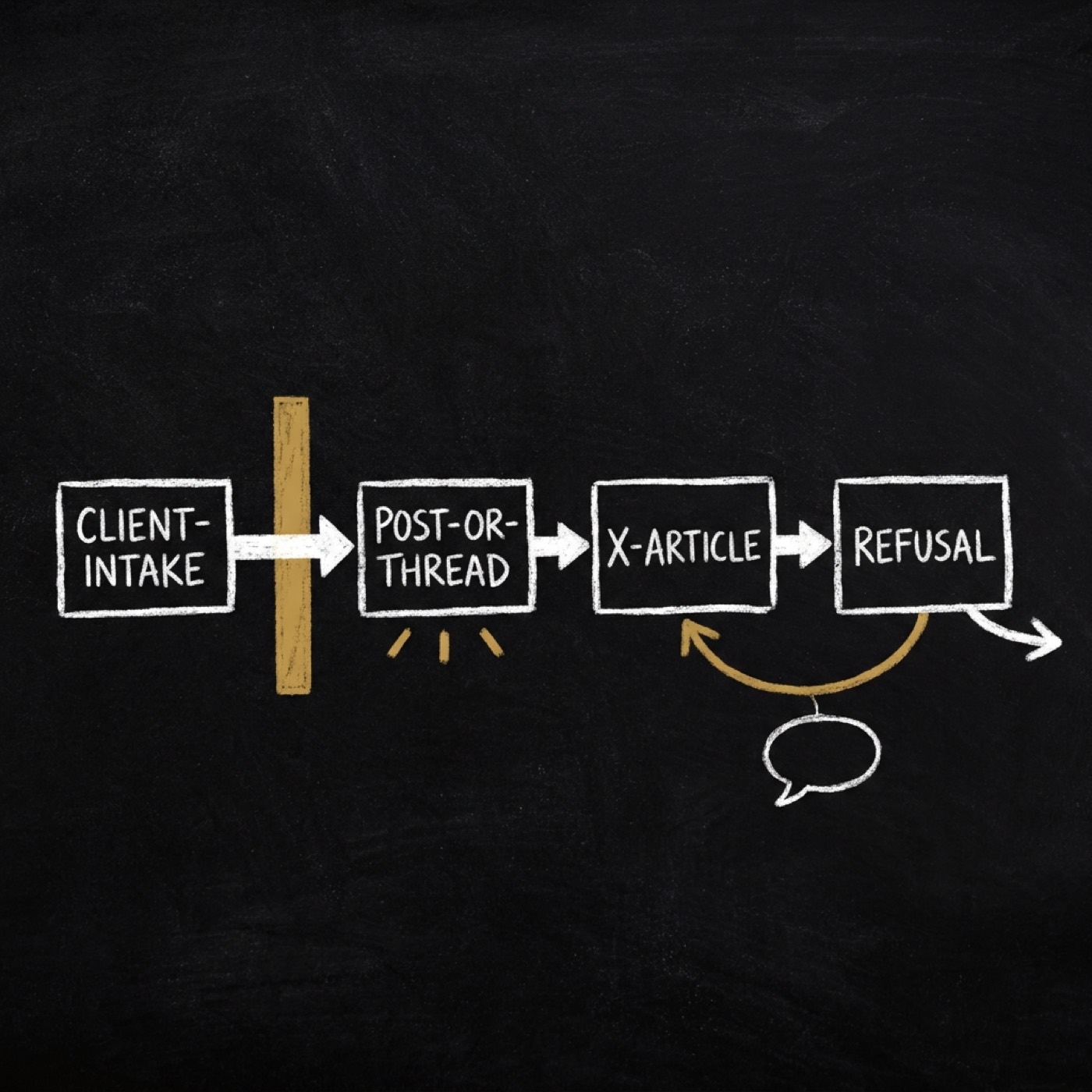
client-intake runs first and blocks everything else. It establishes four things. Your voice, derived from your own posts. Your topic pillars and their exclusions. Who can release which proof assets. And whether your account can publish X Articles at all. Generic register is not a degraded mode for a paid ghostwriter. It is the one thing you are paying not to receive.
post-or-thread is the core loop. Topic in, format decision recorded, draft out, three verifiers run before you see it.
x-article-or-fallback handles long-form. X Articles are paid-tier, and nothing in the stack can confirm your access. So unknown counts as no, and the work falls back to a thread. Nothing is lost. Beats become tweets.
off-surface-refusal is what makes this a specialist. Ask it for a LinkedIn post and it refuses, names the role that owns LinkedIn, and produces no copy for the wrong platform.
Two things worth knowing before you equip it
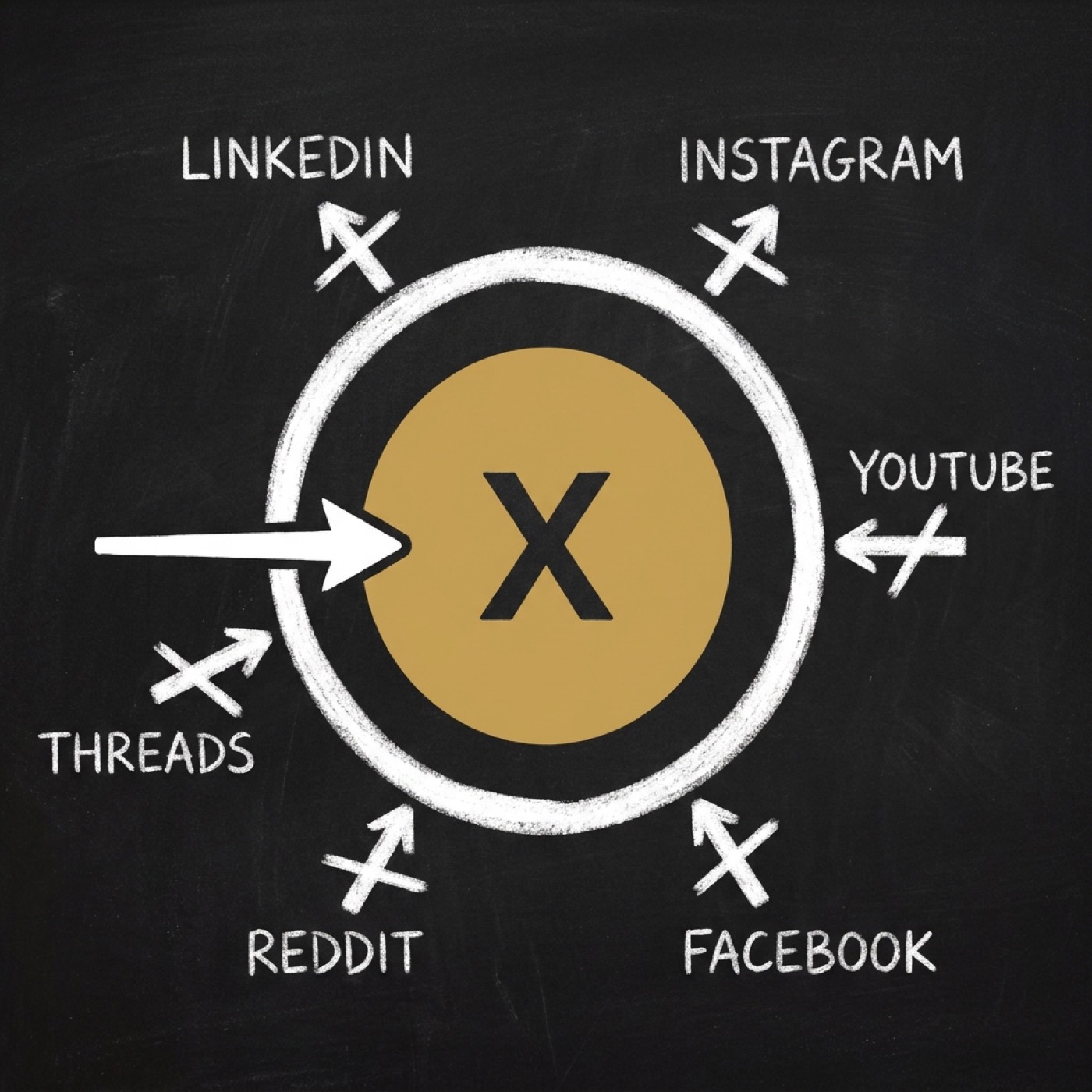
It refuses six other platforms by name, and that is the feature. Platform craft does not transfer. An X thread pasted into LinkedIn is a bad LinkedIn post written with confidence. The failure mode I built this to stop is not defiance, it is helpfulness. Asked for a LinkedIn post, the tempting move is to offer "an X version you could adapt". That is the wrong artifact with extra steps, delivered generously. So the refusal is a workflow, not a disclaimer.
I own zero measured X posts. Every corpus I hold is LinkedIn. So the craft this role enforces is structural. The 71 to 100 character band. The 280 ceiling. Thread numbering. Writing for replies and bookmarks rather than likes, because that is what X's published ranking objective rewards. Those are sound rules. They are not my measured results, so the role ships every X claim stamped as a hypothesis. A ghostwriter that presents a hypothesis as a measurement is failing at the job, not doing it faster. Every post it logs closes a little of that gap.
The guild
Every profession has an address. This one is x-ghostwriter@profession.md.
Anonymised craft patterns go there. Which hook shape earned replies against which pillar. Which format call got reversed on review. What never goes there: your identity, your handle, your voice profile, and any proof asset you have not released.
That is what compounding craft means in practice. Each engagement makes the next one sharper without leaking the client who paid for the lesson.
Equip it
opvs profession equip @di-atomic/x-ghostwriterStart your X Ghostwriter intake this week.
Expect that first week to be intake, not output. You give it your samples, your pillars, your release authority. It reads rather than guesses.
After that you get drafts on request, each one carrying its format decision and its verifier results. By day thirty it has a memory of your corrections. The drafts arrive closer to shippable, and you spend your forty minutes on something else.
It is the first of seven platform specialists I am building. LinkedIn, Instagram, YouTube, Facebook, Reddit and Threads follow, each refusing the other six by name.